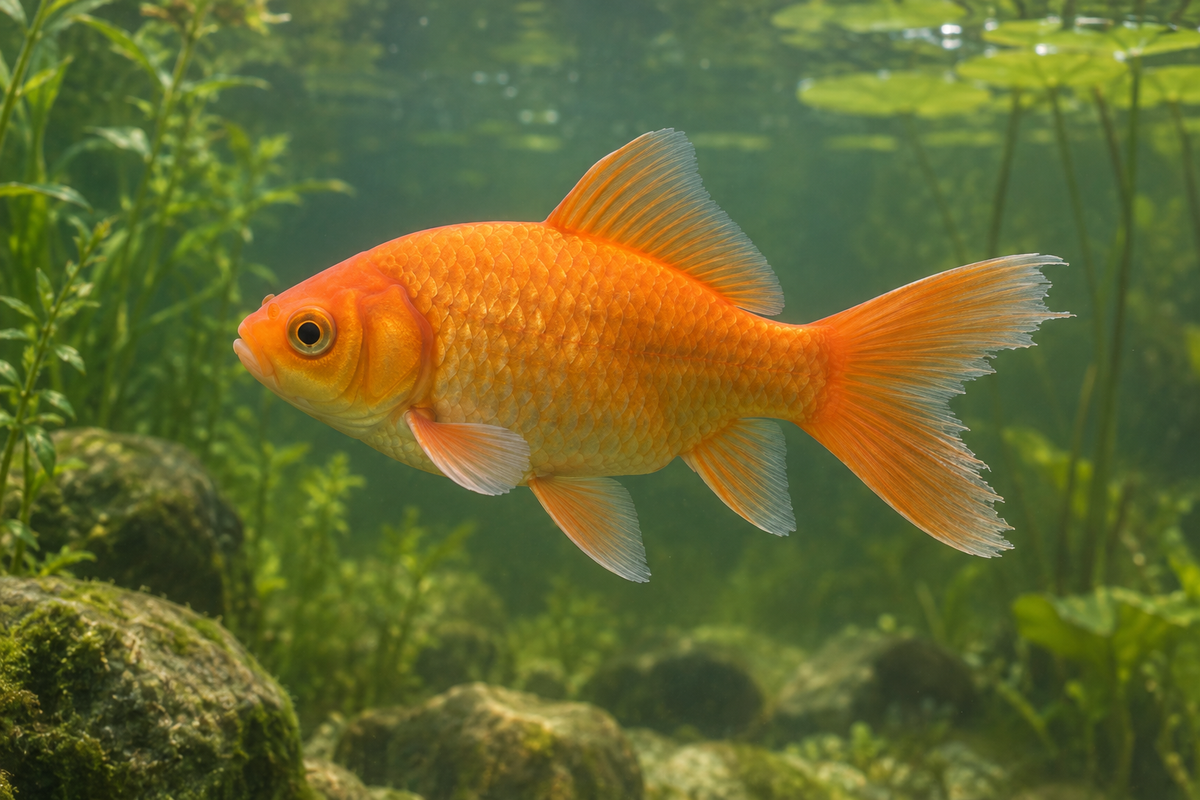
Does your goldfish’s tail seem to be getting shorter, are its fins fraying, or are their edges changing in appearance? These signs warrant a quick response. The term "fin rot" describes tissue degradation, but a photo alone is not enough to identify the responsible agent or choose a medication.
The right approach is to observe the progression, check the water, and look for factors weakening the fish. An injury, bites, or an infection can look similar at first. A veterinarian knowledgeable about fish can refine the diagnosis and treatment when the lesion progresses or the animal exhibits other symptoms.

What signs should you look for on the fins?
Observe the fish in the water from several angles without chasing it with a net. Look for frayed areas, tissue loss between the fin rays, redness, deposits, and any progression toward the base of the fin. Also check the skin, eyes, and mouth.
An isolated tear that appeared after being caught or scraping against something has a different history than a fin that degrades a little more each day. To track this difference, take a clear photo at regular intervals with comparable framing. Note the date and the changes observed.
The color of the edge does not automatically identify a bacterium or fungus. A white appearance can correspond to several situations. Avoid deducing the treatment from a single detail or a resemblance to an image found online.
Also observe the goldfish’s behavior
A fish that is still eating may nonetheless need care. Watch its breathing, the way it swims, and its relationship with the other occupants. Does it stay isolated? Does it keep its fins clamped? Does it rub against the sides? Does it have trouble keeping its balance?
Difficulty breathing, loss of balance, spreading sores, swelling, or multiple affected fish justify prompt veterinary advice. If several animals are gasping for air at the surface, immediately check that the aeration and circulation are working: the problem may affect the entire environment.
Evaluate the group as a whole. A single affected fish does not rule out a water issue, and several sick fish do not prove a contagious disease. The number of animals involved, the timing of the onset, and recent events are useful information for the diagnosis.
Check the water before increasing treatments
Clear water can contain ammonia or nitrites and lack oxygen. In the event of a health problem, priority checks should include temperature, pH, ammonium/ammonia, nitrites, and dissolved oxygen when that measurement is available. The results must be read in relation to their units and the fishes' needs.
The risk associated with ammonia depends on the pH and temperature. Therefore, do not suddenly raise the pH without having examined the overall situation. If an urgent correction is necessary to preserve the animals, ask for an appropriate course of action; the search for a perfect reading must not delay assistance.

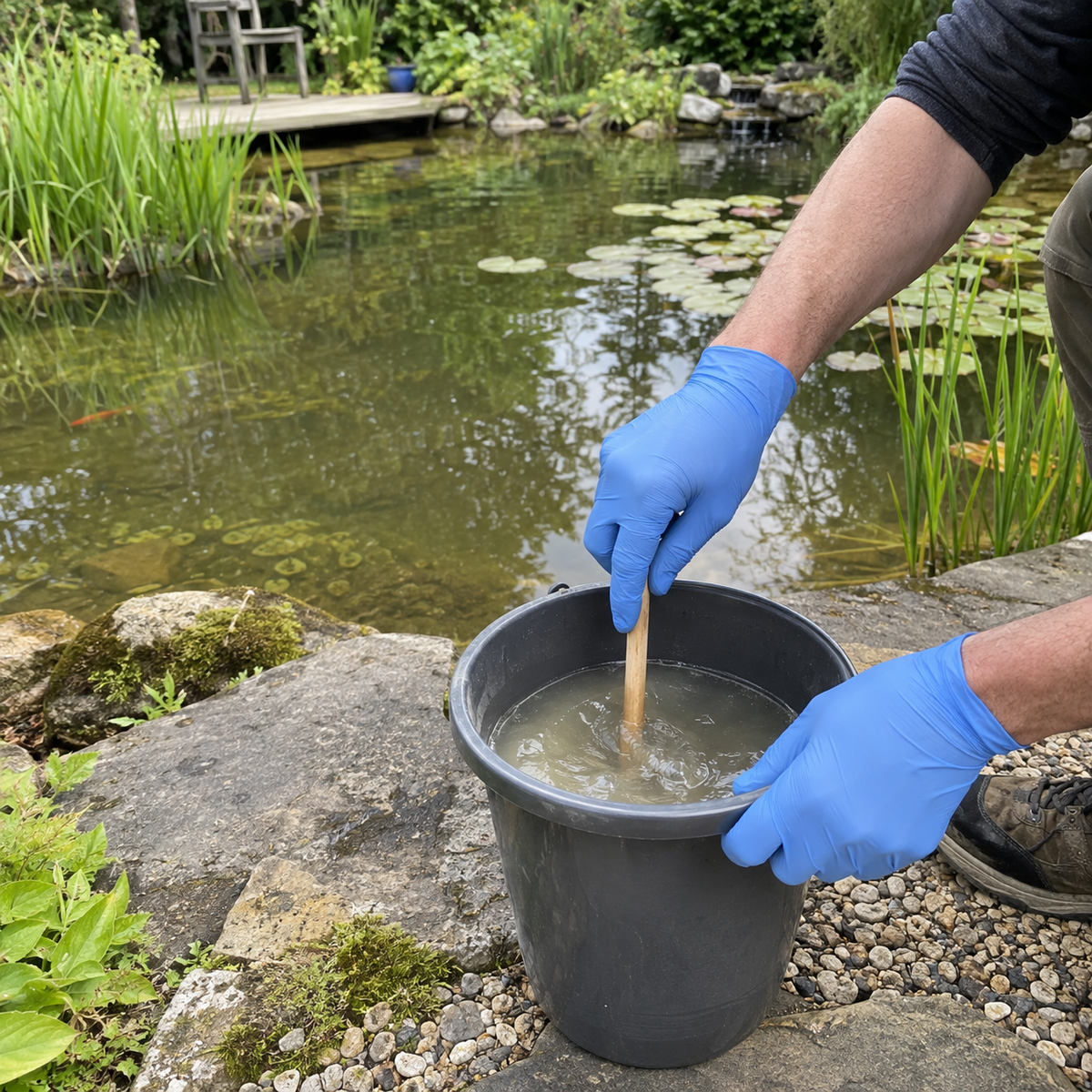
The JBL ProAquaTest Combiset Pond makes it possible to combine several useful measurements for monitoring a pond. It does not detect the bacteria responsible for an infection. Check the reagents' expiration date, respect the sample volumes, and record the numerical results rather than noting "water is okay."
Identify what weakened the fish
Opportunistic infections are encouraged by certain stress situations: poor water quality, accumulation of waste, transport, significant temperature variations, or excessive stocking density. A lesion can also act as an entry point. Correcting these factors supports treatment and reduces the risk of recurrence.
Review the events of the last few days: introduction of new fish, deep cleaning of the filter, power outage, anti-algae treatment, increased rations, or construction work around the pond. A very simple notebook can help link a health development to a concrete change.
Examine the decorations and behaviors. A sharp edge, poorly protected intake, or repeated chasing can sustain injuries. Photograph suspicious elements before modifying the installation so you can explain what has changed.
Useful actions while investigating the cause
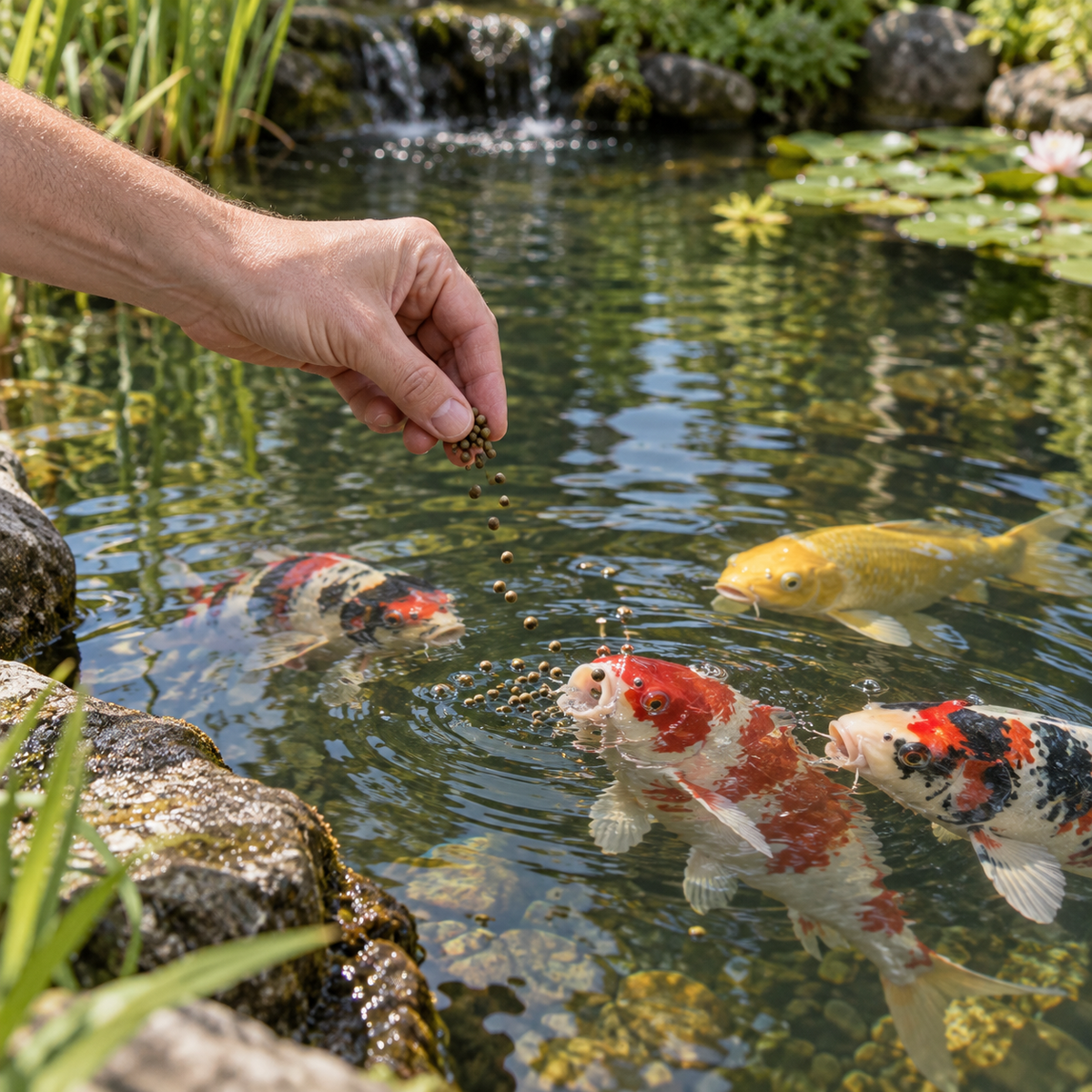
Maintain adequate circulation and aeration, verifying that the equipment is actually functioning. Remove uneaten food and easily accessible waste. Adjust feeding to the appetite, temperature, and analysis results: adding more food will not heal a fin.
If a partial water change is indicated, its quantity and frequency must take into account the measured problem. Use compatible water, properly prepared if necessary, and avoid sudden temperature shifts. Changing all the water or scrubbing the pond and filter simultaneously can destabilize the system further.
Limit handling. The mucus helps protect the fish; repeated capture and unnecessary contact can damage it. Do not rub the fins and do not apply household disinfectant to the animal.
Should the sick fish be isolated?
Isolation can be useful, but a small, improvised container without water monitoring can worsen the situation. A hospital tank must offer an appropriate volume, aeration, a stable temperature, and monitoring of nitrogenous waste. It should be prepared with the help of a veterinarian or the professional assisting with care.
Before any transfer, ask whether isolation is appropriate and how to move the fish with as little stress as possible. Keep dedicated equipment when necessary. The cleaning protocol for accessories must be compatible with their use and they must be properly rinsed before coming back into contact with the animals.
What is the role of Aquipond bacteria?
Aquipond NitriBoost is intended to support biological filtration according to its conditions of use. Its role concerns the functioning of the environment; it does not replace a medication directed against a fin infection.
A bacterial supplement can be considered during startup or when restarting the filter, after analyzing the situation. It does not instantly correct a nitrite spike and does not exempt you from checking flow, oxygenation, fish load, and test results.
When and how to decide on a treatment?
Bacterial diseases may require examinations and, depending on the case, susceptibility testing for antibiotics. The choice rests with the veterinarian. Avoid a chain of products "just to try": this can stress the fish, complicate the diagnosis, and disrupt the pond's functioning.
Prepare the actual volume of the system, the species present, the temperature, the analyses, and a list of products already used with their dates. Then, follow the prescribed protocol, including instructions regarding filtration and UV. Do not stop or extend a treatment on your own initiative.
Monitor improvement without declaring a cure too soon
Monitor appetite, breathing, and the development of the lesion with your dated photos. A fin does not always regain its original appearance quickly, and regrowth depends on the extent of the damage. Further degradation or the absence of expected improvement should lead you to recontact the veterinarian.
To choose tests or verify the consistency of your filtration, contact the Aquiflor team with the pond's specifications. For a sick fish, this material assistance complements the veterinary approach.
Sources and useful reading
- RSPCA — Signs of health and illness in fish.
- Merck Veterinary Manual — Bacterial diseases of fish.
- University of Florida — Introduction to fish health management.
- University of Florida — The role of stress in fish disease.
- University of Florida — Preparing for a diagnostic workup.
- OATA — Looking after pond fish.