A koi carp with a swollen belly requires careful observation and veterinary advice, especially if the change is recent or accompanied by unusual behavior. Swelling is a sign, not a diagnosis. It can correspond to several situations, some of which require rapid intervention.
Avoid immediately concluding that it is constipation, a female full of eggs, or "dropsy to be treated with salt." The fish's shape, water analyses, and additional examinations help guide the investigation. Here is the information to gather and reasonable steps to take while waiting for appropriate advice.

Start by assessing the general condition
Observe the koi in the water, without catching it just to check its belly. Is it interested in food? Is it swimming normally? Is it breathing faster than the others? Is it staying isolated or resting at the bottom? A short video is useful to show its breathing and balance.
Contact a veterinarian familiar with fish quickly if the swelling progresses, if the scales are lifting, if the eyes become bulging, or if redness and sores appear. Loss of balance, difficulty breathing, or marked lethargy increase the urgency.
If several fish suddenly show abnormalities, check the installation immediately and seek help. A ventilation failure or water degradation can affect the entire pond. The examination of a single koi should not make you forget the other occupants.
Describe the swelling precisely
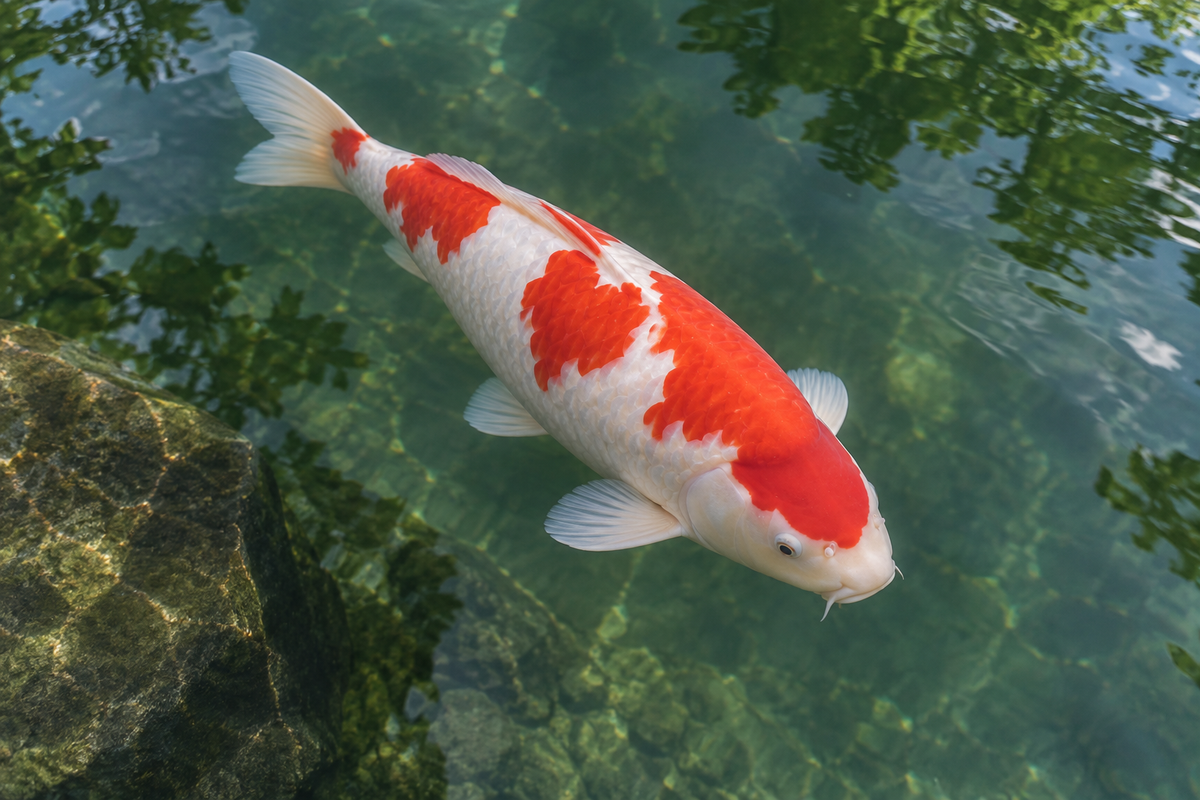
Look at the fish from above and from the side, through the water if visibility allows. Has the volume increased evenly or primarily on one side? Do the scales remain flat against the body? Does the change concern only the abdomen or the entire silhouette?
Compare with previous photos rather than with another koi. Not all individuals have the same morphology. A photo taken through a wavy surface can also distort proportions: multiple views are preferable to a single spectacular image.
Note the date of the first change. Swelling present for several weeks and a modification that appeared in a few hours tell different stories to the veterinarian. However, this alone does not allow the problem to be classified as benign or serious.
What does the word dropsy mean?
In aquaristics, this term is often used for a bloated fish, sometimes with protruding scales. It specifically describes an abnormal accumulation of fluid and a disturbance of the internal balance. It does not designate a single cause that could be treated with the same product in all ponds.
The Merck Veterinary Manual describes abdominal swelling among the possible signs of certain infections. Other internal conditions can also change the silhouette. Determining the origin requires an examination; systematically attributing the phenomenon to a particular bacterium would be premature.
Raised scales are a warning signal, but their absence does not rule out an internal problem. Similarly, a koi that still accepts a few pellets cannot be considered cured or out of danger.
Eggs, internal mass, or other condition: do not decide based on appearance
A female may have a larger abdomen during the breeding season. This possibility is not enough to explain unusual swelling. Abnormal development, asymmetry, or a change in behavior requires an evaluation.
Internal masses, particularly gonadal ones, are described in koi. An ultrasound can help detect them. This does not mean that a bloated koi necessarily has a tumor: it is an additional reason to avoid conclusions based solely on the silhouette.
Never squeeze the belly to try to force out eggs or fluid. Do not puncture a swollen area and do not improvise sedation. These actions can seriously injure the animal and should only be performed by a veterinarian when indicated.
Check the living environment
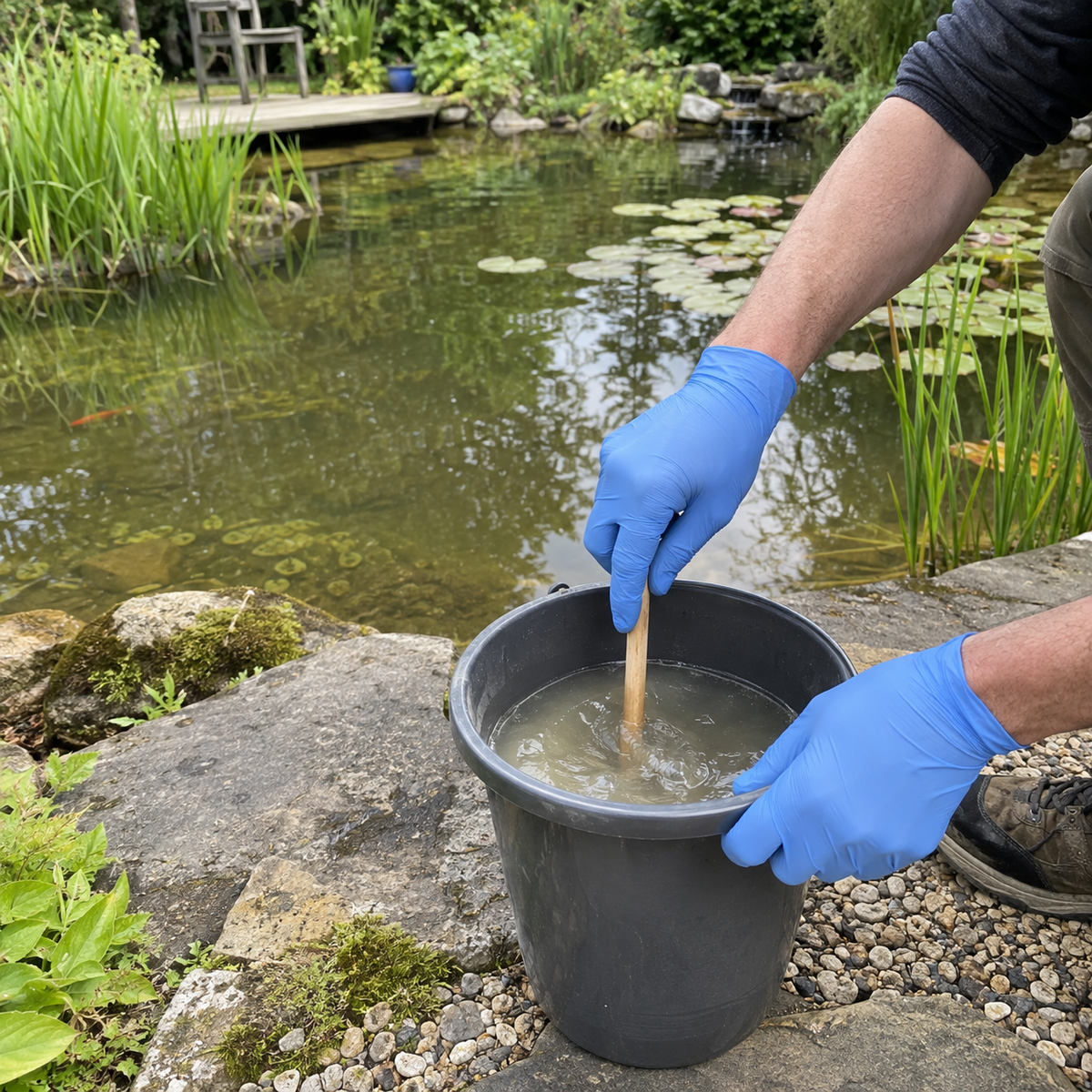
Measure the temperature, pH, nitrites, and ammonium/ammonia; check the dissolved oxygen with a suitable method if possible. Supplement according to the history and the professional's recommendations. Clear water does not mean good chemical quality.
Keep the values, units, and time. Report if a water change or treatment preceded the measurement. The veterinarian may request additional analyses or a sample collected according to their instructions.

The Combiset Pond is useful for documenting several water characteristics. Plan for temperature and, if necessary, oxygen separately. A dated tracking table helps to spot an evolution that you might miss by looking only at the water color.
Check the filtration, aeration, and recent events
Check the actual flow rate, obstructed inlets, diffusers, and any breakdowns. A noisy pump does not necessarily ensure the expected circulation. Also check if the filter media have been cleaned or replaced recently.
Reconstruct the changes: arrival of a new fish, sharp temperature rise, transport, treatment, garden product that may have reached the pond, or unusual feeding. Note the trade names and the quantities actually used, even when they seem unrelated to the problem.
Maintain a stable environment. Repeated handling, sudden temperature changes, and successive interventions can add stress. Veterinary publications emphasize the importance of the environment in the prevention and management of diseases.
What to do about feeding?
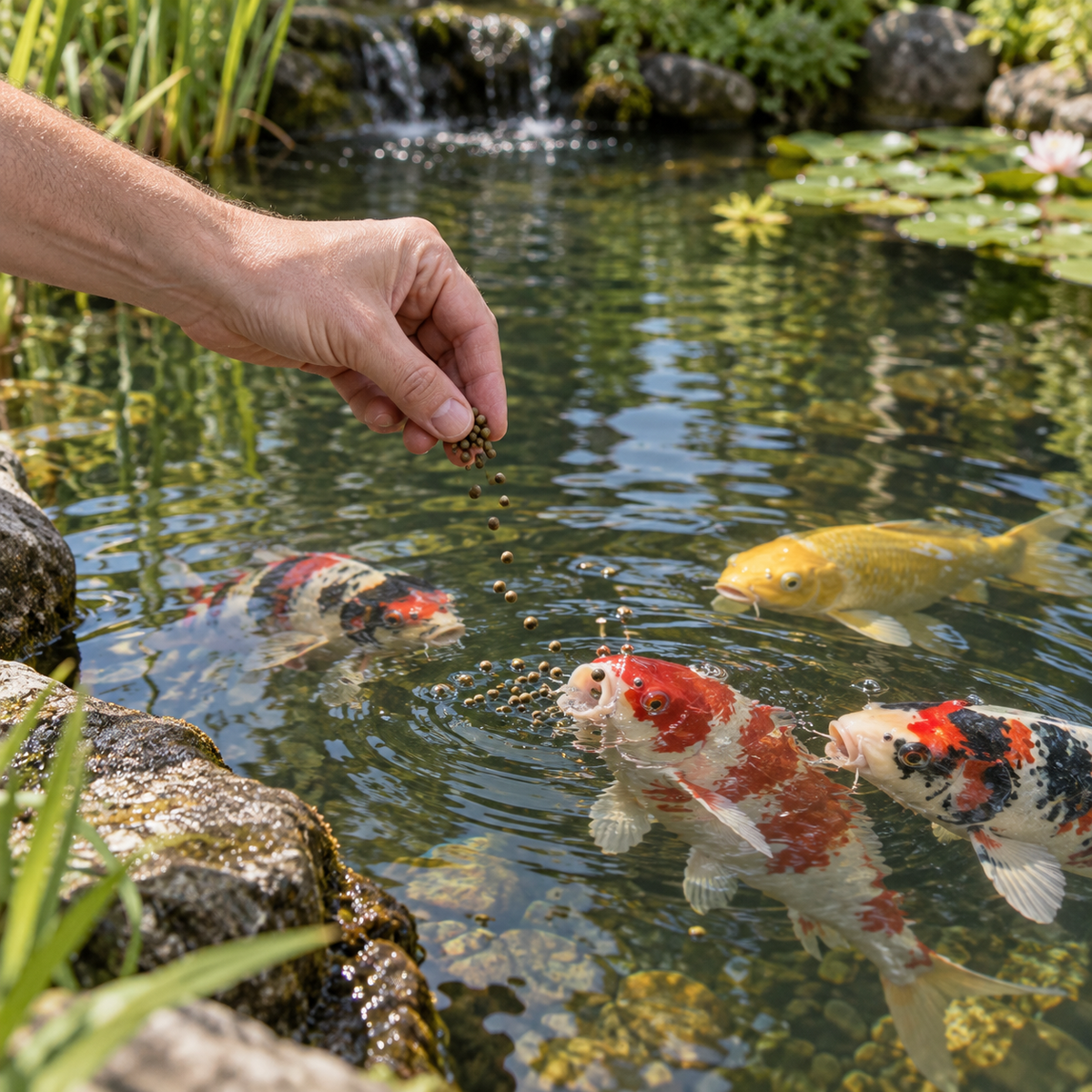
Do not try to "unblock" the fish with a large ration or a food recipe. Observe what it consumes and remove any accessible leftovers. The quantity distributed must remain compatible with its appetite, the temperature, and the water results.
If the koi refuses to eat, report how long it has been. Appropriate food supports the maintenance of a healthy fish, but it does not treat an accumulation of fluid or an internal mass. The veterinarian will specify if a temporary adjustment of the diet is necessary.
Should a hospital tank be prepared?
A separate tank can facilitate certain examinations or treatments. However, it must be sized, aerated, and monitored. Moving a large koi into a small, unprepared tank quickly creates water quality problems. Ask for instructions before catching the fish.
An OASE AquaOxy aeration system can be part of suitable equipment, to be sized according to the installation and its depth. Aeration supports the environment; it does not solve the cause of the swelling on its own.
For biological filtration, Aquipond NitriBoost can be considered according to the instructions and the context of restart. It should not be presented as a treatment for dropsy or as a guarantee of immediate maturation of a hospital tank.
Prepare the discussion with the veterinarian
Gather dated photos, a video, the pond volume, the analyses, the approximate age, and the size of the fish. Add recent treatments and indicate if other animals are affected. Contact the clinic before transporting the koi: packaging and the timing of the transport must be agreed upon.
Depending on the observations, the veterinarian may suggest external examinations, analyses, or imaging. Do not start an antibiotic, antiparasitic, or salt bath without appropriate guidance. Empirical treatment can delay the diagnosis and alter the examination results.
Support pond monitoring
To verify the choice of tests and equipment, the Aquiflor team can help you examine the pond configuration. Continue the veterinary monitoring of the fish in parallel. Visual improvement must be confirmed over time, with satisfactory breathing, swimming, and feeding.