An odor near a septic tank, in the garden, or inside the house deserves an organized inspection. It does not automatically prove that the tank is full, nor that it lacks bacteria. Maintenance begins with identifying the installation, its history, and observable signs of operation without opening the structures.
Septic tanks, compact filters, and individual wastewater treatment systems are not all managed in the same way. This guide helps prepare for checks and understand the role of biological products, with useful benchmarks for a home in Wallonia.

Find the exact type of sanitation system
The word "tank" sometimes refers to an entire installation comprising several elements. Find the invoice, brand, model, capacity, and installation plan. A pretreatment tank alone does not describe the entire system that follows.
Also prepare the latest maintenance report, emptying receipts, and manufacturer’s instructions. These documents allow for comparing current operation with previous observations. If you have recently purchased the house, ask the seller or the company that provided the maintenance for any available records.
This first step avoids a common mistake: applying a rule read for one system to all equipment. The needs of an installation with a compressor, pump, or electrical controls are not the same as those of a passive tank.
Locate the odor without opening the tank
Note whether the odor is detected in only one bathroom, near the house, or in a specific area of the garden. Record if it appears after heavy use, an absence, a service intervention, or an alarm. An odor at the sink may still originate from the local P-trap, even if the home has a septic tank.
Look only for indicators accessible from a safe zone: visible alarms, loss of normal noise, slowed drainage in the house, or unusual ground dampness. Do not walk on sunken areas and do not touch water that could be contaminated.
Do not open lids to examine sludge. Tanks and inspection chambers can present risks of toxic, oxygen-depleted, or flammable atmospheres. The INRS reminds us that interventions in confined spaces require specific organization and resources.
Maintenance and emptying: two operations to distinguish
Maintenance is used to check the operation and condition of components. Emptying removes accumulated materials when necessary. A visit may therefore conclude that an emptying should be scheduled, or that another intervention is a priority.
The frequency of emptying depends in particular on the installation, its usage, and the professional’s findings. An isolated odor does not measure the sludge level. Conversely, the absence of an odor does not exempt you from the scheduled monitoring.
Request a report detailing observations, replaced parts, and next steps. A document simply stating "service performed" will be less useful for the next inspection than a report describing the actual condition of the inspected elements.
Guidelines for individual wastewater treatment systems (SEI) in Wallonia
The Walloon Public Service indicates that individual wastewater treatment systems must be covered by a contract with a provider registered with the SPGE. Minimum maintenance intervals depend on the category: 18 months for a unit, 9 months for an installation, and 4 months for a station.
These intervals concern maintenance; they are not universal emptying frequencies. The provider assesses, among other things, the sludge level and the need to remove it. Find your equipment category in its documents and confirm the applicable procedures with your sanitation agency.
The SIGPAA platform allows for tracking interventions. Also keep your own file: manuals, reports, provider contact details, and the date of the next appointment. These Walloon benchmarks should not be transposed as is to a home located in another region or country.
Ventilation, equipment, and alarms: do not improvise
A persistent odor may require an examination of the ventilation and connections. Never block an outlet to eliminate a nuisance and do not install an accessory without verifying that it is suitable for the entire system. The company must determine what is preventing the installation from functioning correctly.
If your equipment has a compressor or a pump, follow its intended operating mode. Do not stop a device simply because it makes noise, and do not modify settings to clear an alarm. Photograph the display from a safe area and contact the maintenance provider with the exact reference.
After a power outage or a long absence, follow the manufacturer’s restart instructions. A bacterial product does not replace the restoration of a stopped or defective piece of equipment.
Reduce inputs that complicate treatment
Toilets and sinks are not waste collection points. Keep out kitchen grease, food scraps, and wet wipes; dispose of medicines, solvents, and other incompatible products through locally provided channels.
Repair water leaks and adapt usage to the installation's capacity. The EPA advises, for example, to avoid concentrating all laundry on a single day. This advice on managing inputs does not replace the specific requirements of your system.
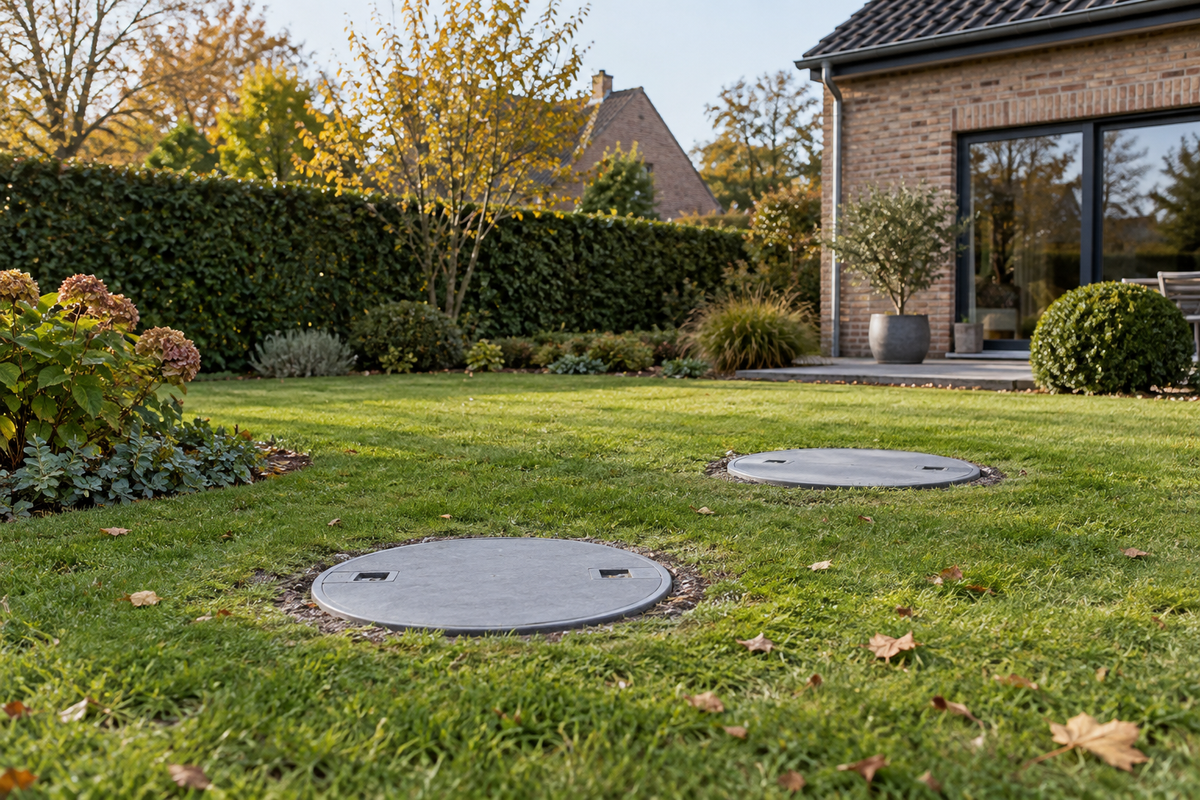
In the garden, respect the areas reserved for the system and the planned load limits. Do not park a vehicle over a structure or treatment area without technical approval. Before modifying a terrace, a rainwater drain, or significant landscaping, find the sanitation plan.
Should bacteria be added to a septic tank?
Not systematically. In its fact sheet on additives, the EPA notes that household wastewater already provides microorganisms useful for treatment. It does not recommend the routine addition of bacterial or chemical additives to operate a home installation.
This general recommendation does not constitute a specific test of every commercial product. It does, however, advise against promises that an additive will eliminate the need for emptying or restore any faulty installation. A malfunction must be evaluated by a professional.
For a particular model, ask the maintenance provider and the manufacturer if a product is compatible, for what purpose it would be used, and how its benefit would be evaluated. The answer must concern your installation, not just the presence of the word "biological" on packaging.
The role of Aquipond Bactodeur
Aquipond Bactodeur is presented by its manufacturer to support the breakdown of organic matter in pipes and sanitation systems. Its presence in the catalog does not mean it should be automatically added to every tank that smells.

Before use, have its compatibility and relevance confirmed. Follow the label on the received packaging. Do not use it to delay a required emptying, ignore an alarm, or compensate for out-of-service equipment. It also does not guarantee that the air in a tank is safe.
To examine the product's indications, consult the Bactodeur product page on Aquishop. You can send the reference of your system and the maintenance provider's recommendations to Aquiflor to verify the intended use.
Signs that require rapid intervention
Backflow, an alarm, significantly degraded drainage, or suspicious surface water justify contacting the provider quickly. Limit water discharge and keep people away from contaminated areas. In case of a strong odor accompanied by symptoms, move away and call emergency services if necessary.
The best monitoring lies in an up-to-date file and precise observations. This is what allows for deciding between routine maintenance, emptying, repair, or a more in-depth inspection.
Sources and references
- SPW, maintenance of individual wastewater treatment systems in Wallonia, updated May 27, 2026.
- IDELUX, role of maintenance and sludge evaluation.
- EPA, Septic Tank Additives Fact Sheet, 2024.
- EPA, maintenance and use of a septic system; American frequencies not applicable here.
- INRS, risks of confined spaces.
- Aquipond, presentation of Bactodeur.