

In short: a water lily flowers when its rhizome has enough room, soil that nourishes it without polluting the water, sunlight, and the right depth. The basket, jute fabric, and potting soil do half the work. This guide gives you the complete method: choosing the variety, preparing the basket, planting, lowering the basket to the right depth, and then maintaining and dividing your water lily so that it flowers every summer.
Why a water lily in your pond
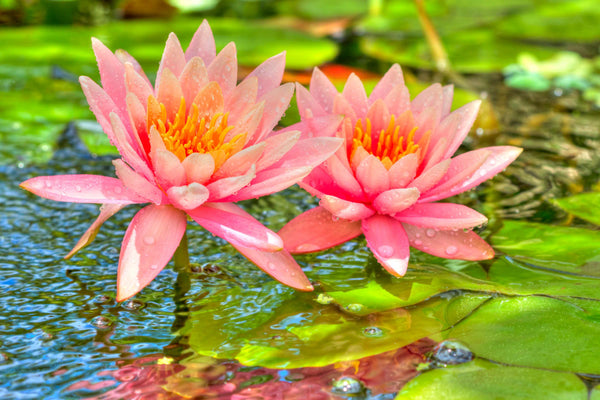
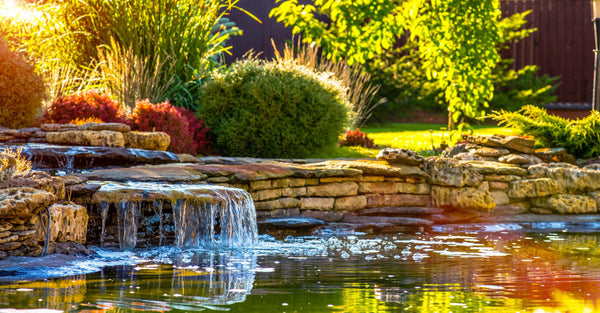
Beyond its flowers, the water lily is one of the best allies for clear water. Its floating leaves provide shade: they limit the light that penetrates the water and slow the growth of algae. They also shelter the fish from the sun and herons. Its roots consume some of the nitrates and phosphates. In a well-balanced pond, aim for about one-third of the surface covered by floating vegetation.

Choosing the right variety
Not all water lilies are suitable for all ponds. Vigorous varieties, like the white water lily from our regions, require significant depth and a lot of space: they are perfect for a large pond or a lake, where they cover several square meters. Dwarf varieties are satisfied with 30 to 40 cm of water and a small pond, or even a tub on a terrace. In between, many medium-sized varieties adapt to classic garden ponds. Always check the recommended depth on the label: that is what determines the flowering.
Why plant in a basket rather than in the ground
- It is easy to remove to divide, clean, or move.
- The soil stays in the basket instead of clouding the water and feeding the algae.
- It limits its spread: a vigorous water lily quickly ends up covering the entire pond.
- It protects the liner from roots and tools during maintenance.
The equipment
| Item | Why |
|---|---|
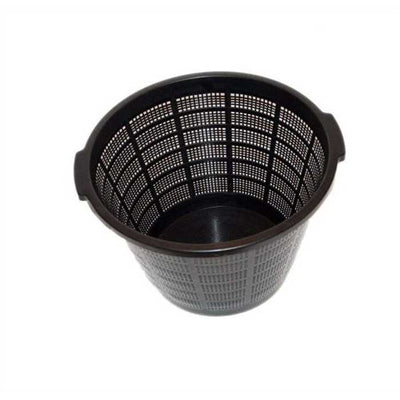
| Round basket Ø40 x 28 cm | Enough volume for the rhizome of a water lily or lotus, reinforced structure. |
| Aquipond jute fabric 1 x 2 m | Holds the soil and lets the roots through. Biodegradable, it can be cut with scissors; 2 m² fills several baskets. |
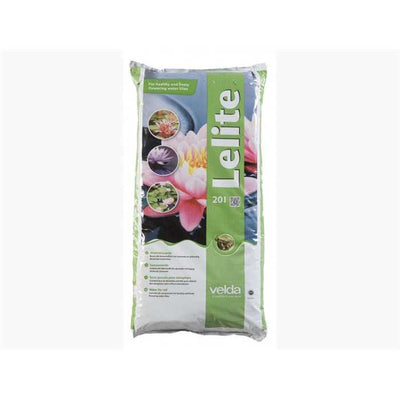
| Lelite 20 L potting soil | Special for water lilies: blue clay and low-marsh peat, aerated structure so the rhizome does not suffocate. Designed for a basket of about 30 x 30 x 25 cm. |
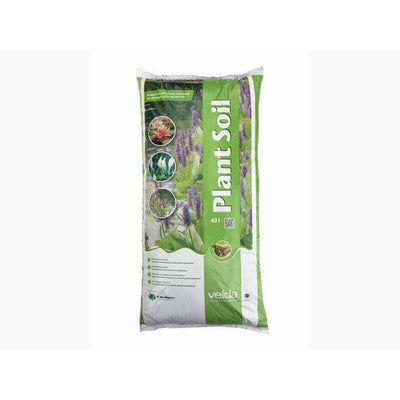
| Moerings 40 L potting soil | For other bank and submerged plants, enriched in trace elements. |
For water lilies and lotus

Jute fabric 1 x 2 m
Basket liner

Lelite 20 L potting soil
Special for water lilies
To avoid: garden soil or universal potting soil. Too rich in fertilizers and light organic matter, they rise to the surface and feed the algae.
When to plant
The best period is from April to June, when the water warms up and the water lily comes out of its winter rest. Planting in early summer is still possible with a well-developed potted plant. Avoid autumn: the plant does not have time to settle before winter.

Planting, step by step
- Line the basket with jute fabric, leaving it overhanging the edges.
- Fill two-thirds with water lily potting soil, slightly moistened.
- Place the rhizome flat or slightly tilted, the bud facing up, without burying it.
- Complete the soil around it, tamp it down, then fold back the fabric.
- Cover with 2 to 3 cm of washed gravel so that the fish do not dig.
- Water gently before submerging the basket, to expel the air.
The right depth
Lower the basket gradually: first shallowly, on bricks, so that the young leaves reach the surface, then to its final depth in a few weeks, removing one brick at a time. A white water lily in a 3 L pot is planted between 60 and 80 cm (up to 140 cm), a dwarf variety between 30 and 40 cm. Full sun is essential, flowering from June to September. Place it away from water jets and waterfalls: it does not like agitated water.
Clear water bonus: water lily leaves provide shade and slow down algae. Aim for about one-third of the surface covered by vegetation.
The mistakes that prevent flowering
- Planting too deep from the start: the young leaves do not reach the surface and the plant exhausts itself.
- Burying the bud under the soil: it rots instead of growing.
- Using a basket that is too small: the rhizome ends up cramped by the second year.
- Placing the water lily under a waterfall: it does not like turbulence.
- Forgetting the sun: in the shade of a tree, it makes leaves but no flowers.
Maintain and divide
During the season, remove yellowed leaves and faded flowers by cutting the stem as close to the basket as possible: they will not rot at the bottom. If the water lily produces many overlapping leaves that stand out of the water, but few flowers, it lacks space: every three to four years, take the basket out in spring, cut the rhizome into pieces each bearing one or two buds, and replant the best ones in new potting soil. You get new plants for free to give away or install elsewhere.
Feeding an established water lily
A water lily planted in suitable potting soil needs nothing in the first year. From the second season, if the flowering weakens, you can push special slow-release aquatic plant fertilizer tablets into the basket soil in spring. They feed the roots without dissolving in the water, unlike classic fertilizers which would mostly benefit the algae. Respect the doses: an excess of fertilizer always ends up turning the pond green.
And in winter?
Hardy water lilies like the white water lily spend the winter without protection, provided that the rhizome remains under the layer of ice. Leave the basket at its usual depth and simply remove the dead foliage in autumn.
Associate other plants
The water lily gives its best in a well-planted pond. Add submerged oxygenating plants, which consume nutrients underwater, and bank plants like irises or rushes, which filter the edges. For these plants, Moerings potting soil and smaller baskets are enough. Together, they form a natural filter that complements mechanical filtration.
And for a pond without a planting zone?
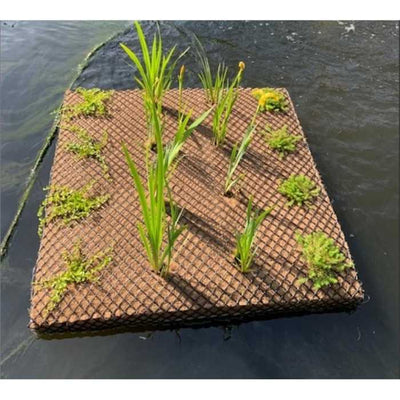
A 1 x 1 m floating island accommodates 25 plants in 9 cm pots (to be provided). Their roots dip directly into the water and consume nitrates, ideal for smooth liner ponds or koi ponds, which often pull up plants in baskets.
Frequently asked questions
My water lily has leaves but no flowers. Why?
Three main causes: not enough sun (it needs at least 5 to 6 hours a day), a basket that is too small or exhausted, or an unsuitable depth. Repotting in spring in new potting soil often solves the problem.
Do koi eat water lilies?
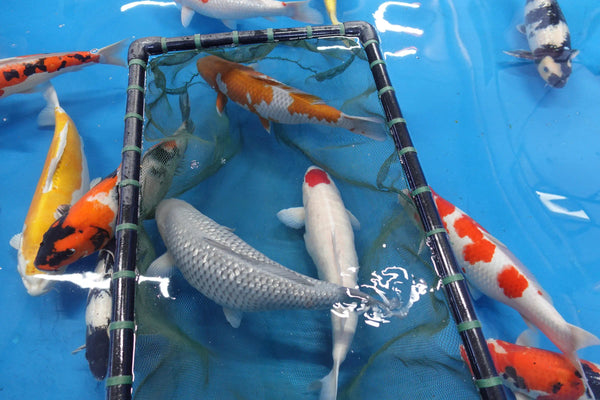
They readily nibble on young leaves and dig in the baskets. A good layer of large gravel and a solid basket limit the damage.
Can you plant a water lily in a small preformed pond?
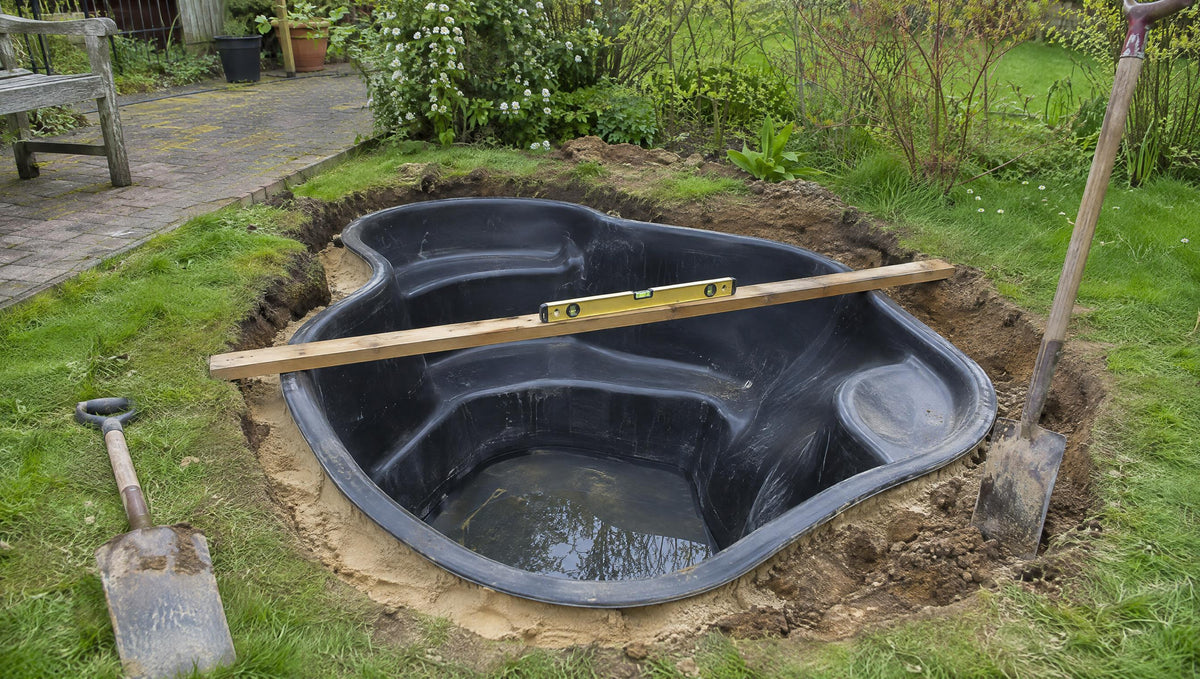
Yes, provided you choose a dwarf variety, which is satisfied with 30 to 40 cm of water. A smaller basket is enough, with the same method: jute fabric, special potting soil, rhizome flat and a layer of gravel. Place it in the sunniest area of the pond, away from the pump and the water return.
A question about your planting? Write to support@aquiflor.com or visit the Nodebais store.