

In short: a new pond is not ready the day it is filled. You need to stabilize the minerals (GH and KH), seed the filter with bacteria, and check the nitrites before introducing the fish, gradually. Allow two to three weeks when the water exceeds 10 °C. This guide details each step, with the target values, the doses, and the mistakes that cost beginners and renovated ponds dearly.
Why we don't add the fish right away
In an established pond, the fish waste is continuously transformed by bacteria settled in the filter and on all surfaces. Ammonia, which is highly toxic, becomes nitrites, also toxic, then nitrates, which are well tolerated and consumed by plants. This is the nitrogen cycle. In a new pond, these bacteria do not yet exist. If fish are added too early, ammonia and then nitrites rise in a few days: this is the "new pond syndrome", responsible for many losses in the first spring.

Step 1: fill and let run
Fill with tap or rainwater, then start the pump and the filter. Let it run for 24 to 48 hours. Rainwater is soft: it lacks minerals, which makes the pH unstable. Tap water is often harder, but it can contain chlorine that evaporates after a few days of circulation. In both cases, measure before correcting. Take advantage of this time to check the watertightness, the connections, and the water level.
Step 2: measure
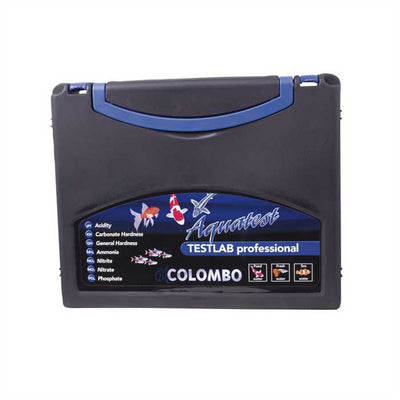
The Colombo Test Lab test kit measures the 7 main values: pH, GH, KH, nitrites, nitrates, ammonia, and phosphates, using liquid tests. Note your results: they will serve as a reference throughout the season.
| Value | Recommended range |
|---|---|
| GH (total hardness) | At least 12 °dH, always above the KH |
| KH (carbonate hardness) | At least 7 °dH: it stabilizes the pH |
| pH | Stable, between 7 and 8.5 |
| Nitrites (NO2) | Close to zero before adding fish |
Step 3: raise GH and KH if needed
GH measures minerals such as calcium and magnesium, essential for fish, plants, and bacteria. KH measures carbonates that act as a buffer: without them, the pH can drop sharply overnight.
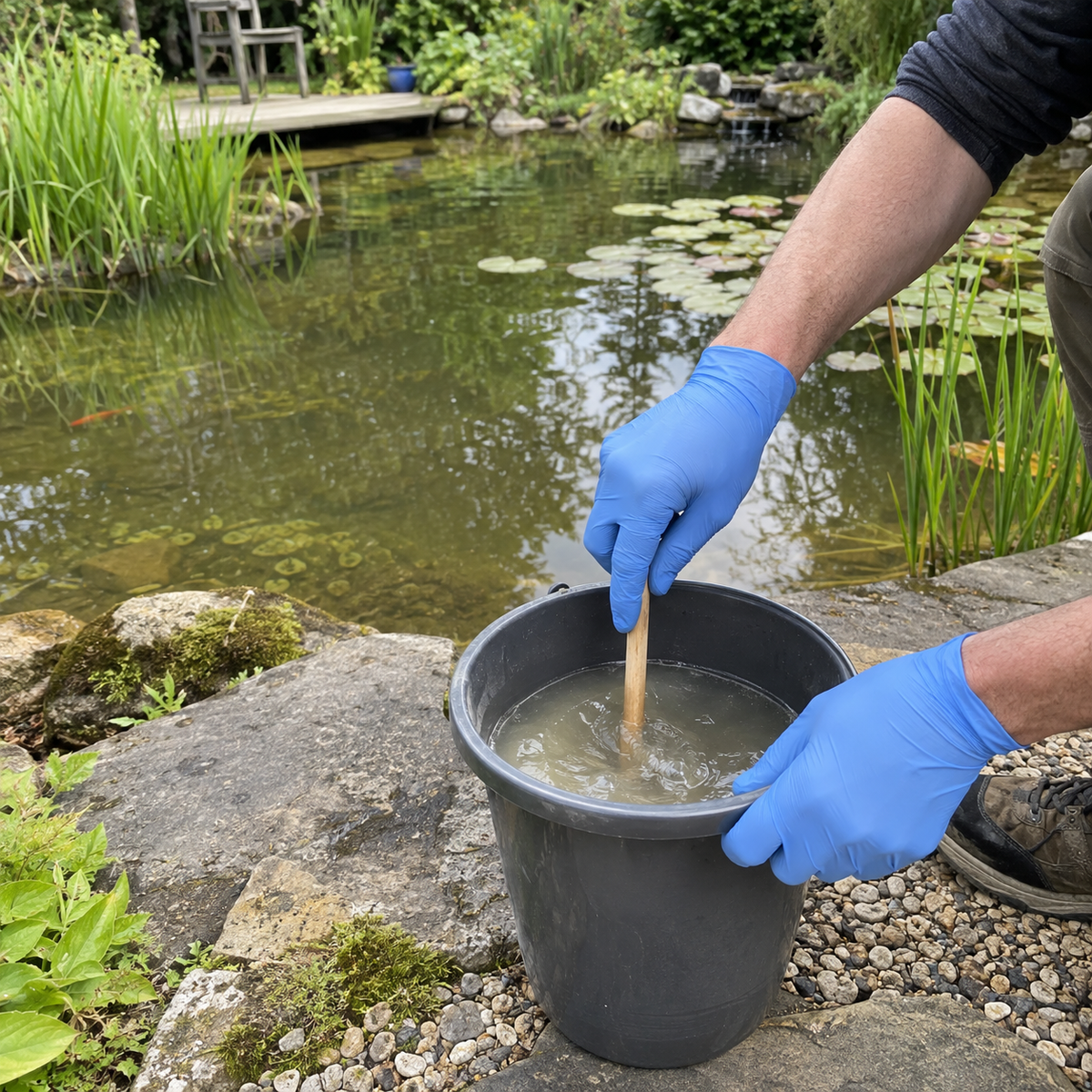
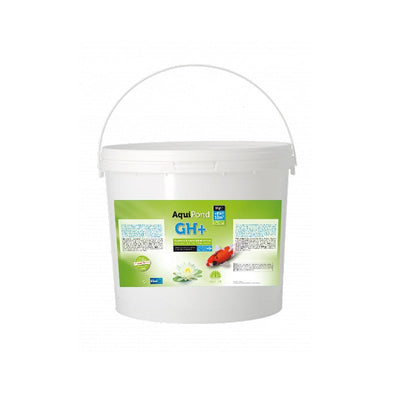
- Aquipond GH+: 25 g (one scoop) per m³ raises the GH by about 1 to 2 degrees. Wait at least 24 hours between two additions. It also supports biological filtration and causes a portion of the phosphates to precipitate.
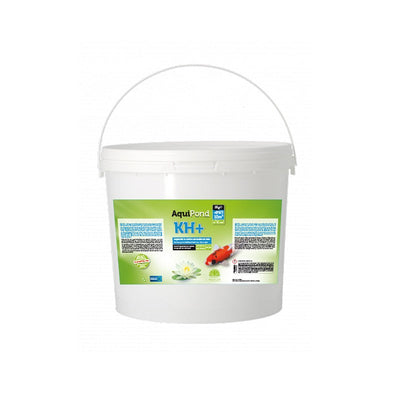
- Aquipond KH+: we use 2 scoops per m³ to gain about 2 degrees in 24 hours.
- For a small pond, the GH+ 1 kg and KH+ 1 kg formats are sufficient.
Example: a 12 m³ pond filled with rainwater shows GH 4 and KH 3. To reach GH 12, you need to gain about 8 degrees: we proceed in several additions of 300 g (25 g × 12 m³), one per day, measuring between each. We do the same for KH up to 7. It is better to increase over four or five days than all at once.


Step 4: seed the filter
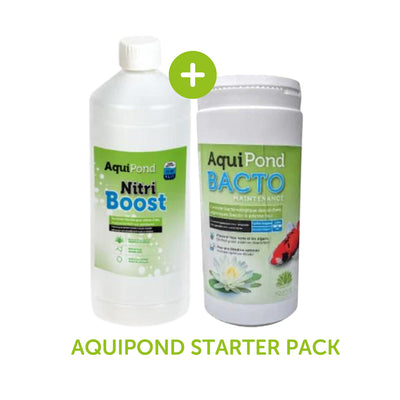
The filter bacteria transform ammonia and nitrites, which are toxic to fish. In a new filter, they are absent and take weeks to establish on their own. Aquipond NitriBoost provides liquid nitrifying bacteria: 1 liter per 10 m³, in water above 10 °C, with the UV turned off during treatment so as not to destroy them. For large ponds: 2.5 L or 5 L. The Aquipond Starter Pack brings together everything needed to start.

Step 5: introduce the fish gradually
- Wait until the nitrites have dropped close to zero.
- Start with a few fish, then complete in stages, every two or three weeks.
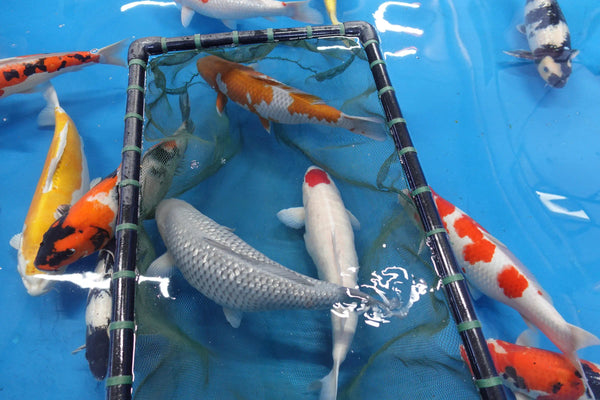
- Let the bag float for 20 to 30 minutes to equalize the temperature before releasing.
- Do not pour the water from the bag into the pond: take the fish with the net.
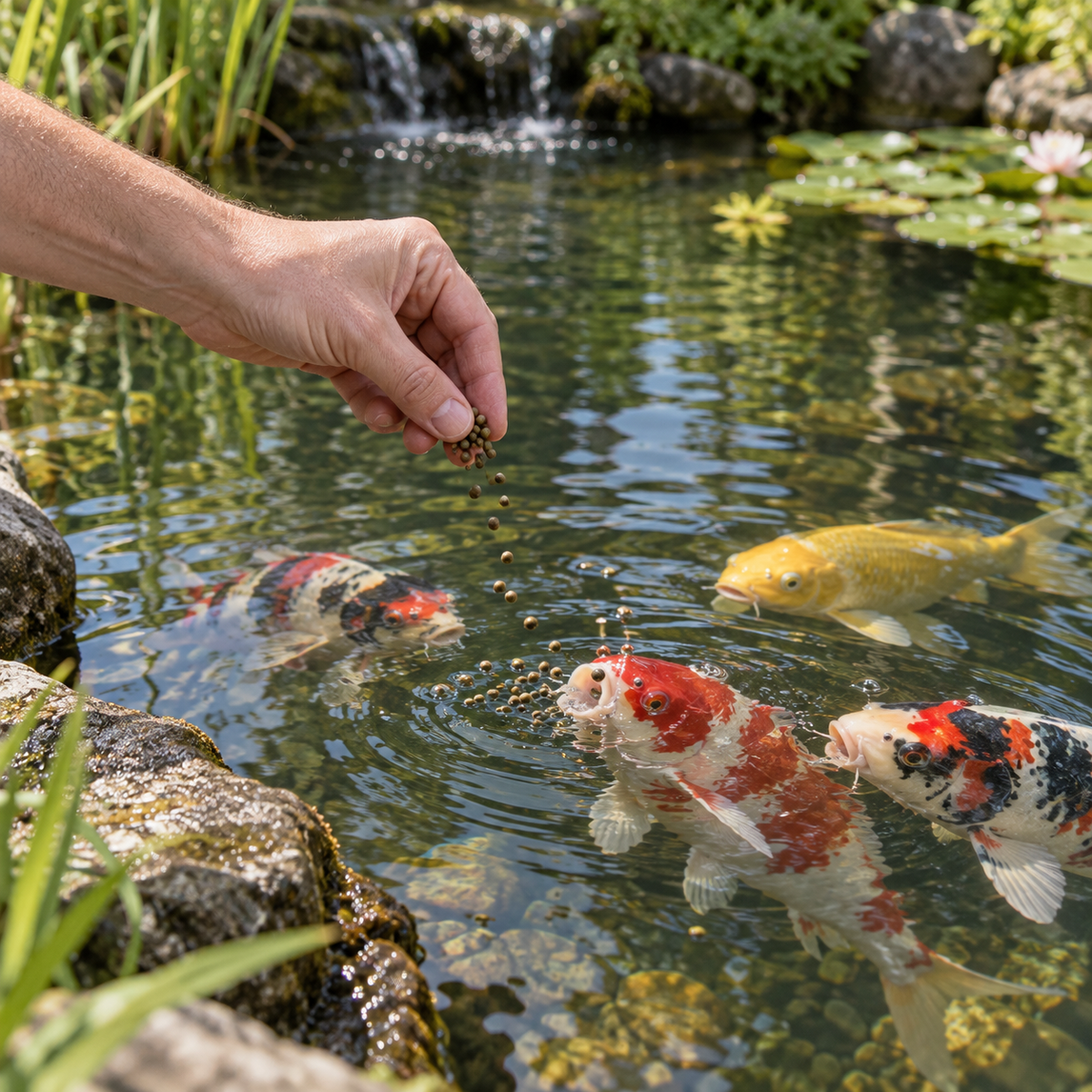
- Feed little the first week: a young filter saturates quickly.
Warning signs: fish gasping for air at the surface, clamped fins, motionless fish at the bottom. Measure ammonia and nitrites immediately, change 10 to 20% of the water and stop feeding for 48 hours.
The typical calendar of a new pond
- Day 1: filling, starting the pump and the filter.
- Day 2-3: first measurements, correction of GH and KH in several additions.
- Day 4: seeding the filter with NitriBoost, UV off. Planting the first plants.
- Week 2: measuring nitrites. If they remain close to zero, introduction of the first fish.
- Week 3-4: turning on the UV, new measurements, gradual addition of other fish.
- Month 2: the filter is mature. You can complete the population, always in small steps.
The most frequent mistakes
- Putting everything in the first weekend: fish, plants, decor, all at the same time. The filter cannot keep up.
- Cleaning the filter with a tap hose during the first weeks: we eliminate the bacteria that have barely settled.
- Turning on the UV from the start: it destroys a portion of the added bacteria.
- Forgetting the plants: they consume nitrates and compete with algae from the start.
- Filling in the middle of winter: below 10 °C, bacteria settle very slowly. Wait for spring to introduce the fish.
Plants, allies of the start
Oxygenating plants, bank plants, and water lilies consume nitrates and phosphates from the first weeks. They provide shade, shelter the fish, and limit the green water of the start. Plant them in baskets filled with burlap and special pond soil, never with garden soil. A good rule is to cover about a third of the surface with vegetation.
Renovated or emptied pond: same method
After a complete drainage, a liner change, or a new filter, your pond starts almost from scratch. Keep a part of the old water and the unwashed filter sponges if possible, then follow the same steps: measure, minerals, bacteria, gradual return of the fish.
The workshop's advice: measure again after heavy rains. They lower the GH and KH in a few days, and that is often where the water turns green or the fish hide.
The shopping list for a new pond
- A test kit to monitor the water throughout the setup.
- GH+ and KH+ minerals if your water is soft or if you fill with rainwater.
- Nitrifying bacteria adapted to the volume of the pond.
- Plants, baskets, burlap, and special pond soil.
- A net to transfer the fish without pouring the water from the bag.
Frequently asked questions
How many fish to start with?
For a 10 m³ pond, three to five goldfish are enough for the first weeks. Then complete gradually, monitoring nitrites after each arrival.
Is green water at the start serious?
No, it is common: algae take advantage of the nutrients before bacteria and plants. It generally disappears when the filter is mature. The UV can be turned on one to two weeks after seeding.
Can you use well water?
Yes, after analysis. Well water can be rich in iron, nitrates, or very hard depending on the regions. Measure it before filling, and let it circulate for a few days so it can oxygenate.
With these elements, your pond starts on good foundations and you avoid most of the problems of the first season. You can also bring a water sample to the Nodebais store: we analyze it and give you the exact doses. Or write to us at support@aquiflor.com.