
The short answer: good pond lighting highlights a specific feature, such as a waterfall, water jet, tree, or fish, rather than flooding the entire garden with light. Use IP68 waterproof low-voltage LED spotlights in warm white (around 2,700 to 3,000 K), aimed at the subject and hidden from view. Oase’s LunAqua Power LED, for example, provides 580 lumens at 5.8 W and 24 V. The transformer remains out of the water, connected to a socket protected by an RCD.
Key points
- Light up a feature, not the entire pond.
- Warm white for a soft, natural atmosphere.
- Low voltage (12 or 24 V) and IP68 for submerged spotlights.
- An underwater spotlight shines better in clear water.
- Plan your cable lengths and extensions before you start.
Why light up a pond?
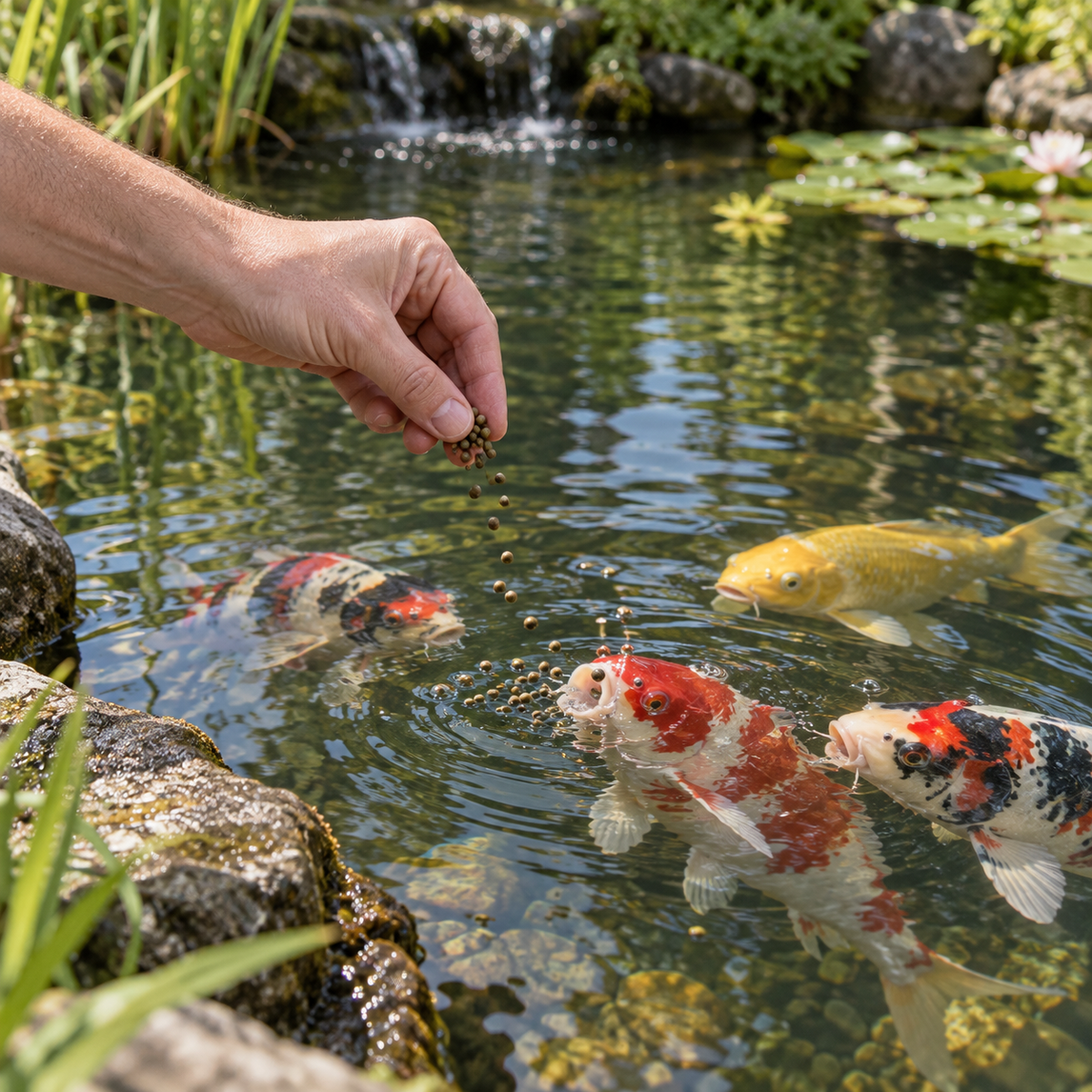
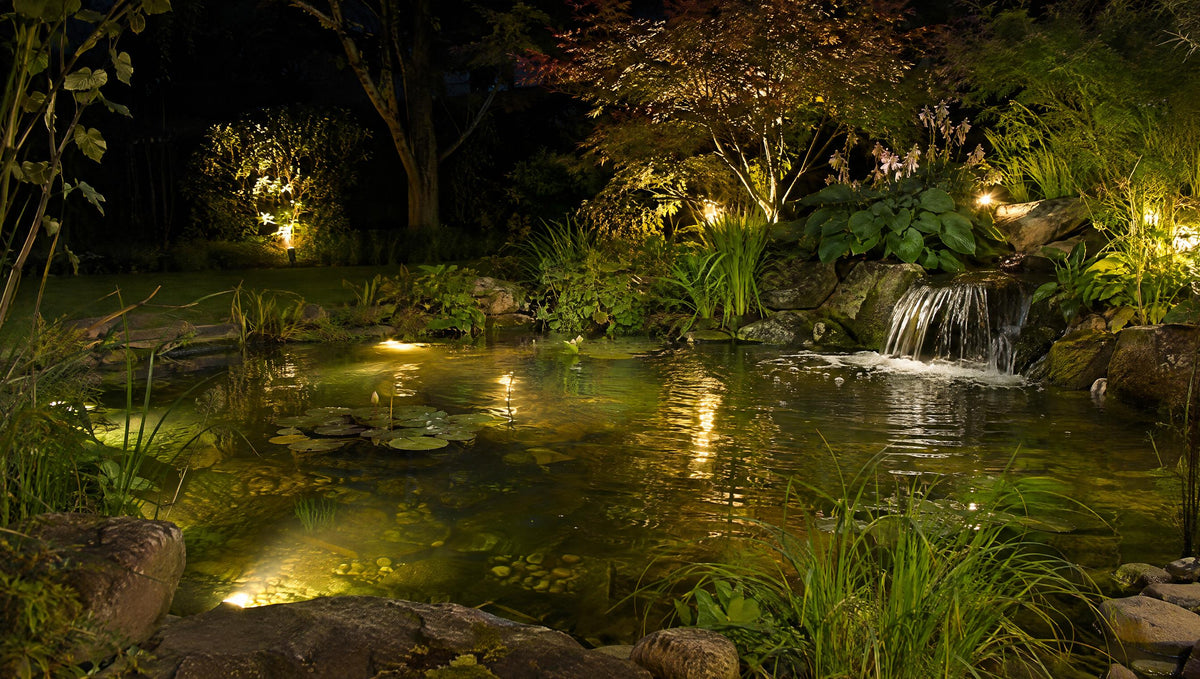
In the evening, an unlit pond disappears into the darkness. A few well-placed spotlights transform it into a feature: the waterfall sparkles, the water jet becomes a luminous sculpture, foliage stands out against the sky, and koi appear as they pass through the beam. Lighting also extends the use of the patio in the evening and makes the area around the pond safer. With today’s LEDs, all this uses very little power.
Where to place the spotlights?
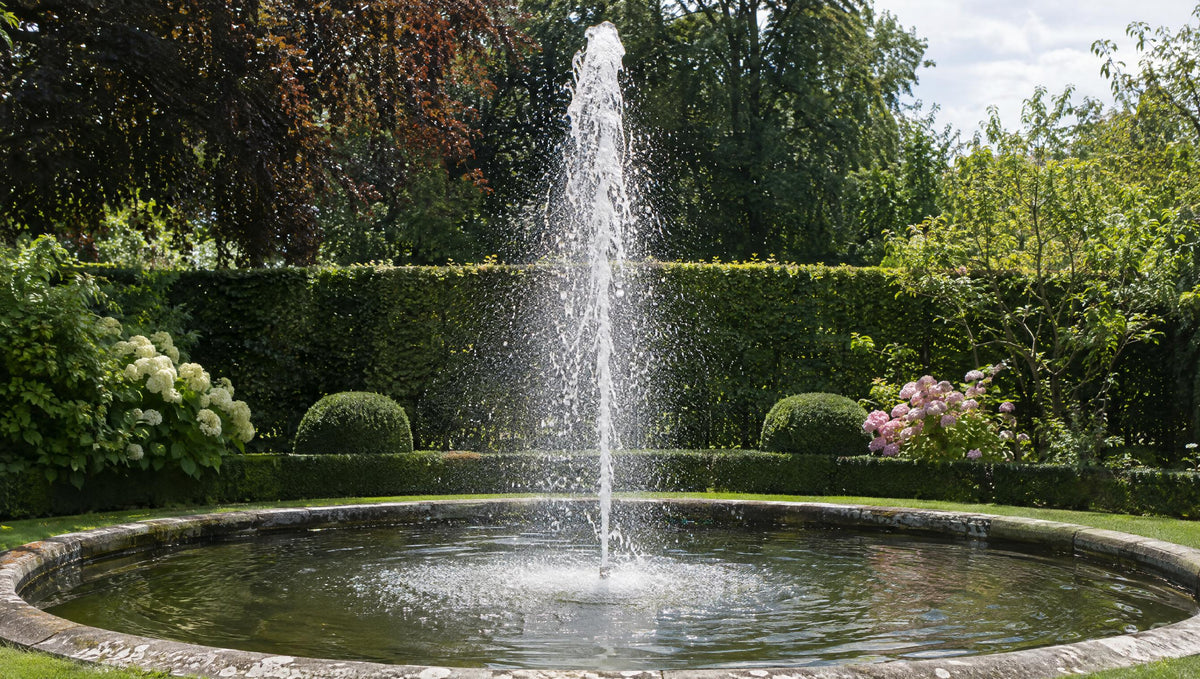
- Under a water jet or fountain: an underwater spotlight aimed upwards makes every drop shine. This is the most spectacular effect.
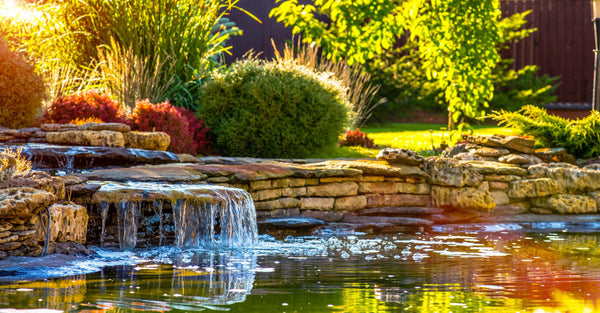
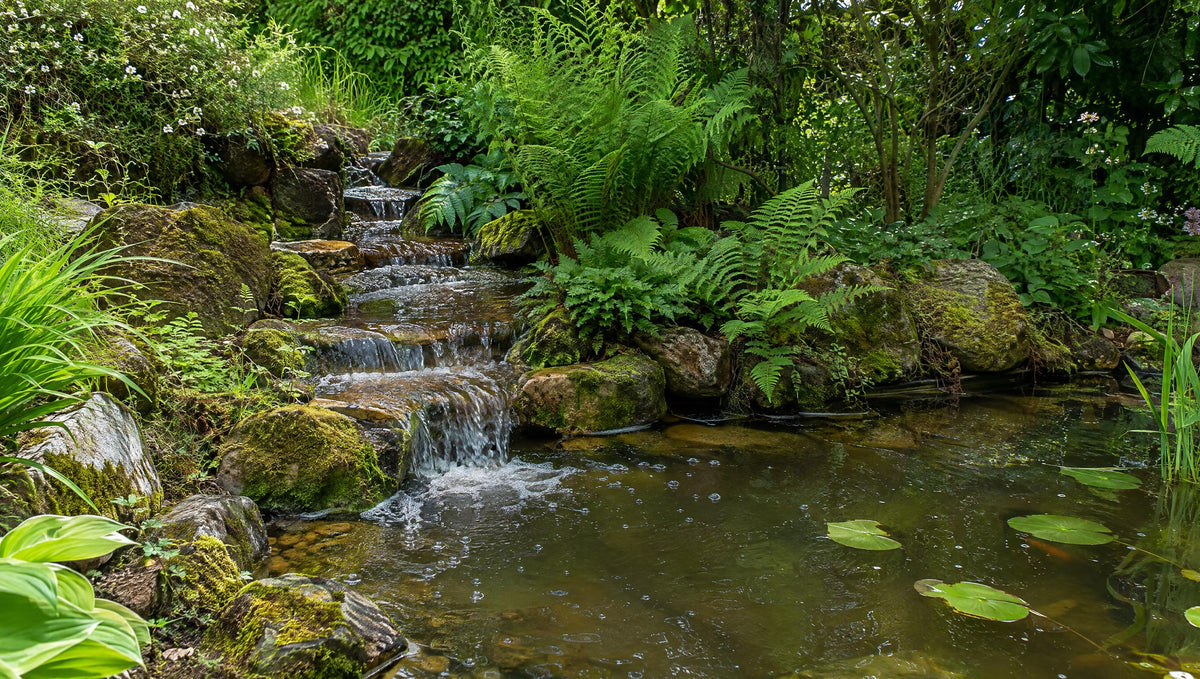
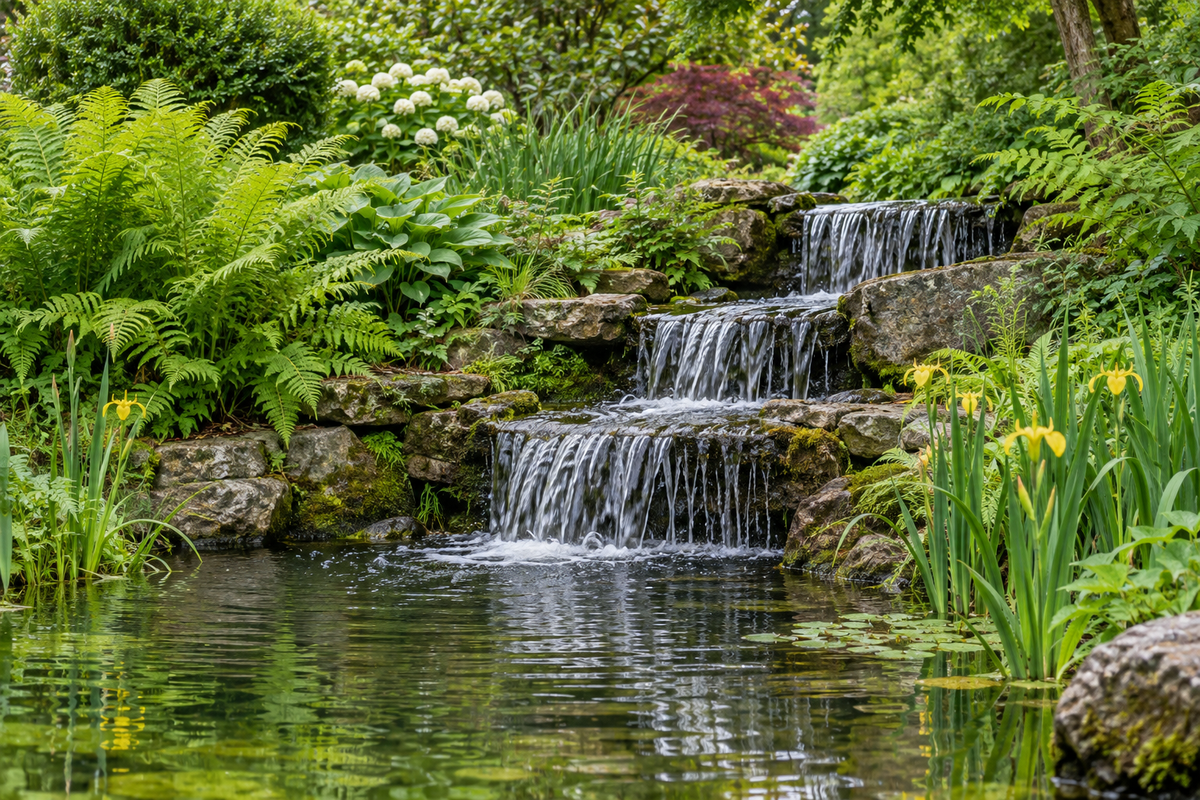
- At the foot of a waterfall: from the bank or underwater, skimming the falling water to make it sparkle.
- Underwater, towards the centre of the pond: to see the fish in the evening in clear water. Aim the spotlight so that it does not dazzle you from the patio.
- On bank plants and trees: a ground spotlight aimed at foliage creates the silhouette of the garden and reflects in the water.
- Along paths and borders: discreet, ground-level lighting makes the area safer without dazzling.
The golden rule: you should see the effect, not the lamp. Hide the spotlights behind a stone, a plant, or beneath the surface, and test each position at night before fixing it permanently.
Which spotlights to choose?
| LunAqua Power LED Set 3 | LunAqua Terra LED Set 6 | |
|---|---|---|
| Use | Powerful highlighting: jet, waterfall, tree | Ground or pond-recessed lighting |
| Lamps | 3 spotlights (expandable to 4) | 6 recessed spotlights |
| Power per lamp | 5.8 W, 580 lm | 0.25 W, 14 lm |
| Colour | Warm white 2,700 K | Warm white 3,000 K |
| Voltage | 24 V DC | 12 V |
| Underwater | IP68, up to 4 m | IP68 lamps, IP44 connection |
| Features | Wi-Fi control with InScenio FM-Master | Drive-over up to 3 t (if installed correctly) |
Specifications: Oase data sheets.
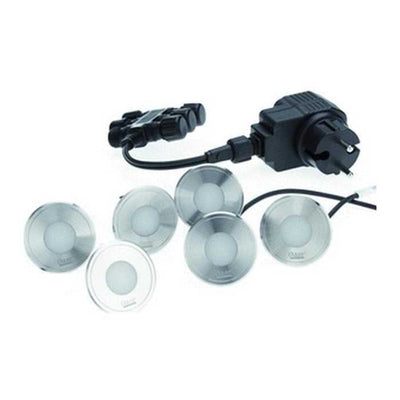
The LunAqua Power LED Set 3 is our favourite for highlighting features: each compact spotlight provides 580 lumens for just 5.8 W, which Oase says is comparable to the light from a 50 W bulb. It operates at 24 V DC, with an IP68 rating for the spotlight, driver, and cable up to 4 m deep, and a stated lifespan of over 36,000 hours. The kit includes three lamps, each with a 5 m cable, three stakes, and a driver that can accept a fourth lamp. The LunAqua Terra LED Set 6 offers six small stainless steel spotlights to be recessed into a 40 mm hole, for gentle lighting above or below the water.


What colour light should you choose?
For a garden, warm white between 2,700 and 3,000 K creates the most natural atmosphere: it warms up stones and foliage, like the end of the day. Cool white, which is more bluish, suits a very contemporary setting but can quickly make the whole thing look clinical. Colour lights should be used sparingly, for a water jet or a special evening: a colour disc kit is available for LunAqua 3 and LunAqua Solar spotlights.
How to install the lighting safely?
- Make a plan: the location of each spotlight, the transformer and the socket, and the cable lengths.
- Place the transformer out of the water, in a sheltered place, connected to an outdoor socket protected by a 30 mA RCD.
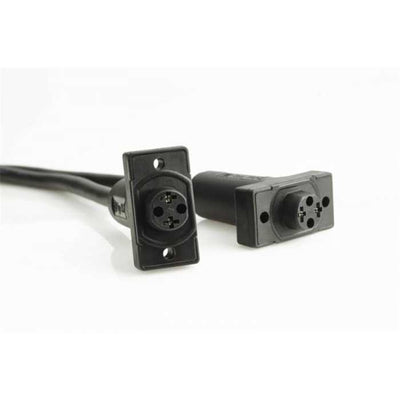
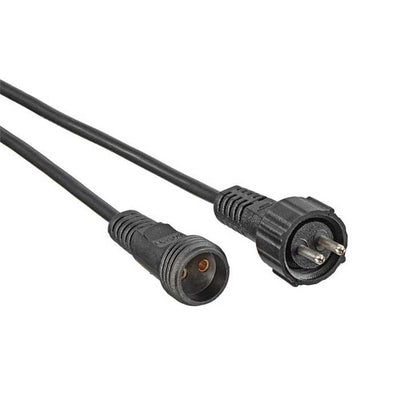
- Plan your extensions: for the LunAqua Power LED, a 10 m extension is placed between the lamp and the driver, with up to four per line. For the Terra LED, a 10 m extension is also available.
- Run the cables under mulch, under stones, or in a conduit, out of reach of the lawnmower.
- Test at night before fixing the spotlights permanently, and adjust their direction.
- Set a timer or remote control so you do not forget to turn it off.
Swimming ponds: Oase specifies that due to regulations, the LunAqua Power LED driver must not be submerged in a swimming pond, even though the 24 V spotlights can be used there. Always follow the instructions in the manual and current electrical regulations, and call an electrician for any new outdoor electrical line.
The workshop's advice: start with little light. Two or three well-placed spotlights often have more effect than ten. Then add one spotlight at a time, looking at the result from where you enjoy the garden in the evening, the patio, or the living room.
An example of a lighting plan
Let's take a medium-sized garden pond, with a small waterfall at the back and a water jet in the centre, viewed from the patio. A first LunAqua Power LED spotlight is placed underwater, just under the jet, aimed upwards. A second lights up the waterfall from the bank, hidden behind a stone, skimming the falling water. The third, planted in the ground with its stake, illuminates a maple tree whose silhouette is reflected in the water. Finally, a few recessed Terra LED spotlights mark the path between the patio and the pond. The whole thing is connected to a driver placed in an outdoor box, on a protected socket, and programmed to turn off at the end of the evening.
Light and fish: a few precautions
Fish need an alternation of day and night. Do not light up the pond all night: a few hours in the evening are enough, then turn it off. Avoid permanently aiming a powerful spotlight at an area where fish like to rest, and keep some corners in the shade. Underwater lighting that is too intense can also attract nocturnal insects and disturb the garden wildlife: keep it moderate.
Lighting maintenance
- Clean the glass of submerged spotlights in spring and summer: a build-up of algae or limescale absorbs a good part of the light.
- Check the cables and connections every season.
- Reposition the spotlights when the plants have grown.
Frequently asked questions
How much power does a LunAqua Power LED spotlight use?
5.8 W per lamp for 580 lumens, according to Oase, which is comparable to the light from a 50 W bulb.
Can the spotlights be submerged?
Yes for the IP68 models: the LunAqua Power LED can be used underwater up to 4 m deep. The transformer, however, remains out of the water.
What colour light should you choose?
A warm white, between 2,700 and 3,000 K, for a natural atmosphere. Colours are reserved for occasional effects.
Does the lighting bother the fish?
Not if it remains moderate and limited to a few hours in the evening. Keep shaded areas and turn it off at night.
Written by the Aquiflor team, a specialist pond and garden pond shop in Nodebais (Belgium), an official Oase repair workshop. Updated in November 2026. Specifications: Oase manufacturer data sheets.
Do you want a lighting plan for your pond? Send us a daytime photo, the location of the socket, and what you want to highlight to support@aquiflor.com or call 010 86 03 54: we will help you count the spotlights and extensions.