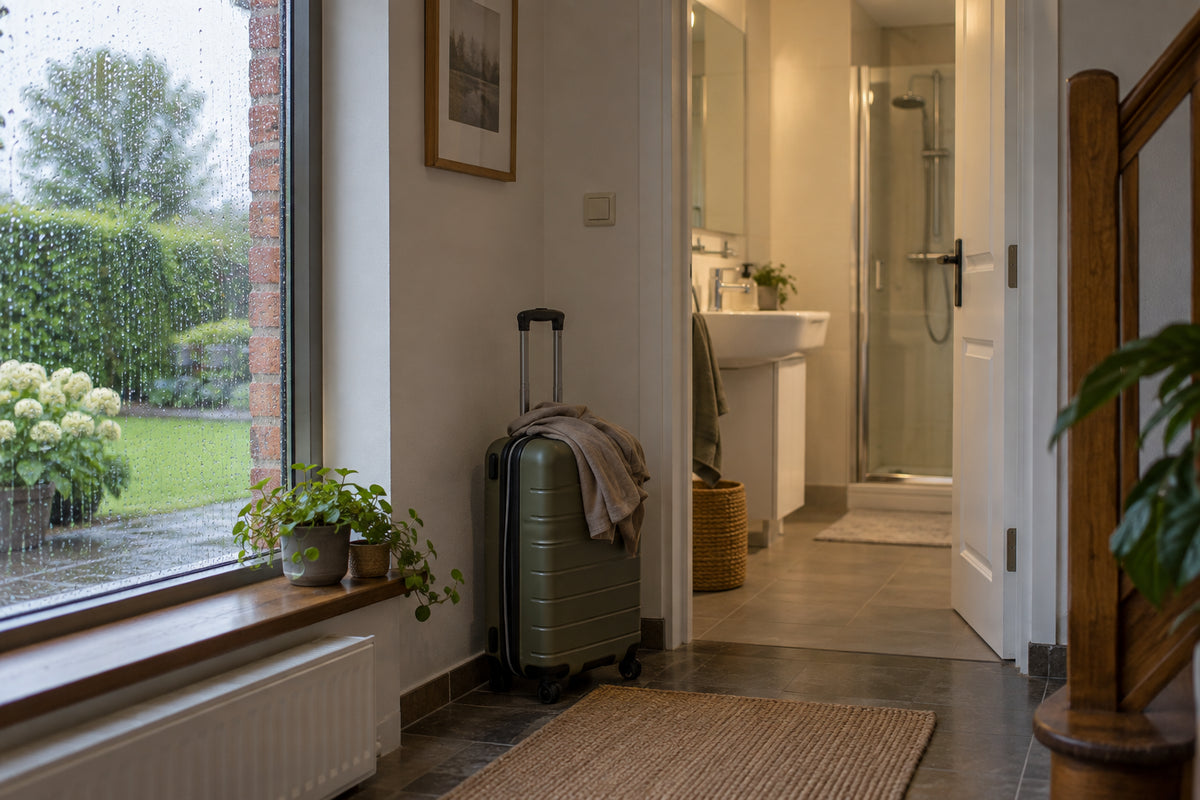
The house smelled like nothing before leaving. Upon returning, a sewage odor seems to come from the bathroom. In another dwelling, the problem appears mainly in rainy weather. These two situations have one thing in common: the timing of the appearance is a clue, but is not enough to identify the cause.
After an absence, little-used drains are the first to examine. When the weather seems to play a role, you must note what actually changes: flow, noises, the room affected, or if the odor is also present outside. This approach avoids automatically blaming the septic tank, the rain, or a missing cleaning product.

After an absence, think about unused appliances
A standard siphon trap holds a water seal that separates the air in the home from that of the network. When the appliance is no longer used, this water can evaporate. Buildwise reminds us that devices rarely used are more exposed to a reduction in their water seal.
Start with the guest shower, the attic sink, the laundry room, and the floor drains. The main sink is not necessarily responsible just because it is in the room where you notice the odor. A draft can move a nuisance and complicate its localization.
In a vacation home, keep a permanent list of these points. It will be useful each time you reopen the property and will prevent you from forgetting a small siphon hidden behind a piece of furniture. If a drain has been abandoned after renovation work, ask a plumber how it should be connected or capped.
Restoring water flow provides useful information
If the odor is moderate, no other symptoms are present, and the drains are working, gradually put the little-used appliances back into service with clear water. Do not perform this test if an unknown drain cleaner is stagnant in the pipe, or if water is backing up.
Note the points addressed and observe the result. A lasting disappearance after restoring water supports the hypothesis of a dried-out siphon, without in itself constituting a complete check of the plumbing. A quick return calls for another verification: a leak, a poorly positioned siphon part, or pressure variation.
Avoid pouring a fragrance or deodorizer at the same time. You would lose the ability to distinguish the effect of restoring water from that of olfactory masking. The goal of this first step is also to gather actionable observations.
Why the odor may return upon first use
You have filled the siphons, but the odor returns after a flush or a machine drain? Note this sequence precisely. The operation of another appliance may reveal a weakness in the drainage network or its ventilation. A repeated gurgling sound, associated with a visible variation in the water level, deserves to be reported.
Pipe ventilation is not the same as bathroom air extraction. Running a fan more does not necessarily correct the operation of a siphon. The installer must examine the pipes, their configuration, and the devices intended to manage pressure variations.
Do not remove a siphon part to facilitate flow and do not block a vent to prevent an odor from escaping. These modifications may displace the problem. Instead, keep a description of the usage patterns that trigger it.
When rain seems to trigger odors
Start by distinguishing between two phenomena: an odor perceptible without a change in flow, and a sewage backup. The latter requires rapid intervention. Limit water discharge, keep people away from the contaminated areas, and contact the appropriate professional or manager.
Heavy rains can strain certain networks that also receive rainwater. This does not mean that every odor during wet weather comes from a saturated public sewer. The type of network, the connections, and the state of the local installation must be checked.
In an apartment building, note the date and ask the manager if other occupants have noticed the same thing. In a house, specify if the lowest points react first. Do not open manholes to observe rising water and do not try to modify a rainwater connection yourself.
Wind, heat, or atmospheric pressure: keep the facts
It is tempting to summarize the problem as "it smells when the weather changes." To prepare for a diagnosis, this phrase is too broad. Instead, note whether the odor is present outside, near an open window, or only at a sanitary appliance.
A link with the wind can guide the inspection of outlets and air circulation, but it does not prove that a roof vent is poorly placed. This check must be carried out by a professional, without improvised work at heights.
Similarly, a hot day may coincide with a long period without using the shower. Distinguish between the circumstances before attributing the phenomenon to atmospheric pressure. A log of several episodes is more reliable than an explanation chosen from a single return from vacation.
A very simple observation log
| To note | Example of useful phrasing |
|---|---|
| Date and time | Odor noticed upon return, before any use of water |
| Location | Ground floor shower; kitchen not affected |
| Flow | Normal, slow, or accompanied by a backup |
| Circumstances | Three-week absence, rain during the day |
| Action and result | Siphon refilled; result to be checked during subsequent uses |
This is a note-taking template, not a real case or proof of causality. Add recent work, products poured, and photos of accessible connections. If you contact a company, send this record before their arrival.
Is Bactodeur useful when returning from vacation?
A dry siphon first needs to regain its function. Adding bacteria does not replace this refilling or a repair. Aquipond Bactodeur can be considered in a different context: the maintenance of organic deposits, when the network is working and the installation instructions authorize this use.

Follow the label of the product received. Do not double a dose to "catch up" on weeks of absence and do not combine several treatments. In an individual sewage treatment unit, apply the manufacturer’s restart instructions and contact the maintenance provider in case of an alarm. A biological treatment should not be used to ignore a malfunction.
To check the suitability of Bactodeur, consult the Aquishop product page or write to Aquiflor, specifying the duration of the absence and the type of sanitation system.
Preparing for the next absence
Before leaving, remove waste from accessible baskets and check that the siphons are properly reassembled. For a long vacancy, ask the manufacturer or installer for the appropriate measures. Do not pour oil into the drains to create an improvised seal and do not shut down sewage equipment without instructions.
Finally, if a strong odor is accompanied by symptoms or suggests a gas leak, leave the premises and call for help from outside. The vacation schedule and the weather then become secondary: safety comes first.
Sources and references
- Buildwise, siphon water seals and pressure variations.
- Southern Water, effects of heavy rain on certain sewage networks; British context, without transposition of local rules.
- Geberit, maintenance of sanitary drains.
- Sibelga, gas odor: what to do.
- Aquipond, uses presented for Bactodeur.