
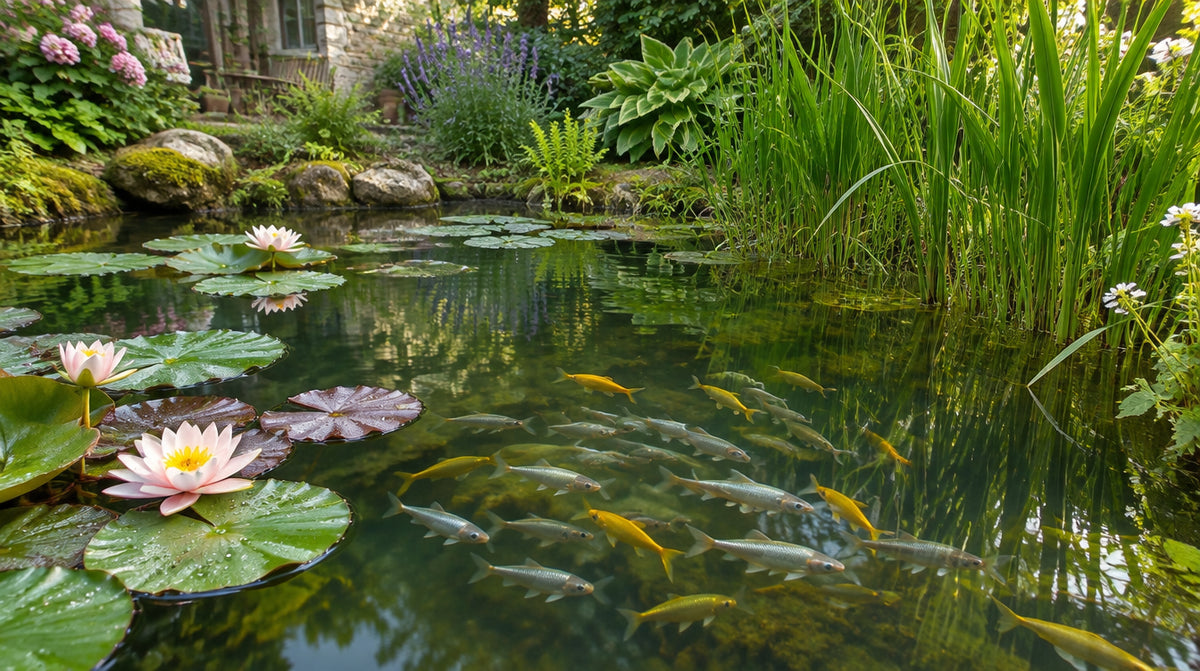
The short answer: for a small planted pond or pool, choose a school of Notropis chrosomus (the most colorful) or minnows (the hardiest). For a large pond or lake, the common rudd provides a larger school that swims near the surface. The sarasa, a goldfish relative, is suitable for almost any pond. In any case, buy them in a group: a schooling fish on its own is a stressed fish.
Key points
- Schooling fish should be kept in groups of at least 10; 20 or more is ideal.
- Notropis and minnows: small, colorful or hardy, perfect for a planted pond.
- Rudd: larger, for ponds and lakes of several cubic meters.
- All these species overwinter outdoors in a sufficiently deep pond.
- Prepare the pond before buying: test the filtration and water.
Why choose schooling fish for your pond?
Many pond owners start with a few goldfish or a handful of koi. That’s a great introduction, but a pond takes on a whole new dimension when a real school swims through it: twenty or thirty small fish swimming together, changing direction in a single movement and sparkling in the sun. It’s lively, it’s soothing, and it’s often the first thing visitors notice.
Schooling fish also have very practical advantages. They are small, so they place little demand on the filtration system. They do not root around the bottom or tear up plants like large koi can. They eat insect larvae, including mosquitoes. And most of the species we offer are hardy: they overwinter outdoors in our gardens.
Comparison: which schooling fish for which pond?
| Species | Size at sale | Key feature | Ideal pond |
|---|---|---|---|
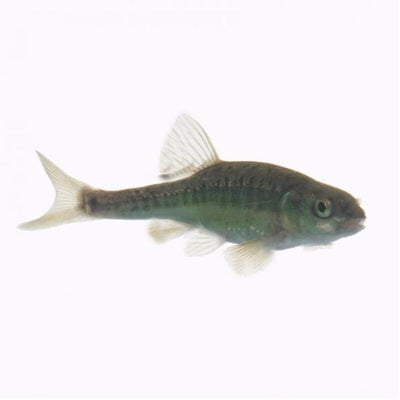
| Notropis chrosomus | 4 to 5 cm | Blue, pink, and red colors | Planted pond, pool, 5 m³ or more |
| Common minnow | 6 to 8 cm | Native, very hardy | Freshwater, flowing water, waterfall |
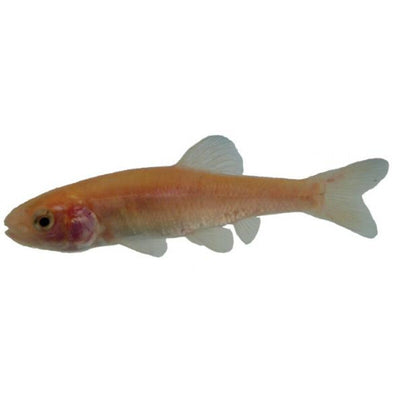
| Golden minnow | depending on arrival | Golden reflections, highly visible | Garden pond, pool |
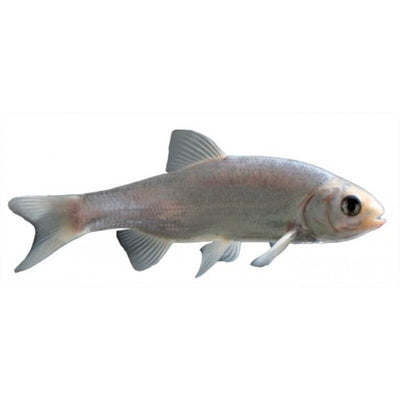
| Common rudd | depending on arrival | Large surface school | Large pond, lake |
| Sarasa | depending on arrival | Red and white, easy | Almost any pond |
Sizes: Aquishop product sheets. Available sizes vary depending on arrivals.
Notropis chrosomus: the most colorful
The Notropis chrosomus, or rainbow neon tetra, is the star of planted ponds. This small freshwater fish from North America shines with blue, pink, and silver reflections, and its males turn bright red and neon pink in spring. It grows to about 6 to 8 cm, should be kept in groups of at least 10, and overwinter outdoors in a pond of at least 5 m³. It is the best choice if you are looking for color without the demands of a large fish. We have dedicated a comprehensive guide to it.
The minnow: the hardiest
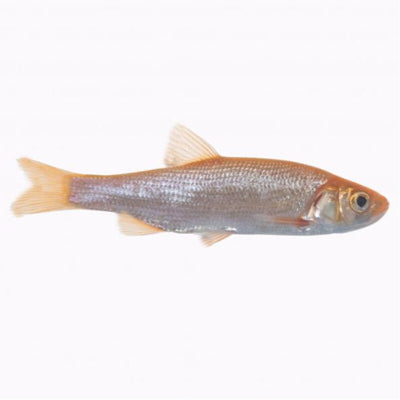
The common minnow (elrits in Dutch) is a native fish from our rivers. It likes cool, highly oxygenated water: it is the ideal companion for a pond with a waterfall or stream. Very resilient, it handles our winters without difficulty. In spring, the males develop a red throat and darker flanks. The golden minnow (Pimephales promelas) is another species, with golden reflections highly visible from the bank, appreciated in pools and small ponds.


The common rudd: the school for large ponds
The common rudd is available in a classic blue version and a golden version (goudwinde). It is a larger, faster, and more gregarious fish that swims near the surface and livens up a large pond. It needs space to swim and highly oxygenated water: reserve it for ponds of several cubic meters and lakes. With koi, it forms a very beautiful contrast: the koi at the bottom and mid-water, the school of rudd on the surface.
The sarasa: the easy classic
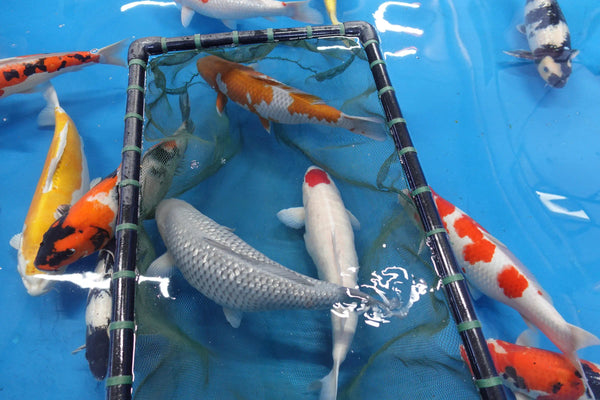
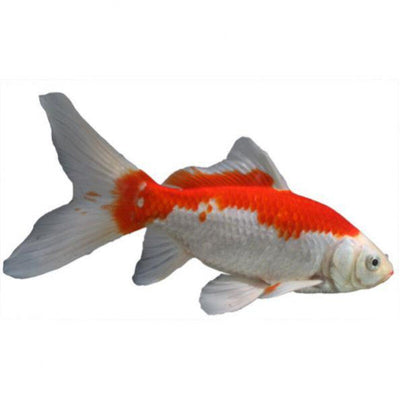
The sarasa is a variety of goldfish with a red and white coat. It is not a schooling fish in the strict sense, but it lives very well in groups and is suitable for almost any pond. It is hardy, low-maintenance, and overwinter outdoors. It is often the first fish in a family pond.
The workshop's advice: mix two species that swim at different heights, for example a school of Notropis at mid-water and a school of minnows near the current, or rudd on the surface above your koi. The entire volume of the pond is animated, and each school keeps its place.
Which species to combine, and which to avoid?
The species presented here are peaceful and coexist well with each other, with goldfish, sarasas, tench such as the Mongolian tench, and with snails and filter-feeding mussels. The fish to avoid are predators: perch, black bass, pike. They are very interesting in a large natural lake to regulate a population, but they will eat your small schooling fish. With large koi, plan a large and well-planted pond so that the smallest can find refuge.
How many fish to put in a pond?
There is no single rule, because everything depends on the filtration, the plants, and the size of the fish at maturity. Small schooling fish like Notropis and minnows place very little demand on the water: a school of 20 in a well-filtered pond of 5 to 10 m³ remains reasonable. Rudd and sarasas grow larger and require more volume. Always start with less than you imagine, let the pond balance itself, and add more the following season.
And in winter?
All these species overwinter outdoors in our regions, provided that the pond has a deep area that does not freeze to the bottom. They gather near the bottom, move little, and eat almost nothing. Keep an opening in the ice with an ice-free device such as the Oase IceFree Thermo 330 or a small air pump, and stop feeding when the water is cold. In spring, resume with food adapted to small fish like Aquifood Biotope or the Wheat-Germ range for still-cool waters.
How to buy live fish from Aquiflor?
Our live fish are delivered by our own delivery person, during a weekly tour around Nodebais, or can be picked up at the store. They are not shipped by courier. In winter, the tours depend on the water temperature: it is the right time to reserve your school and prepare your pond, so you can receive it as soon as conditions allow.
How to introduce a school into the pond?
A stressed schooling fish upon arrival will hide for several days, and a bad introduction can cost a few fish. The method is simple and takes half an hour:
- Let the sealed bag float on the surface of the pond, in the shade, for 15 to 20 minutes: the temperature of the water in the bag will match that of the pond.
- Open the bag and add a little pond water, in two or three stages, to accustom the fish to its composition.
- Release the fish with a net, without pouring the water from the bag into the pond.
- Do not feed on the first day: the fish must first explore and find their hiding places.
Introduce the entire school at once rather than a few fish per week: the newcomers reassure themselves in a group and the school forms immediately. The best time is from spring to early autumn, when the water has warmed up permanently.
The mistakes that make a school disappear
- Buying too few fish: a small group stays hidden and never forms a real school.
- Not providing any hiding places: without submerged plants or a deep area, the small fish are easy prey. Our guide to protecting your fish from herons details the hiding places that work.
- Mixing very small fish with large koi: a large koi can swallow a fish of a few centimeters.
- Overloading the filtration: a school of twenty fish is added to the fish already present. Check that the filter can handle it.
- Overfeeding: a schooling fish also finds its food in the pond. A few pinches are enough.
Frequently asked questions
What is the most colorful schooling fish for a pond?
The Notropis chrosomus, or rainbow neon tetra, with blue, pink, and silver reflections, and bright red males in spring.
How many schooling fish should you buy?
At least 10 per species. The schooling effect is much more beautiful from 20.
Do minnows overwinter outdoors?
Yes, the minnow is a very hardy native fish that overwinter in a sufficiently deep pond.
Can you mix Notropis and minnows?
Yes, they are two peaceful species that swim at slightly different heights and enliven the entire pond.
When to introduce schooling fish into a pond?
From spring to early autumn, when the water has warmed up permanently. Introduce the entire school at once, after 15 to 20 minutes of acclimating the sealed bag on the surface.
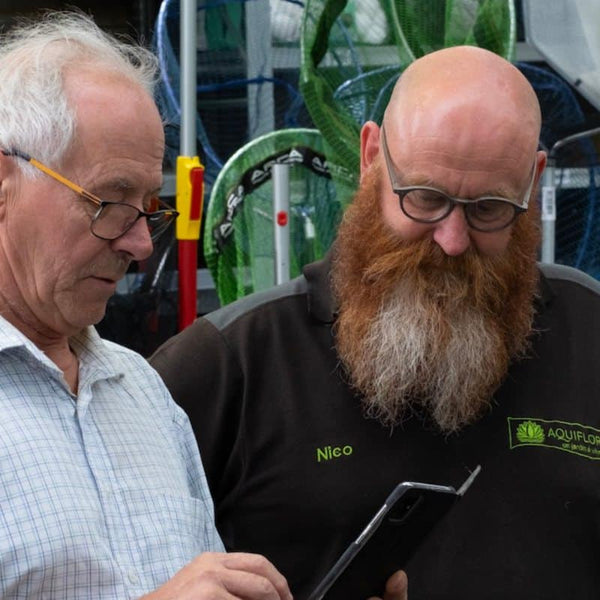
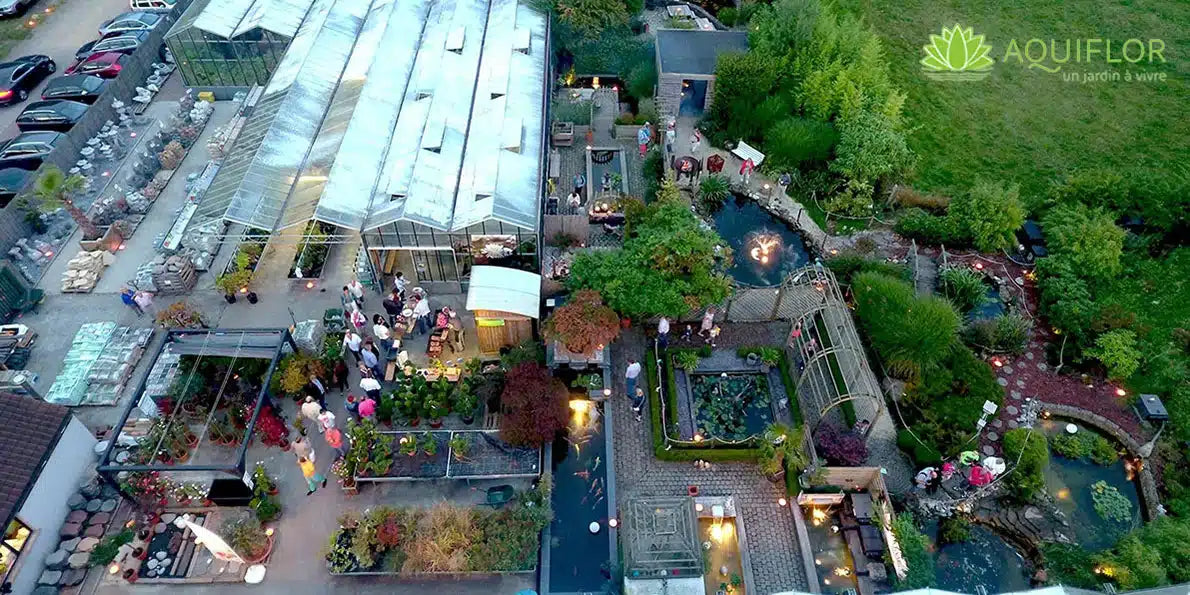
Written by the Aquiflor team, a store specializing in ponds and lakes in Nodebais (Belgium), an official Oase repair workshop. Updated in November 2026. Data: Aquishop product sheets.
Are you hesitating between several species? Send us the size of your pond, its depth, and the fish already present to support@aquiflor.com or call 010 86 03 54. All our fish: live lake fish.