
The short answer: choose a preformed pond if you want a small pond of around 1,500 litres or less, installed quickly, with pre-moulded shelves for plants. Choose an EPDM liner as soon as you want a larger, deeper pond for fish, or a freeform shape. For anything larger than a few square metres, a liner is almost always the best solution.
Key points
- Preformed: simple, quick, moulded shelves, but limited in size and depth.
- EPDM: any shape and size, custom depth, very durable.
- For koi or a school of fish that spend the winter outdoors, depth matters: EPDM is often the best choice.
- An above-ground or raised pond is a third option for a patio.
- In all cases, filtration and plants are key to a successful pond.
What is a preformed pond?
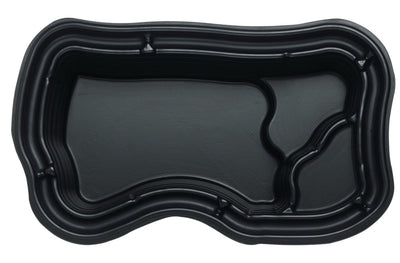
A preformed pond is a rigid shell made of polyethylene (PE or HDPE) or polyester, which is buried in a hole shaped to fit it. The depth zones are already moulded: a shelf for marginal plants, and a deeper area for submerged plants and fish. It is the simplest solution for a first small pond.
The Oase PE 1000 preformed pond, for example, holds 1,000 litres and measures 240 × 140 cm with a depth of 62 cm. Its 19 kg shell is easy to position, its shelves accommodate plants from the start, the pump location is pre-designed, and Oase offers a 15-year warranty. At Ubbink, the Start and Quadra ranges offer sizes from 250 to 1,500 litres.
What is an EPDM liner pond?
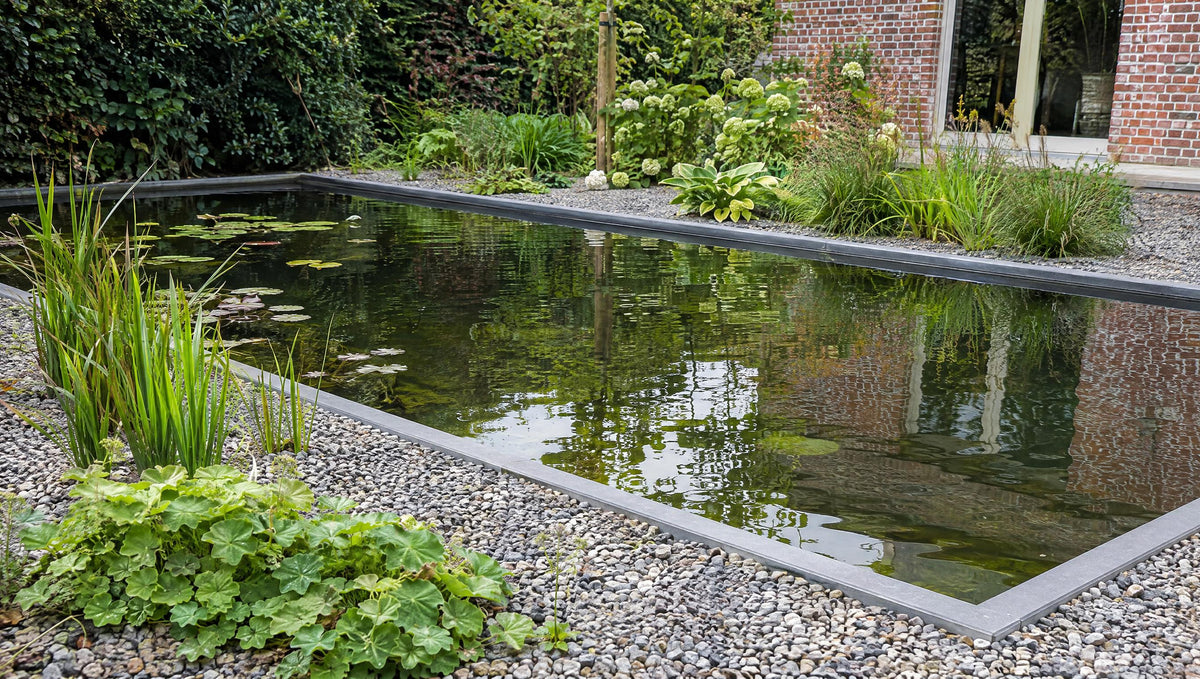
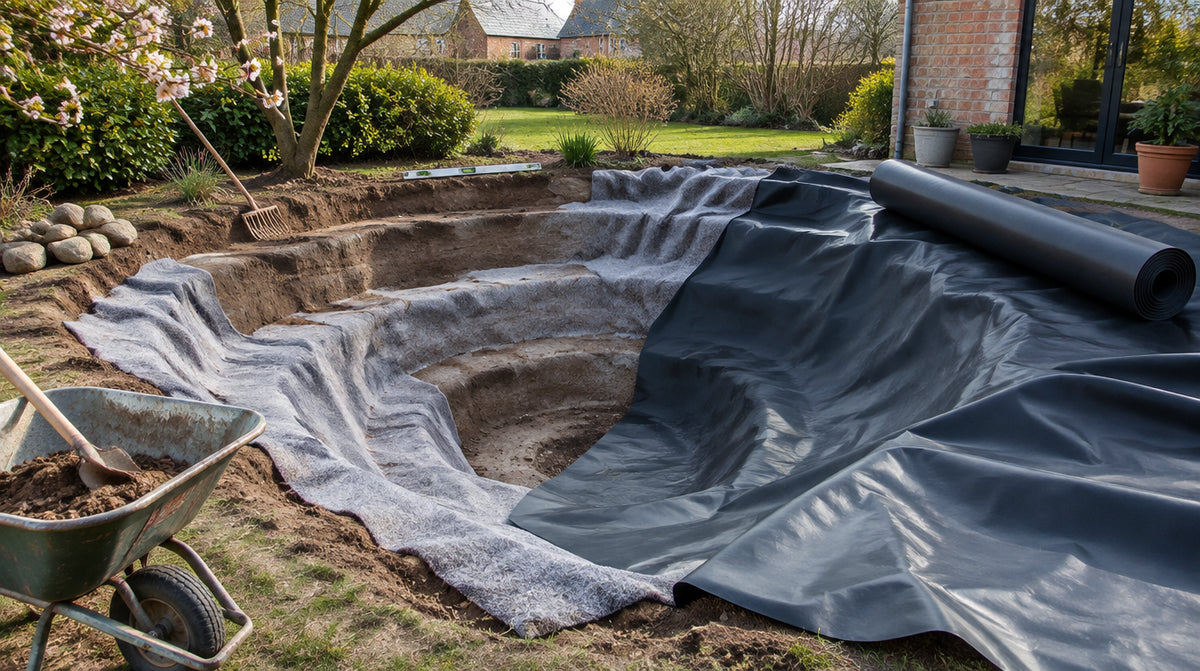
With a liner, you design the shape of the pond yourself. You dig the shape, shelves, and depth you want, lay down a protective underlay, and then a flexible EPDM liner that conforms to the excavation. EPDM is a rubber highly resistant to UV rays and frost, which remains flexible over time. It is suitable for both a small patio pond and a pond measuring several dozen cubic metres or a natural swimming pool.
Comparison
| Criterion | Preformed pond | EPDM liner |
|---|---|---|
| Size | Small, around 250 to 1,500 L | Unlimited |
| Shape | Determined by the shell | Freeform |
| Depth | Often 45 to 70 cm | As deep as you dig |
| Installation | Quick, careful levelling | No excavation, flexible installation |
| Plants | Moulded shelves | Custom shelves, beaches, marshes |
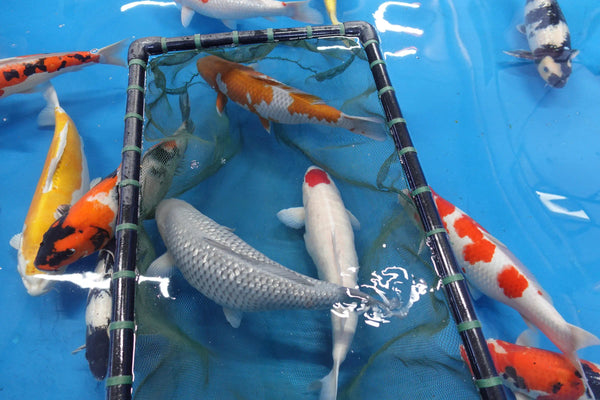
| Fish | Small fish, few in number | All, including koi |
| Ideal for | First small pond, patio corner | Fish pond, marsh, large pond |
When to choose a preformed pond?
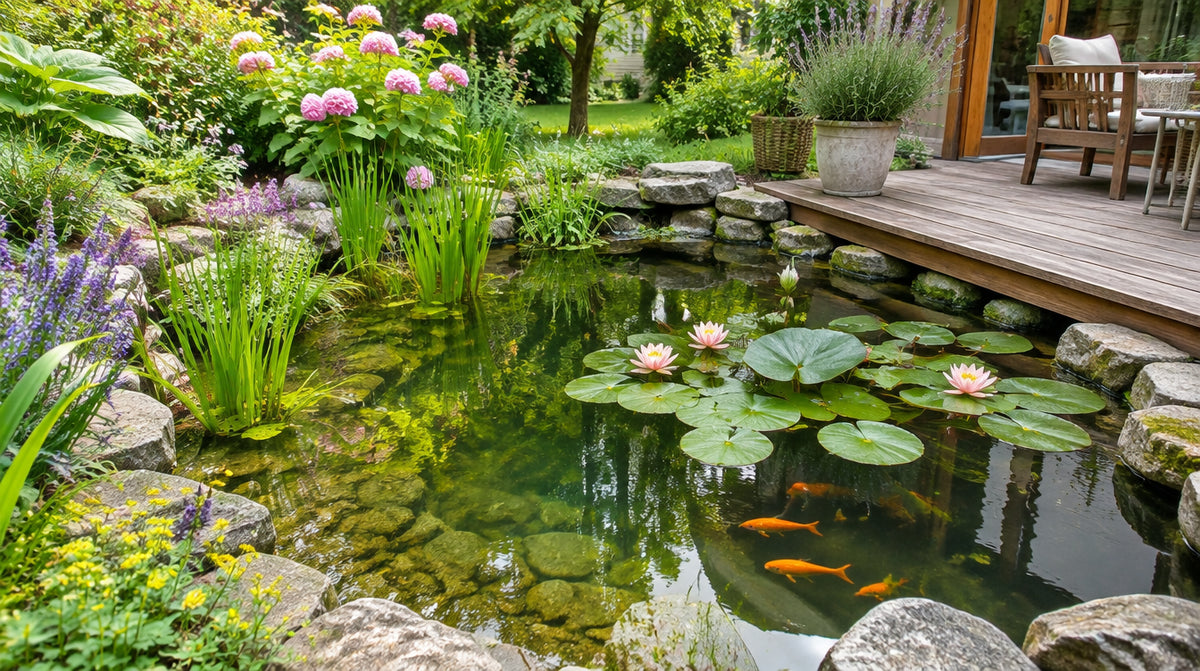
- You want a small, decorative pond with a few plants and possibly a few small fish.
- You have little time and want quick results.
- Your soil is stony or full of roots: a durable shell like Oase PE handles this better.
The tricky part of installing a preformed pond is the installation: the bottom must be perfectly level and the shell supported everywhere, with tamped sand that is allowed to settle with water under the shelves, while filling the shell at the same time to balance the pressure.
When to choose an EPDM liner?
- You want more than 1,500 litres, or a pond that blends into the garden with a natural shape.
- You want fish that spend the winter outdoors: depth is essential, and koi require a large volume.
- You imagine a waterfall, a stream, a beach, or a natural swimming pool.
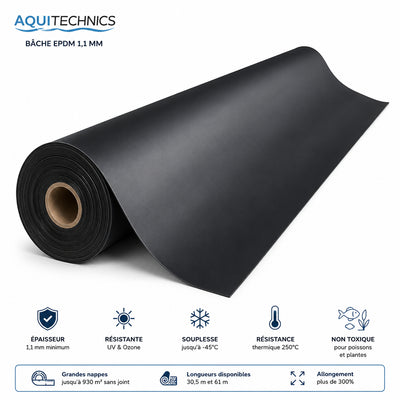
With a liner, the budget follows the surface area: the Aquitechnics EPDM liner can be ordered by the m², with free delivery in Belgium. To calculate your surface area, follow our guide on creating a pond with an EPDM liner.


And what about above-ground ponds?
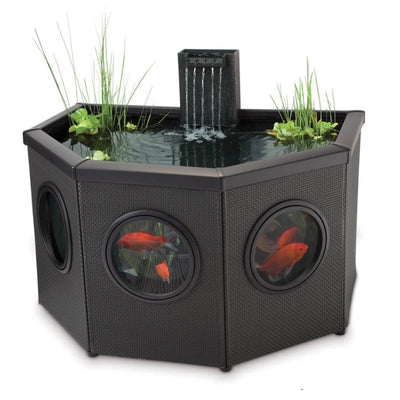
For a patio, terrace, or garden where you do not want to dig, there is a third option: a raised pond. The Raised Window Pond Halfmoon, for example, is a patio pond with panoramic windows: you can see the fish from the side, at eye level. Note: a small above-ground volume freezes faster in winter, so it is mainly suitable for plants and fish that can be brought indoors for the winter. Discover the full range in our preformed and above-ground ponds.
The workshop's advice: we often hear, two years after installing a small preformed pond: "we should have made it bigger". A larger pond is also more stable: the temperature varies less, the water stays clearer, and the fish are healthier. If you are hesitating, think big.
Whatever your choice: filtration
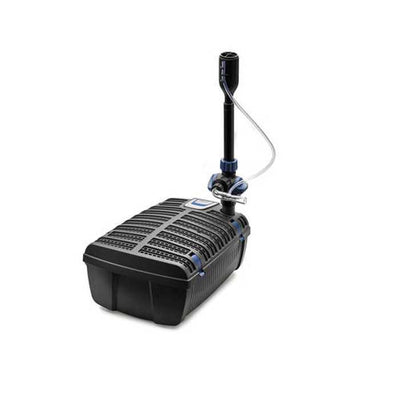
A preformed pond or a liner pond needs a pump and a filter as soon as it houses fish. For a small pond, an all-in-one device like the Oase Filtral UVC 3000 combines a pump, a filter, and a UV-C clarifier in a single submerged unit, and can also power a small waterfall. For a larger pond, a pressure filter with integrated UV-C and a suitable pump takes over. A heavily planted pond without fish can do without it.
The budget: what to plan for
To fairly compare the two solutions, add everything up: the shell or the liner with its underlay, the filtration, the plants, the edging, and the labour time. The preformed pond has a fixed and predictable price for a small volume. The liner has a cost that follows the surface area, but it allows for a much larger volume for every m² purchased as soon as you dig deeper, and it is the volume that makes a stable pond. In both cases, keep aside part of the budget for filtration and plants: they are what make the pond a success.
Installing a preformed pond: the steps
- Place the pond in the chosen location and trace its outline on the ground, adding a few centimetres all around.
- Dig following the shelves of the pond, a little deeper than necessary, so you can put a bed of sand at the bottom.
- Spread a layer of sand that is well tamped and remove stones and roots.
- Level the pond with a spirit level placed on a straightedge, in length and width. A tilted pond is immediately noticeable once filled.
- Fill and backfill at the same time: as the water rises, fill the space between the pond and the earth with damp, well-tamped sand. The pond is supported everywhere and does not deform.
- Finish the edging with stones or plants to hide the rim.
It is this progressive backfilling that makes the difference: a pond filled all at once, without support on the sides, can deform or crack.
And for an EPDM liner?
The installation is different: you dig the shape of your choice, protect the bottom with sand and an underlay, then the liner is pressed against the walls during filling. All the steps, the surface area calculation, and the equipment list are in our guide for creating a pond with an EPDM liner. In both cases, plan from the start the location of the pump, the filter, and the electrical connection, with a protected outdoor socket.
Errors to avoid
- Choosing a preformed pond that is too small: a small volume heats up quickly in summer and cools down quickly in winter. Take the largest model your garden can accommodate.
- Forgetting the sand bed: a stone under the bottom will eventually weaken the shell.
- Backfilling with dry earth: it leaves voids. Damp sand settles better.
- Neglecting the level: a few centimetres of difference are visible along the entire length of the rim.
- Installing the pond under a tree: leaves and roots complicate maintenance and can damage the shell over time.
Frequently asked questions
Is a preformed pond deep enough for fish in winter?
For a few hardy small fish, a shell of around 60 to 70 cm can be suitable with an opening in the ice. For koi or a large school, plan a larger and deeper pond with an EPDM liner.
How long does an EPDM liner last?
Properly installed on a protective underlay and protected from impacts, an EPDM liner is made to last several decades.
Which one is easier to install?
The preformed pond requires less excavation, but careful levelling. The liner requires more digging, but is more forgiving of imperfections.
Should you fill a preformed pond during backfilling?
Yes. Fill and backfill at the same time with damp, well-tamped sand: the pond is supported everywhere and does not deform.
Written by the Aquiflor team, a store specializing in ponds and ponds in Nodebais (Belgium), an official Oase repair workshop. Updated in November 2026. Data: Oase and Ubbink product sheets.
Are you hesitating? Send us a photo of the location and your ideas to support@aquiflor.com or call 010 86 03 54: we will help you choose before spring.