A common goldfish and an Oranda may share the same color without having the same needs in winter. Likewise, a koi that has been living in a suitable pond for several years does not prepare for the cold in the same way as a fish that has recently been purchased, is weakened, or has been kept indoors until now.
To protect fish sensitive to cold, start with their identification, their condition, and the actual conditions of the pond. A stated depth or an anti-freeze device is not enough to guarantee successful overwintering. Here is how to decide what can remain outside and what requires a prepared solution under shelter.

Not all goldfish prepare in the same way
Common goldfish, comets, and shubunkins are among the varieties commonly kept in outdoor ponds. The Aqueon guide distinguishes them from more delicate forms and notes their ability to endure relatively cold winters under appropriate conditions.
This does not mean that a shallow container exposed on a terrace offers the same conditions as a well-designed pond. The available volume, exposure, duration of frost, and water quality remain determining factors.
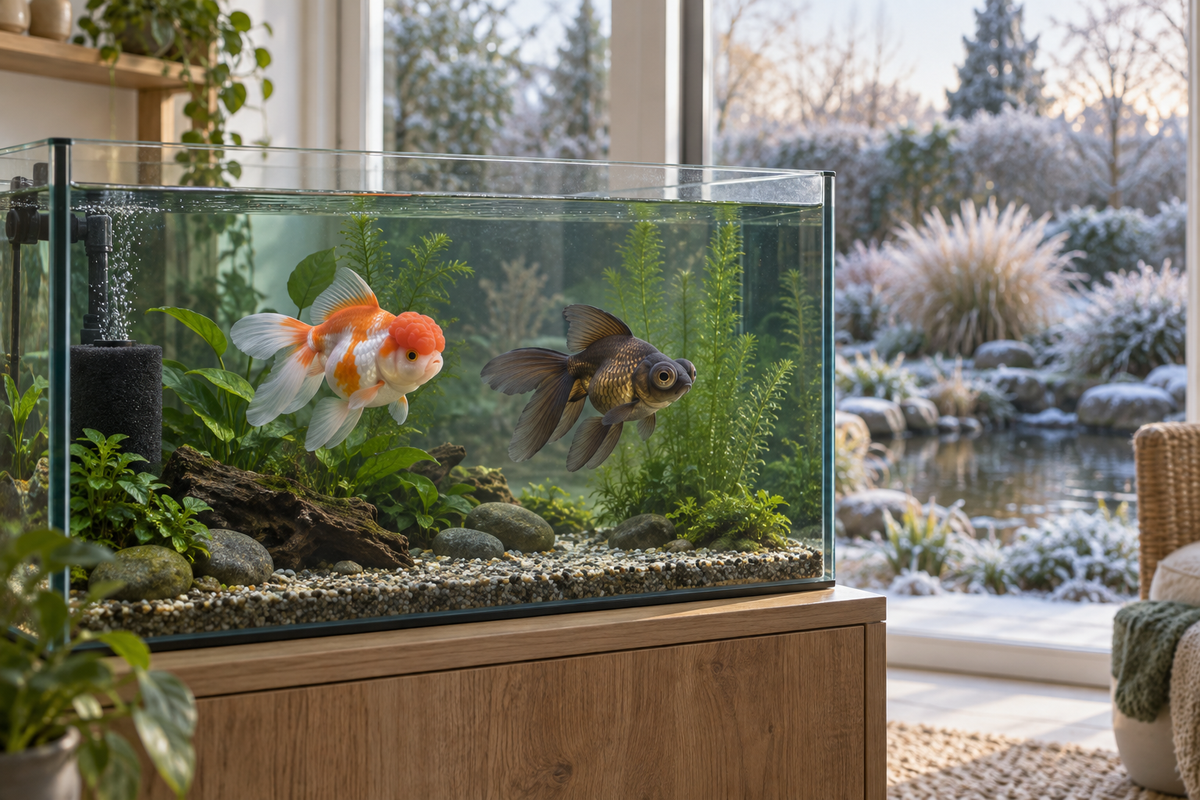
Selected forms like Orandas, Ryukins, or telescopes deserve more caution. The OATA recommends keeping "fancy" goldfish varieties in an indoor aquarium. Aqueon also indicates that their time outside requires a return to shelter in climates with harsh winters.
The right reflex, in Belgium or in a region regularly subjected to frost, is therefore to organize their accommodation before the sharp drops in temperature. Their silhouette and fins alone do not allow for setting a reliable minimum temperature.
Koi, sturgeon, tropical fish: three different situations
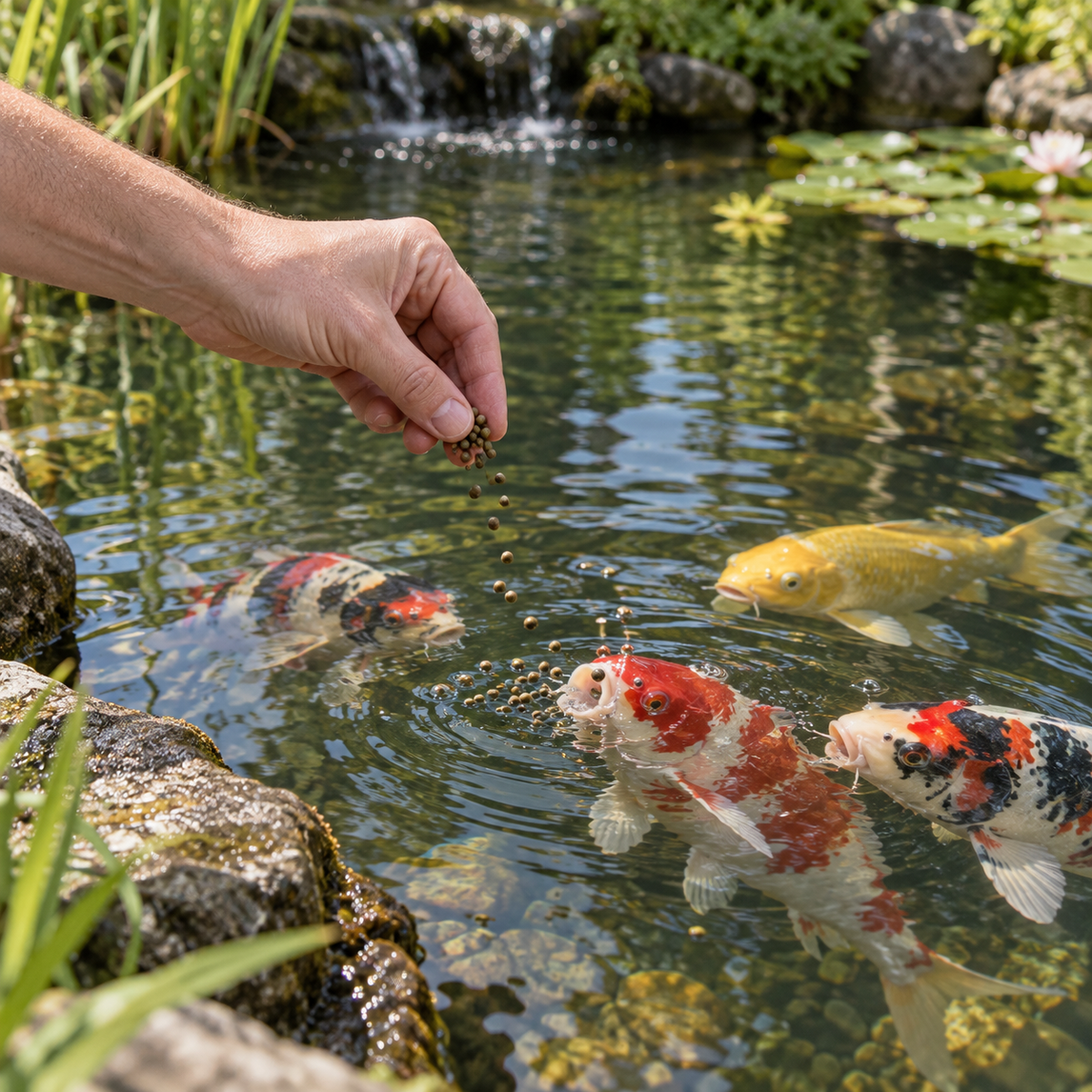
Koi acclimatized to a suitable pond
In cold water, the activity and appetite of koi decrease. A calm fish, maintaining its balance and breathing without difficulty, can simply follow the seasonal rhythm. The RSPCA describes this slowing down and the search for sheltered areas in pond fish.
Avoid, however, turning "koi can tolerate winter" into a sufficient rule. A very crowded pond, accumulated waste, or an installation that freezes can cause difficulties for a population otherwise adapted to the climate.
Sturgeon have a specific feeding program
They do not automatically follow the fasting period of koi. The OATA reminds us that they continue to be fed in winter with appropriate food. One must also take into account their oxygen needs and actual access to sinking pellets.
Identify the species and its size before choosing the installation and food. A general indication of "coldwater fish" does not replace this verification.
Tropical fish installed outside during the summer
A summer stay does not turn a tropical fish into a hardy pond fish. Its return indoors must be planned according to the specific needs of the species and the temperatures measured in the water. Waiting for a night of frost to improvise exposes you to avoidable difficulties.
Prepare the destination, filtration, and monitoring before the transfer. A heated room is not enough if the reception tank is new, too small, or incompatible with the other occupants.
Fragile fish require individual attention
Sensitivity does not depend solely on the species. An emaciated or injured fish, one exhibiting an anomaly, or one recently arrived deserves a specific assessment. Note what you observed before the cooling: was it eating normally, swimming with the group, has its appearance changed?
Labored breathing, loss of balance, or visible lesions justify a veterinary opinion competent in fish. The Merck Veterinary Manual highlights the importance of environmental factors: unsuitable water can produce signs that resemble an infectious disease.
Do not automatically decide to warm up or treat the fish based solely on a photo. It is necessary to relate the signs to the temperature, analyses, and history of the pond. The same actions are not suitable for all situations.
Evaluate the pond before buying equipment
Prepare a simple sheet with the volume, depths, species, number of fish, and equipment in operation. Add a few water temperature readings, particularly during a cold period. The weather indicates what is coming; the thermometer shows what the fish are experiencing.
- Does the pond have an area adapted to the overwintering of its population?
- Are the pipes, filter, and water returns exposed to frost?
- Could a breakdown or an overflow cause the level to drop?
- Are leaves and organic deposits under control?
- Is there safe access to check the equipment in winter?
This sheet facilitates useful advice. Indicating only "my pond is one meter deep" leaves out the surface, volume, exposure, and the needs of the species. No isolated figure guarantees that all fish can spend the winter there.
An anti-freeze protects an opening, not all fish from the cold
The OASE IceFree Thermo 330 helps maintain a locally open area thanks to its heating element and frost control. Its function is not to keep a whole pond at a tropical temperature or to make a delicate variety hardy.
Aeration can also contribute to winter operation, with a setup adapted to the depth and configuration. Check the equipment instructions and the diffusion location instead of keeping a summer setting without examination.
Regularly check the opening and the level. A plugged-in device is not sufficient proof of operation. Planning who will monitor the pond during an absence is part of protecting the fish.
Preparing an indoor accommodation that really works
The reception tank must allow the fish to swim and have an established biological filtration system. Filling a container with water from the pond does not guarantee that this new system can process their waste. Biological media and their operation matter much more than the origin of the water alone.
Maintain a stable temperature and choose compatible companions. Delicate varieties may be disadvantaged for feeding when they cohabit with faster goldfish. The decorations must respect their fins and, for some varieties, their prominent eyes.
Organize the transfer with advice that takes into account the temperature difference and the chemistry of both waters. Avoid abrupt transitions from a cold pond to a warm aquarium. A fish already in difficulty requires a procedure adapted to its condition.
After installation, check ammonium/ammonia and nitrites, observe the fish, and adjust meals to the operation of the tank. The arrival of new occupants increases the load to be processed. Also prepare replacement water when the supply contains chlorine or chloramines.
Useful analyses for monitoring overwintering
The JBL ProAquaTest CombiSet Pond kit brings together measurements for pH, KH, GH, ammonium, nitrites, and phosphates. It allows you to track several pond parameters and document a request for advice.

It does not measure dissolved oxygen or nitrates. If these checks are necessary, provide the corresponding tests. Keep the results with their date, temperature, and observations: an evolution often explains more than an isolated value.
Maintenance bacteria do not replace thermal protection
Autumn preparation can include waste reduction, but a bacterial product does not correct a species poorly adapted to the cold. For organic deposits, the combination of targeted mechanical maintenance and biological monitoring should be prepared during an appropriate period.
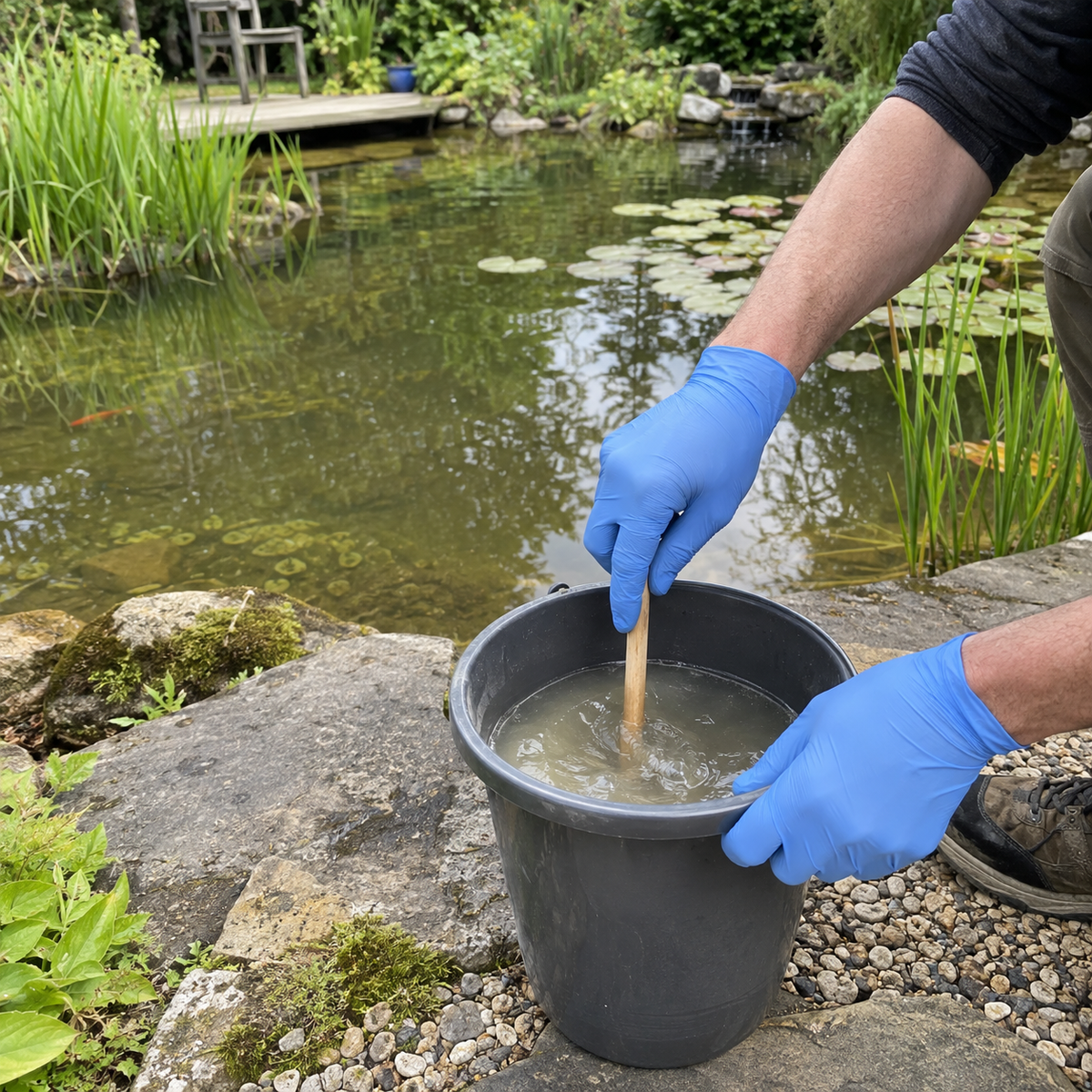
A PondoVac 4 allows for the extraction of accessible deposits. The Aquipond Bactovase targets the organic fraction of the sludge. Check its conditions of use on the instruction manual; do not expect an immediate intervention under the ice.
These solutions are part of proactive maintenance. Avoid stirring up the bottom too much when the fish are wintering peacefully.
Prepare for winter based on your population
Start by identifying the fish, measuring the water, and checking the equipment. You will then be able to choose pond protection or organize a coherent indoor shelter.
See the pond analysis kit →
Discover the IceFree Thermo 330 →
Sources
- OATA — How to Look After Fancy Goldfish: housing, delicate varieties, and compatibility.
- Aqueon — Goldfish Care Guide: common goldfish and selected varieties in ponds.
- RSPCA — Caring for Your Pet Fish in Winter: seasonal behavior and stability.
- OATA — How to Look After Pond Fish: sturgeon feeding and water maintenance.
- Merck Veterinary Manual — Environmental Diseases of Aquatic Animals: environment quality and signs of difficulty.
- OASE — IceFree Thermo 330: function of the anti-freeze device.
- Aquishop product sheets linked in the guide: characteristics of tests and maintenance equipment.