Installing a water feature adds a resource to the garden that terrestrial plants cannot provide: a place to drink, bathe, or complete part of a life cycle. Depending on its shape, it can serve birds, insects, or aquatic wildlife. It also adds reflections and a place for observation just a few steps from the house.
You don't need to start with a large pond. A maintained birdbath, a container water garden, and a planted pond each meet different needs. The best project is one that you can install correctly and follow over time.

A useful resource for garden visitors
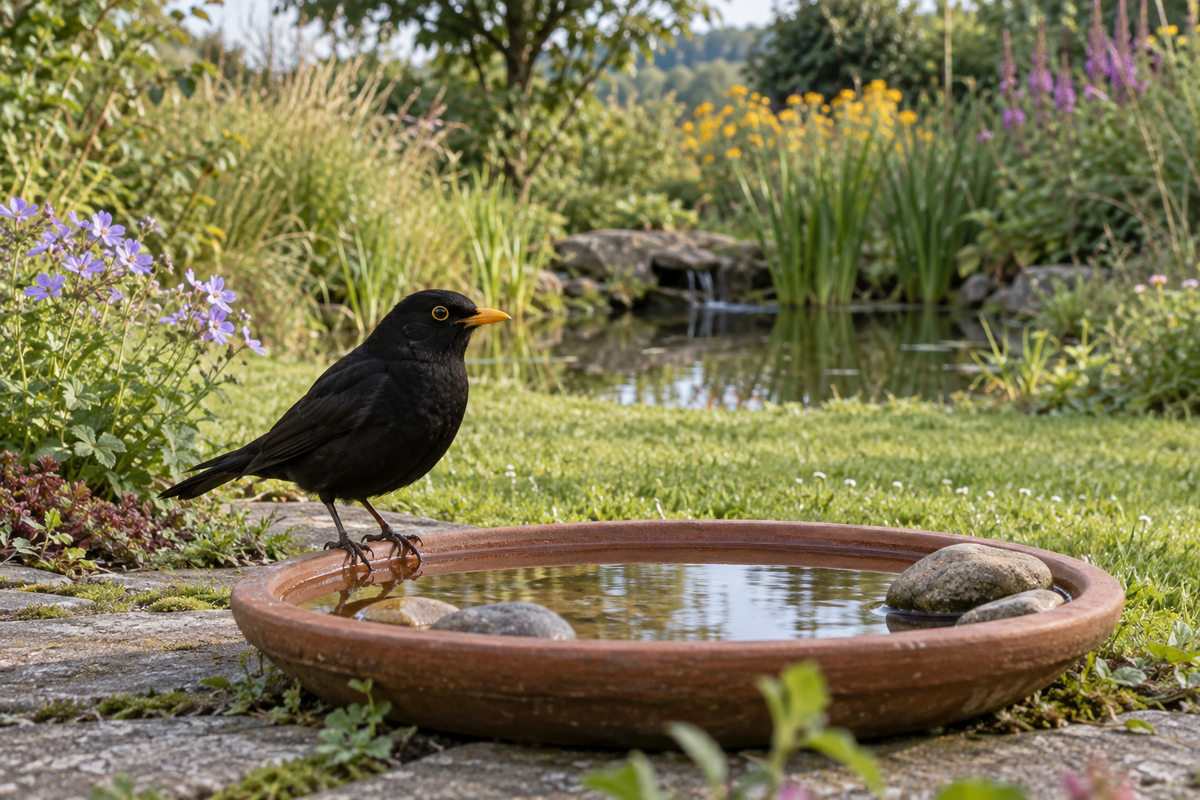
Birds use water to drink and maintain their plumage. A shallow, stable, and easy-to-clean container can offer them an access point. Choose a location where they can see predators arriving and avoid a setting that traps them against a hiding spot.
Insects use water in different ways. Some species come to drink; others, such as dragonflies, have an aquatic larval stage. A saucer refreshed daily and a permanent pond therefore do not serve exactly the same function.
Amphibians may use a pond and the surrounding shelters if conditions and nearby populations allow. Their arrival is not guaranteed, and they should not be moved from another environment to populate your garden.
Choosing the format according to your goal
| Format | Primary benefit | Commitment required |
|---|---|---|
| Shallow birdbath | Accessible water for drinking and bathing | Frequent refreshing and rigorous cleaning |
| Mini container pond | Aquatic plants and observation in a small space | Level, temperature, and vegetation control |
| Garden pond | More varied habitat with banks and vegetation | Design, wildlife access, and zone-based maintenance |
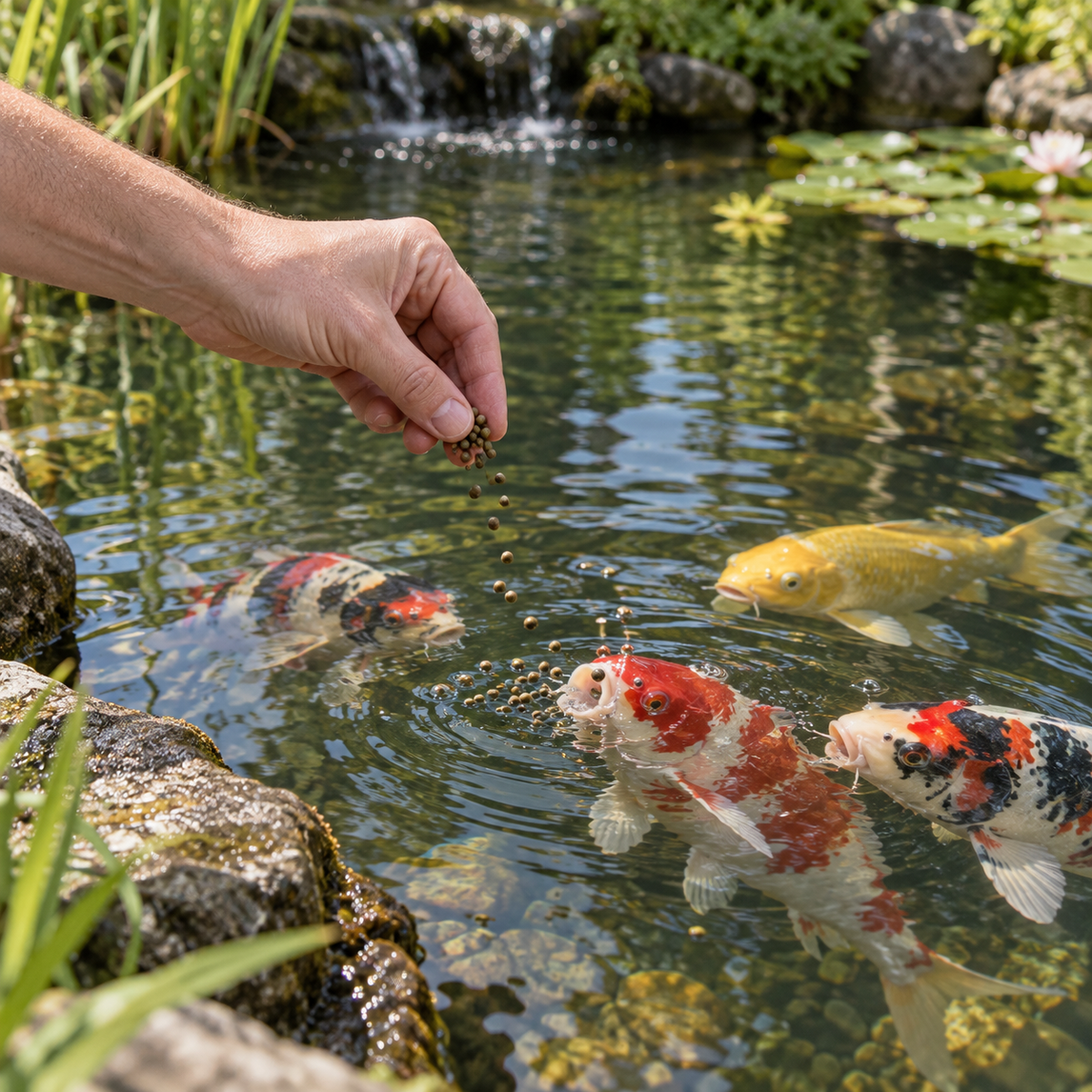
| Fish pond | Breeding and observing ornamental fish | Volume, filtration, testing, and animal care |
If your priority is local aquatic biodiversity, a fish-free pond is a consistent direction. If your main goal is to provide water for birds, a well-maintained birdbath may be more suitable than a large basin inaccessible behind smooth walls.
A small water feature can change how you observe
Proximity facilitates discovery. From a window or a bench, you can watch for visitors, blooms, and changes in water level. The garden becomes more legible when you follow the same spot over several weeks.
With children, observation can focus on reflections, leaves, resting insects, or larval skins left on stems. This should be done under supervision and without routinely capturing animals. A shallow depth does not eliminate the risk of drowning.
Choose an access point that allows viewing without trampling the plantings. A stable spot, at a suitable distance from the water, makes visits more pleasant and limits disturbance to the environment.
Plants to create multiple spaces
A planted pond offers different zones: damp edges, emergent stems, submerged vegetation, and open water. Plants should be chosen according to depth and their mature size. Overfilling the surface from the start can complicate maintenance and reduce space diversity.
For a shallow area, Caltha palustris (marsh marigold) or Myosotis scorpioides (water forget-me-not) are options to consider. For the submerged part, Ceratophyllum demersum (hornwort) can provide structure underwater, provided its spread is controlled.
Prioritize identified and cultivated plants adapted to the project. Do not harvest plants, mud, or water from a natural pond to speed up installation. You could transfer unwanted organisms or disrupt an existing habitat.
Access points matter as much as the presence of water
A container with vertical walls can trap small animals. Provide a rough, stable exit from the water. For an above-ground tank intended for terrestrial wildlife, you may also need external access from the garden.
In a pond, gently sloping banks and shallow areas offer useful transitions. Stones can create supports, but they must be stable and not risk damaging the liner. A poorly fixed branch or ramp can tip over when an animal uses it.
Check these access points as the water level drops. A passage that works with a full pond can become unusable after several dry days. The design should anticipate this variation rather than depend on a perfectly maintained level at all times.
A preformed pond for an in-ground project

The Ubbink Start 250 is an example of a preformed pond for in-ground use. The catalog lists 250 liters and dimensions of 135 × 105 × 46 cm. These characteristics describe the container; they do not alone guarantee the ability to host any particular wildlife.
The shell must be installed and supported according to its manual. Its banks require landscaping to facilitate exits. If your project requires other depths or very gradual slopes, a flexible membrane and appropriate earthwork can offer more freedom.
Birdbaths require a different routine
A birdbath gathers visitors around a small amount of water. Hygiene is therefore essential. The RSPB recommends refreshing the water daily and cleaning the container regularly, with appropriate disinfection at least weekly in their maintenance guidelines.
Use a compatible method, rinse thoroughly, and do not leave residues accessible to birds. Clean sooner if the water is soiled. If you cannot ensure this routine during an absence, arrange for someone to help or temporarily remove the container.
This instruction does not mean that you should empty and disinfect a planted pond every week. A pond is a living habitat whose maintenance follows a different logic. The two uses must remain distinct to avoid destroying aquatic wildlife while trying to do good.
Maintaining a pond without resetting it
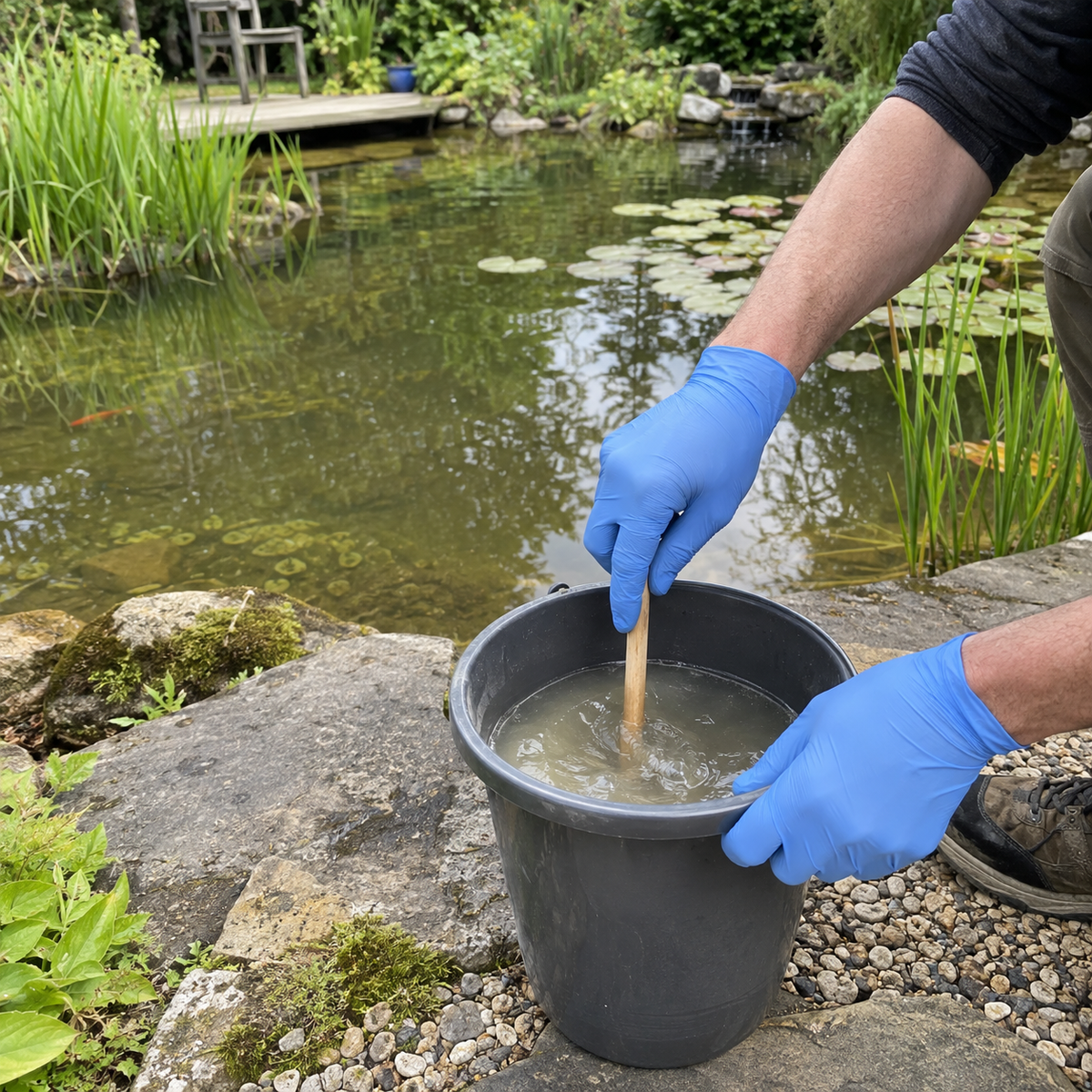
Remove accessible debris and excess leaves, then check plant growth. Working in zones preserves refuges. Natagora notably recommends avoiding removing all the mud from the entire bottom in the same year when this operation becomes necessary.
A light deposit can be part of the environment. Before using a vacuum or treatment, identify the problem and the animals present. The practices for an ornamental pond heavily stocked with fish do not automatically translate to an ecological pond.
Also protect the water from unnecessary inputs: fertilizers, rich potting soil, grass clippings, or runoff from cleaning products on patios. A good location and a few habits often reduce difficulties at the source.
Managing seasons and dry periods
In summer, monitor evaporation and the quality of top-up water. A small container can heat up quickly; its exposure deserves careful consideration. Clean rainwater may be suitable for some projects, depending on how it is collected and stored.
In winter, check the container's durability and equipment guidelines. For a birdbath, replace frozen water with an appropriate method without adding salt or antifreeze. In a pond, avoid abrupt interventions that unnecessarily disturb resting animals.
A water feature does not eliminate mosquitoes and does not guarantee a pest-free garden. It creates an additional environment, with its own interactions and maintenance requirements. This realistic expectation allows you to appreciate it for what it brings.
Starting at a scale you can handle
Choose an initial project compatible with the time and space available. A small water feature followed regularly will be more useful than a large installation left unattended. You will then be able to expand the vegetation or create a second, complementary habitat.
To prepare a pond or water garden, send your dimensions, exposure, and a photo to support@aquiflor.com. Aquiflor can help you choose the container, plants, and equipment corresponding to your goal.