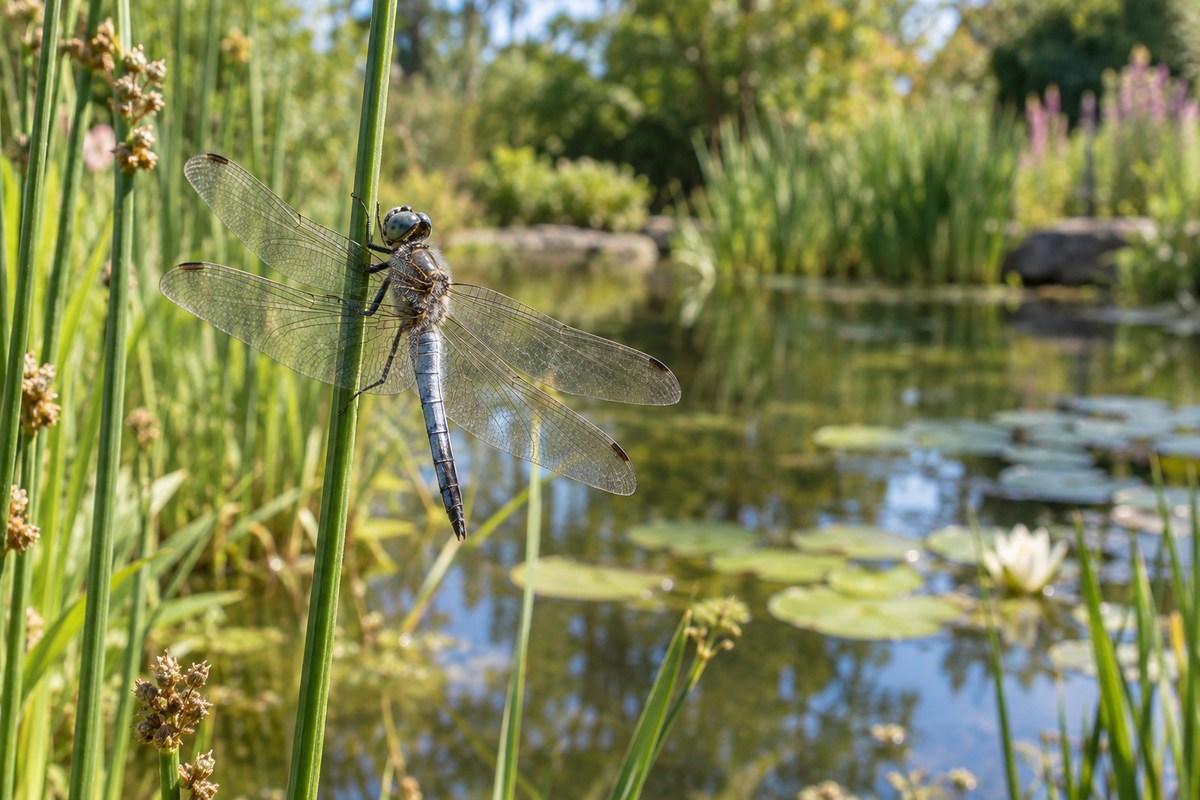
A dragonfly lands on a rush, stays motionless for a few seconds, then resumes its hunt above the water. It is often this type of encounter that makes you want to make your garden more welcoming. But installing a pond is not enough to ensure their reproduction: the insect we see flying first lived underwater, in an environment its larvae depend on.
To welcome dragonflies to your garden, think about the water, the plants, and the edges of the pond together. A varied bank, preserved refuges, and measured interventions offer more possibilities than a water surface surrounded by slabs and cleaned entirely each spring.

Why dragonflies need our water features
Ponds and wetlands are essential habitats for dragonflies and damselflies, which are grouped in the order Odonata. Their degradation, changes in water flow, and droughts affect many species. The European assessment published by the IUCN in 2024 estimates that about 21% of species in Europe are threatened. This figure concerns a set of species and territories; it does not mean that all populations are declining in the same way around your garden.
A private pond can add a water feature to a landscape that lacks one. Its value depends on its configuration, its maintenance, and neighboring habitats. It does not replace a natural wetland, but it can offer a stopover, a hunting ground, or a breeding site for certain species.
So, keep a concrete ambition: improve the conditions available at your home. You do not need to promise the return of a rare species to give value to a few meters of vegetated bank.
Understand their cycle to better design the pond
Eggs are laid in the water, nearby, or in vegetation, depending on the species. The larvae then develop in the aquatic environment, where they hunt small organisms. This phase can last for months or several years. The winged adult is therefore only the most visible part of a life largely spent beneath the surface.
At the time of emergence, the larva leaves the water and clings to a support. The adult emerges from its old shell, unfolds its wings, and lets them harden before flying away. The empty shell, called an exuvia, can remain attached to a stem. If you find one, leave it in place or photograph it: it is a much more precise observation of local reproduction than the simple passing of an adult.
Adults can move between different sites. A dragonfly spotted over the pond was therefore not necessarily born there. Its presence also does not replace a water analysis, especially in a pond populated with fish.
Design banks that offer several possibilities
Vary depths and exposures
For a new pond, design several planting levels rather than a uniform basin. A gently sloping bank, a ledge for bank plants, and a deeper part allow for the installation of plants with different needs. The planting depth should be chosen for each plant species, taking into account the actual water level.
Choose a location that receives sun, without seeking to eliminate all shade. Observe the garden at different times: a nearby bed or a tree can strongly modify the exposure. Natagora recommends, in particular, a sunny spot, sufficiently far from trees to limit leaf fall. In an existing pond, start with what is possible: a better-planted bank can already diversify the shelters.
Install supports, without closing off the entire surface
Upright stems give insects perches and footholds. Submerged plants and roots offer other refuges in the water. The goal is a mosaic: vegetation in some places, open water elsewhere, access to light, and space for maintenance.
Avoid lists of plants chosen only for their common names. An “oxygenating plant” can belong to different species, some of which cause proliferation problems. Check its botanical name, origin, and adult growth. For a pond dedicated to local fauna, prioritize native plants adapted to your region.
An example of a bank plant: soft rush
The soft rush offered on Aquishop, Juncus effusus, provides a clump of vertical stems that is useful for structuring a damp bank. Its product sheet indicates an adult height of about 80 cm and exposure to sun or partial shade. Plan for this height from the start: a small plant in a pot will not necessarily remain discreet at the edge of a small pond.

Check the planting conditions before immersing it: a damp soil plant is not automatically placed at the bottom of the pond. No plant, even well-chosen, guarantees the arrival of dragonflies on its own. It is the environment as a whole that counts.
Fish and dragonflies: finding a coherent setup
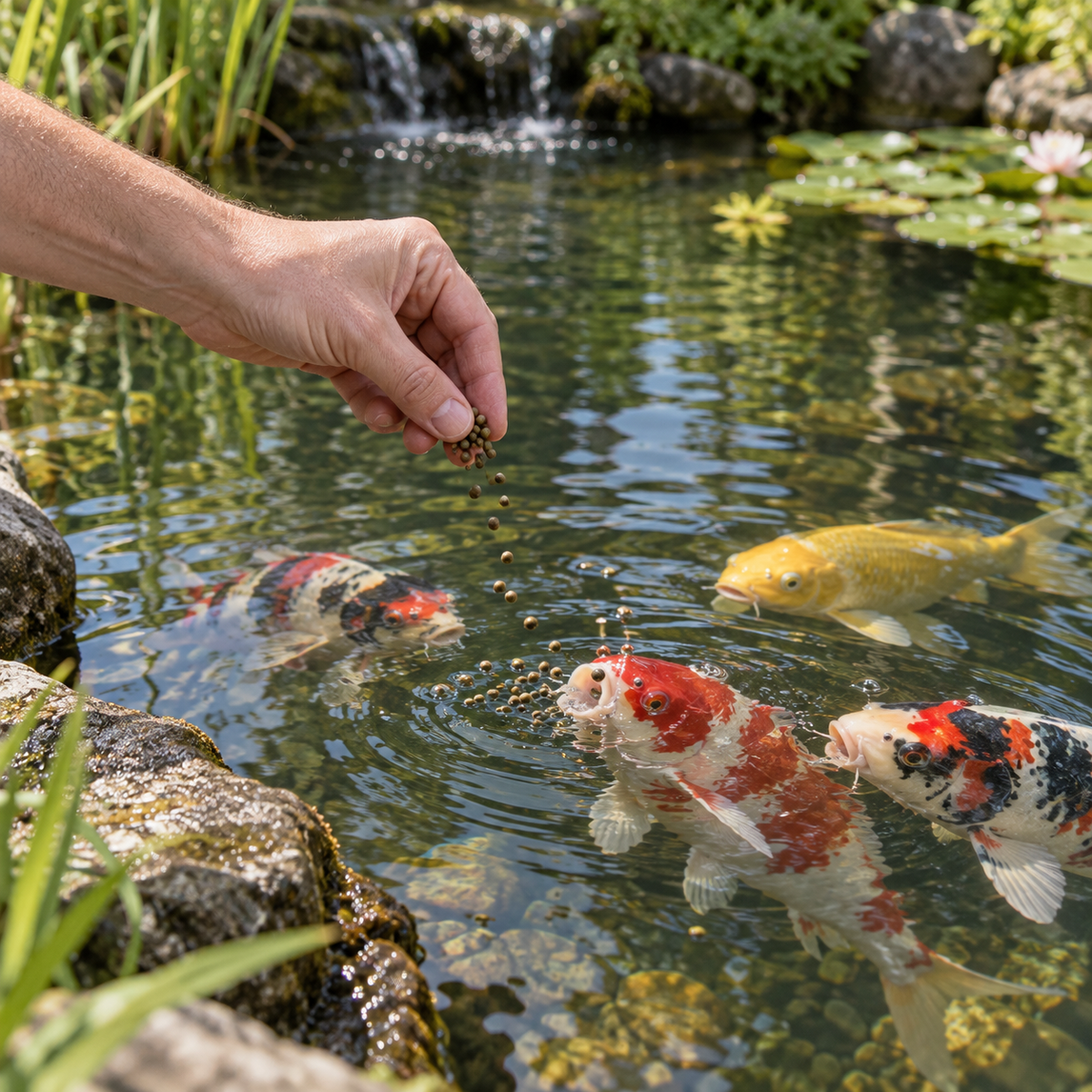
Fish can eat insect eggs and larvae. The British Dragonfly Society recommends not introducing fish into a pond created specifically for dragonflies. This does not mean that a pond with fish will never receive visitors, but the possibilities for reproduction are different there.
If your garden already hosts koi, keep the needs of the fish at the center of their pond management. You can arrange planted banks and, if space permits, a small separate pond without fish. This separation is clearer than a simple patch of vegetation presented as a totally protected zone: fish can often enter it.
Do not move fish to a public pond or natural pool to free up space. Do not take larvae from elsewhere to populate your garden either. Let colonization happen spontaneously.
The garden around the water also counts
Adults hunt insects in flight. A wildflower strip, grasses left taller, and a few undisturbed spaces contribute to diversifying the surroundings. You can keep a mowed path to walk on and let a portion of the bank grow: this compromise facilitates observation without transforming the entire garden.
Avoid pesticides near the pond and runoff from treated surfaces. Think about the path of water during heavy rain: a slope that directs runoff from a patio or lawn toward the pond deserves to be examined before planting.
Dragonflies mainly consume small insects, but their presence does not ensure the disappearance of mosquitoes. Design the garden for its diversity, without expecting a single species to solve all the inconveniences of summer.
Maintaining a pond without removing all refuges
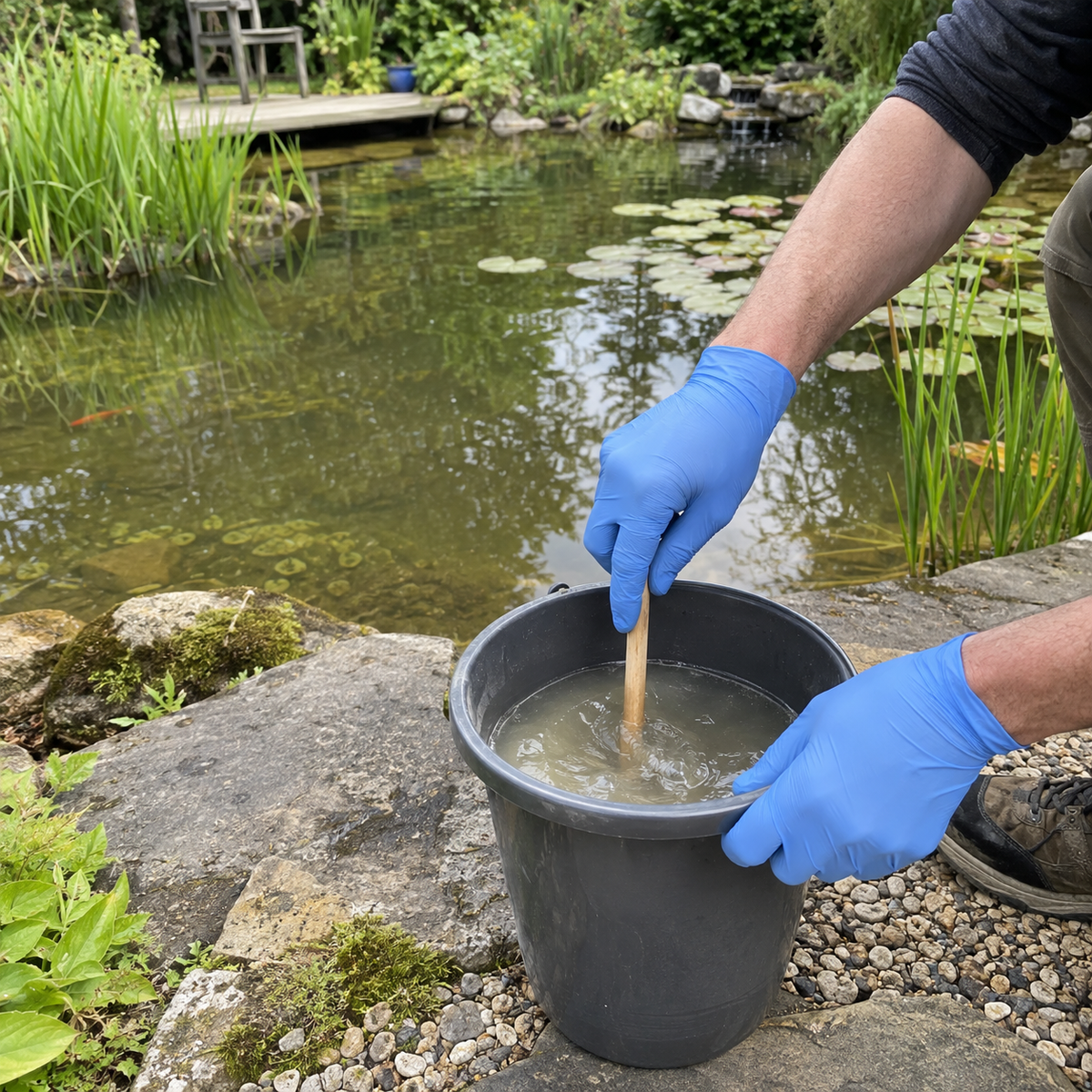
Before cleaning, observe what really needs to be removed. A few dead leaves, dry stems, and sediment at the bottom do not systematically justify a refurbishment. Conversely, letting all the vegetation invade the water ends up making management more difficult. Work progressively, keeping quiet areas.
- Spread out the trimming. Avoid cutting all the bank stems on the same day.
- Inspect the plants before intervening. An emergence in progress is fragile: do not handle the insect or its support.
- Remove problematic waste with moderation. Seek the cause of an accumulation before increasing cleanups.
- Adapt the equipment to the pond. A natural pond without fish and a filtered koi pond do not have the same technical needs.
In a pond well-designed for biodiversity, Natagora indicates that a pump is not necessary as a matter of principle. In an equipped pond, do not cut a filtration system essential to fish to imitate the operation of a pond. First, define the purpose of each water feature.
Observe progress without imposing a schedule
A dragonfly can discover a new pond quickly; elsewhere, it will take more time, and some species will not come. The proximity of other aquatic environments, weather conditions, and available habitats influence visits. There is no universal delay of two or three seasons.
Note the date, the place, and the observed behavior: passing, hunting, mating, laying, or emergence. Take photos without capturing the insects. This small notebook will help you understand which parts of the garden are used and to choose your next interventions.
Your first improvement this week
Identify a bank where you could keep more vegetation, check the exposure, and measure the available space. Then choose a plant adapted to this spot, its depth, and its adult size.
Sources and useful reading
- IUCN — European Red List of Dragonflies and Damselflies, 2024 update: conservation status.
- British Dragonfly Society — Frequently Asked Questions: life cycle, movement, and relationship with fish.
- British Dragonfly Society — Gardening for Dragonflies: garden design and maintenance.
- Natagora — The natural pond: depth diversity, plant selection, and spontaneous colonization.
- Aquishop — Aquipond soft rush sheet: characteristics of the presented plant.