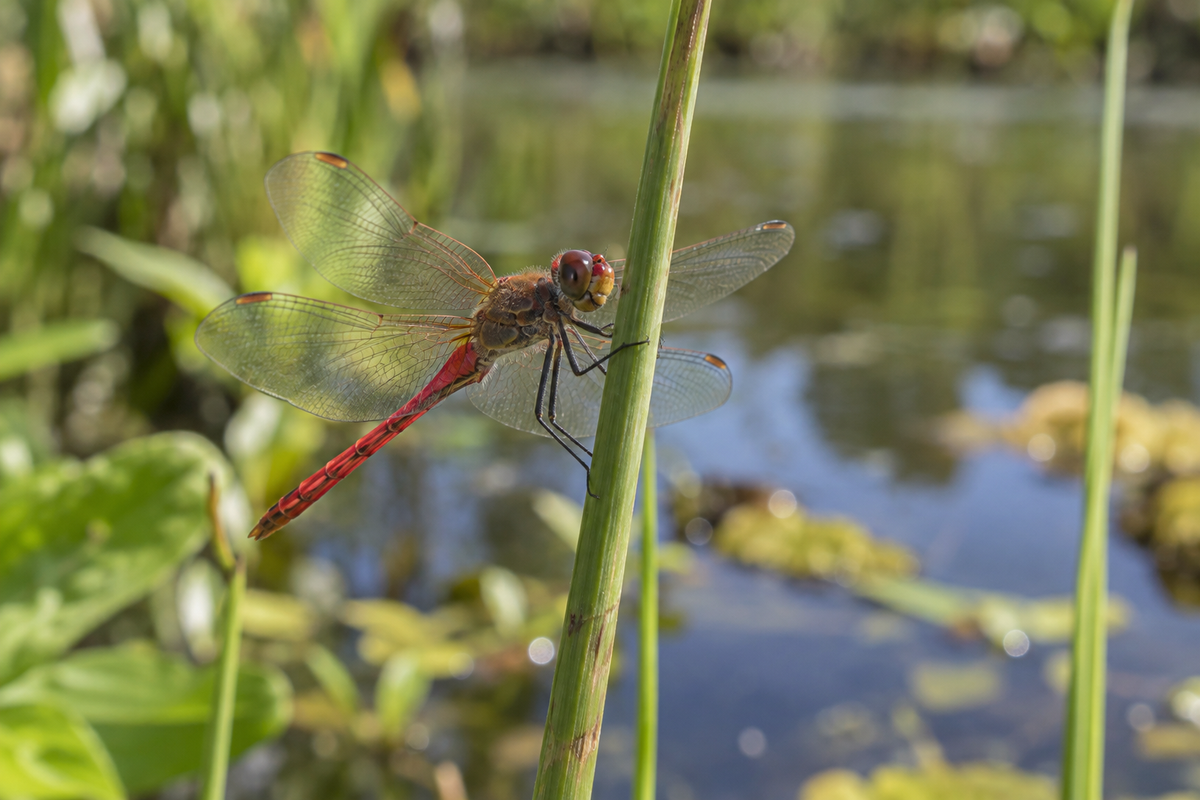
To attract dragonflies with a mini-pond, provide them with water, plants, and a calm, undisturbed environment. A small water feature may be visited, but its size does not guarantee the presence of a specific species or successful reproduction. Location, water retention duration, and nearby habitats are also important.
The best approach is to prepare a welcoming environment and then observe. The adult dragonflies seen flying represent only one part of their life cycle: their larvae develop underwater. A pond suitable for these insects must therefore function both above and below the surface.

Understanding the link between adult and larva
Dragonflies go through egg, aquatic larva, and adult stages. The time spent underwater varies greatly depending on the species and conditions. It can exceed a single season. Regularly emptying a small pond every winter can therefore interrupt the development of animals already established there.
At the time of emergence, the larva leaves the water and clings to a support. The adult exits its larval skin, unfolds its wings, and hardens gradually. An empty shell left on a stem, called an exuvia, is an interesting sign of this process.
A dragonfly landing on your patio may just be passing through. Egg-laying or exuviae provide more information. These observations are unique and deserve to be noted separately if you are monitoring the evolution of your mini-pond.
Choosing a bright and quiet location
Observe your garden throughout the day. A water feature completely hidden under dense vegetation does not offer the same potential as a pond that receives light and has open space nearby. Plan for varied vegetation without completely enclosing the surface.
In a small above-ground container, full sun all day can cause significant heating. Look for a compromise between light and stability, with partial shade during the hottest hours if necessary. The color and material of the sides also influence the pond's conditions.
Keep the pond away from areas receiving runoff containing soil, fertilizers, or cleaning products. A recently treated patio should not drain its rinse water into the mini-pond. The quality of the location starts with what might end up in the water.
Offering several forms of vegetation
Combine a submerged section, some emergent stems, and an area of open water. This diversity creates different supports and spaces. Plants must remain proportional to the container so the pond does not quickly turn into a mass of roots and leaves.
Emergent stems must be stable enough and remain accessible from the water. A purely terrestrial plant placed behind a high wall does not play the same role. Choose plants based on their planting depth and adult size.
For very shallow zones, you can consider water forget-me-not or marsh marigold. In a small container, do not try to install an entire collection. A few well-placed plants allow more room for natural variations.
Hornwort for diversifying the underwater space

Ceratophyllum demersum, or hornwort, is a submerged plant with no true roots. It is not planted like a marginal plant in a pot of soil. Its foliage provides structure underwater, but its growth must remain compatible with the volume.
Introduce a reasonable amount and observe its development. If you need to thin out the vegetation, proceed with care and inspect the removed plants to avoid taking out small animals. Never discard fragments into a stream or natural pond.
Like other plants, hornwort respires. The term "oxygenating" does not mean that it alone ensures a sufficient oxygen concentration in all situations. Avoid using this as a justification to overload the pond with animals.
Keeping the mini-pond fish-free
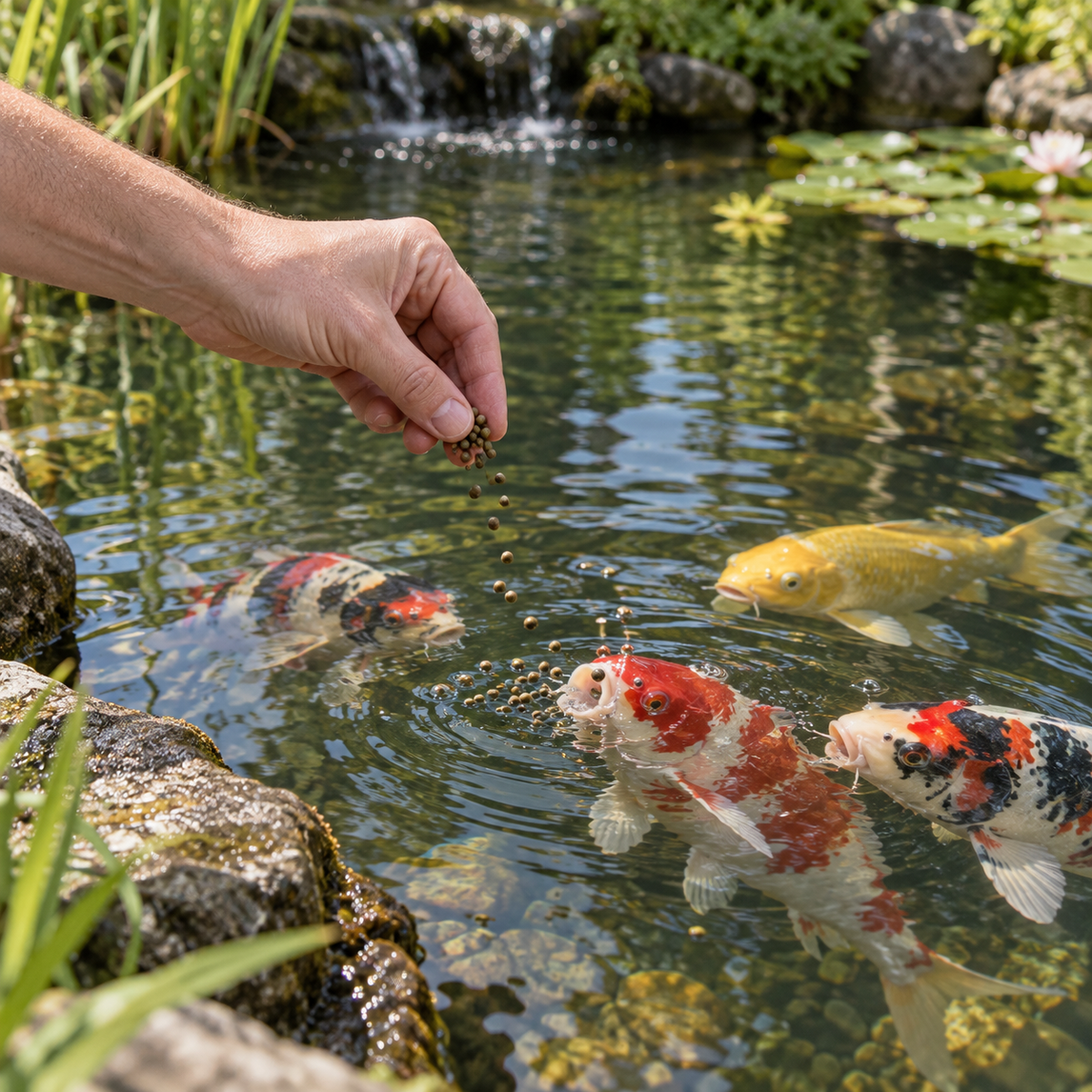
If your priority is to welcome dragonflies and other invertebrates, the absence of fish is a consistent choice. Fish can eat larvae. The British Dragonfly Society recommends not adding them to small ponds designed to foster this fauna.
This does not mean that every pond with fish is devoid of insects. Large environments and complex habitats present different situations. In a mini-pond, you simply have less space to create refuges and limit interactions.
Do not add fish solely to control mosquitoes. The pond needs proper balance and maintenance; adding a predator also changes the possibilities for other animals. Dragonflies also do not guarantee the disappearance of mosquitoes around the house.
Considering the garden around the water
Adults hunt insects and also use terrestrial spaces. Suitable flowers, grasses left taller in places, and sheltered zones can enrich the pond's environment. A small pond in the middle of an entirely paved area offers fewer resources around it.
The British Dragonfly Society emphasizes the importance of preserving the insects that dragonflies feed on. Reduce treatments that may reach the water or decrease the garden's small fauna. Spraying near the pond requires particular attention.
For other visitors, provide a stable, rough exit from the water. An external ramp may be necessary if the container is above ground. Check that it remains usable when the water level varies and that stones or supports are not likely to tip over.
Maintaining with targeted actions
Remove excess fallen leaves and accessible debris, but avoid scraping out the entire pond at fixed intervals. Larvae and other organisms may live in the vegetation and sediment. Maintenance by small zones preserves more refuges.
Before pruning an emergent stem, check if it bears an exuvia or an insect in the process of transformation. If you observe an emergence, leave the support alone. The newly formed adult is fragile and must be able to complete its development without handling.
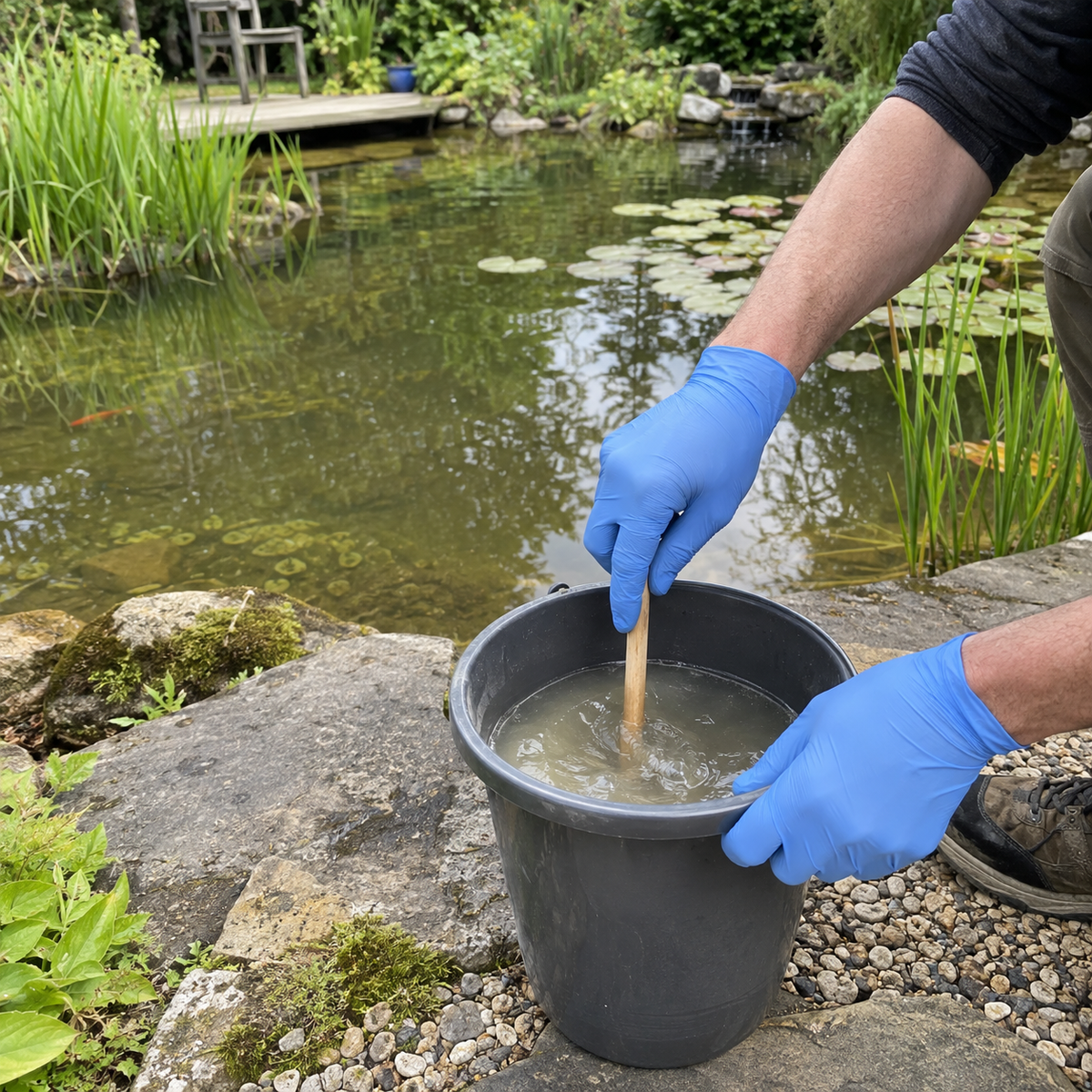
A pond vacuum, useful for some ornamental ponds, can remove small animals in a mini-pond. For this project, favor careful observation and limited manual removal when necessary. Sediment is not automatically a problem that must be entirely eliminated.
Monitoring the level during dry periods
A small container can lose a significant portion of its water through evaporation. Check the level and prepare suitable top-up water. Clean rainwater can be useful, but its quality depends on collection and storage.
Top up gradually without disturbing the plants or stirring up all the sediment. If the level drops abnormally fast, also check for a leak, a subtle overflow, or a material that is wicking water to the outside.
The water regime of a small pond must be consistent with your goal. Some species frequent temporary environments, others need permanent water. Without precise identification, avoid assuming that a complete drying out is without consequences for the larvae present.
Observing without moving animals
Settle down at a short distance and take photos. Note the date, weather, behavior, and potential presence of exuviae. A clear image helps more with identification than a captured or handled insect.
Do not introduce larvae, mud, or water from another pond to speed up colonization. You could move unwanted organisms or diseases. Visits also depend on populations present in the neighborhood: the absence of dragonflies after a few days does not mean the pond is a failure.
To prepare for planting, send the dimensions and a photo of the mini-pond to support@aquiflor.com. The goal is to create an environment that remains welcoming through the seasons, then let the animals discover it.
Naturalist sources
- British Dragonfly Society: life cycle, larvae, and emergence.
- British Dragonfly Society: gardening, food resources, and pesticides.
- British Dragonfly Society: frequently asked questions about ponds and fish.
- The Wildlife Trusts: mini-pond and natural colonization.
- Natagora: shoreline landscaping and wildlife support.
- Aquishop: hornwort product sheet.