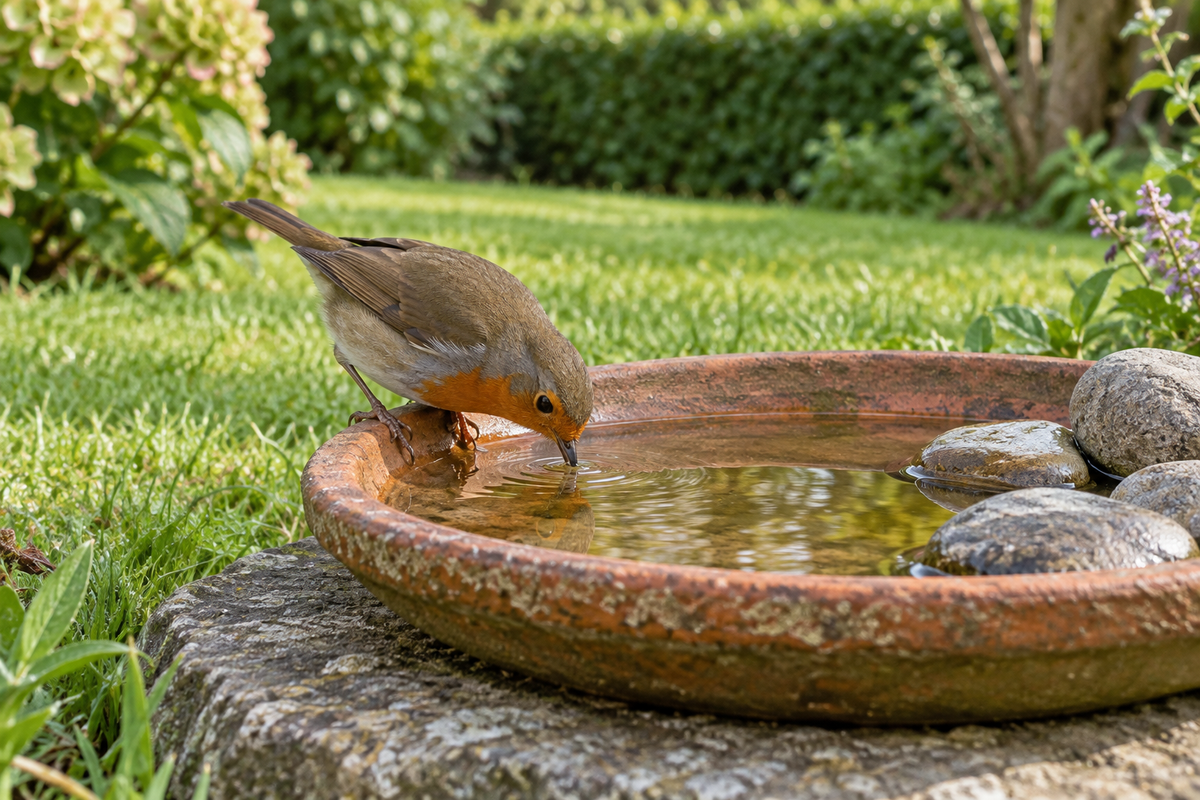
A titmouse coming to drink a few meters from the terrace, a blackbird taking a bath before joining the hedge: a water point allows you to observe the garden in a different way. To create a watering station, you don't need to start with a large structure. A well-chosen, stable, and regularly cleaned bowl is already an interesting addition.
The priority is to offer clean, shallow, and easily accessible water in a place where birds can see dangers coming. The choice of location and the maintenance routine are just as important as the shape of the birdbath.

Is a watering station useful if you have a pond?
Start by observing the existing banks. A pond with a gentle slope and accessible water may already allow birds to drink and bathe. The BTO indicates that an additional water point is generally not necessary when this resource is available.
The situation changes with a pond with vertical walls, a water feature whose level is very low, or an entirely frozen surface. An independent bowl can then offer easier access. It also allows you to maintain the watering point without affecting the pond's filtration.
However, avoid multiplying containers as a matter of principle. Each additional water point requires monitoring. If you can only clean one properly, install only one in a convenient location.
Choosing a container suitable for birds
Look for a shallow container with a base that offers grip and accessible edges. The steep sides of a bucket or barrel are poorly suited for this use. Small animals must be able to get out easily after entering the water.
A sturdy saucer can serve as a base. Check that it is intact, holds water, and that its surface is easy to clean. An old container used for chemicals should not be reused for birds.
The RSPB advises a flared shape, where the depth increases gradually. The goal is not to fill the container to the maximum: keep a very shallow access area for small visitors. If you add stones, choose elements that are clean, stable, and easy to remove during cleaning.
Do a test run before deciding on the final location. Fill it slightly, check that the support does not tilt and that the container stays firmly in place. A wobbly basin will be tedious to maintain and could tip over.
On the ground, on a pedestal, or hanging?
These three installations meet different constraints. A bowl on the ground is easy to fill, but it can be exposed to cats, foot traffic, and splashed soil. A pedestal model lifts the water point off the ground; it requires a very stable base. A hanging model saves space, but it must remain accessible for cleaning.
| Installation | Point to check first | Practical question |
|---|---|---|
| Ground bowl | Visibility around the container | Can a predator hide right next to it? |
| Pedestal bath | Stability of the base | Can I empty and brush the basin easily? |
| Hanging bath | Sturdiness and balance of the suspension | Does the wind cause too much movement? |
Do not choose solely based on an atmospheric photo. Measure the space, imagine the route with a watering can, and check how you will remove dirt. A simple accessory can be very well suited to a small garden.
Where to place the water point?
Install it in an open area, with accessible refuges nearby, but without an immediate hiding place for a cat. A hedge can be part of the layout without placing the bowl at the foot of its densest vegetation.
Avoid places where leaves, seeds, and droppings constantly fall into the water. Do not place the birdbath under a feeder. Also, keep a practical distance from children's play areas, frequently used doors, and the path of the lawnmower.
Observe the sunlight throughout the day. An area that is pleasant in the morning can become very hot in the afternoon. Choose a location that makes it easy to keep the water cool and check the level, especially during hot periods.
To enjoy the visits, plan your observation point from the house. This will prevent you from approaching every time a bird arrives. Give the animals time to explore the installation.
Which birdbath to choose on Aquishop?
The Nymphea Arrosoir & Persil bath offers a decorative presence in the garden. As with any bath, check the useful depth, stability, and ease of maintenance before determining its use and filling level.

You can compare it with the Galet PM pedestal bath or the hanging Leaf bath. Their installation is prepared differently: base location for one, hanging point and access for the other.
If a dimension or maintenance characteristic is missing from the product sheet, ask about it before purchasing. A precise answer helps you choose an accessory that is consistent with your garden.
What water to use and how often to change it?
Use clean, potable water. For a small independent birdbath, fresh tap water is a simple solution. Do not add salt, sugar, continuous disinfectant, or pond treatment.
Renew the water every day, and sooner if it is soiled. Empty the container completely before refilling it: topping up the level over a dirty bottom leaves waste in place. This operation is quick when the bowl has been chosen to be handled easily.
In hot weather, also check the level during the day. If you are away with no one to maintain the installation, it is better to leave it empty than to keep degraded water.
Cleaning without leaving residue
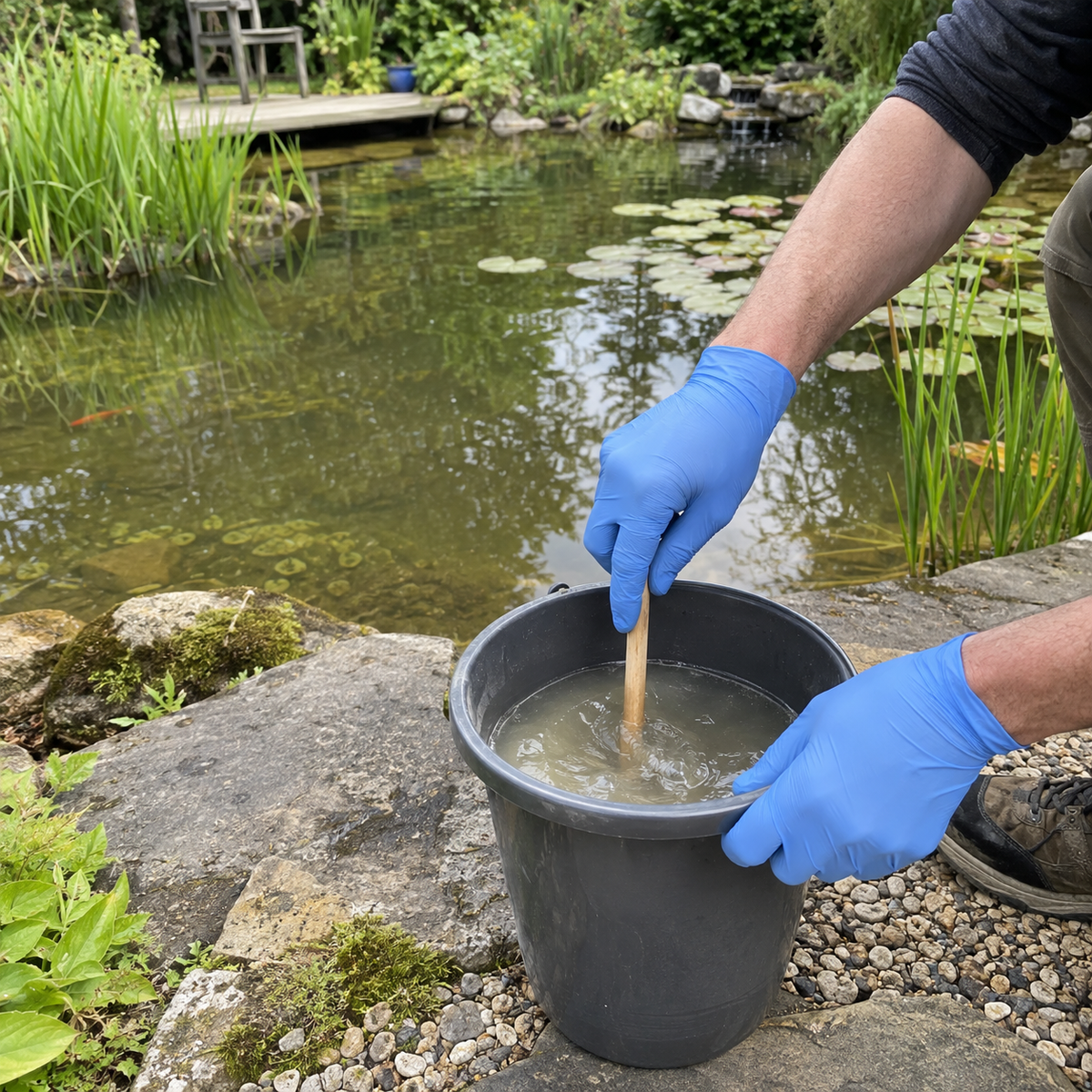
Provide a brush reserved for this use and work outdoors, away from surfaces where you prepare meals. Remove deposits first. For disinfection, choose a suitable product and follow its instructions, then rinse thoroughly and let dry before adding water again.
The BTO recommends thorough weekly cleaning of containers, in addition to daily renewal. Water that is clear to the eye does not eliminate the need to clean the sides.
If you see sick or several dead birds, empty the bath temporarily and seek advice from a wildlife rehabilitation center. Do not try to treat the birds by adding medication to the common water.
What to do when the water freezes?
Remove the ice away from visitors and put back a small amount of water at a safe temperature. Avoid pouring boiling water into an occupied container or onto a material that might crack. Two bowls used in rotation can facilitate the routine.
Also check the frost resistance of the chosen accessory. A decorative model may require winter storage depending on its material and the manufacturer's instructions.
The final check before the first visits
Is the container stable, the access to water gradual, the surroundings clear, and the cleaning easy? Your station is ready. Monitor its use and then adjust the location if necessary, without moving the whole thing every day.
Discover the Nymphea bath and, above all, prepare the small routine that will accompany its installation. The quality of this follow-up will make the difference over the seasons.
Sources and references
- RSPB — Designing a birdbath.
- BTO — Seasonal recommendations and water points.
- BTO — Good hygiene practices.
- Natagora — Watering birds and small animals safely.
- Aquishop birdbath sheets linked in the article.