A mini-pond can only house fish if its dimensions, water quality, and operation meet the chosen species' needs in the long term. For a small decorative container, the simplest choice often remains a planted water garden without fish. Adding two young goldfish just because they seem to fit in the container is not a sizing method.
Before purchasing, consider the usable volume, swimming space, exposure, filtration, and the coming winter. The term "mini-pond" covers very different installations, from a patio pot to an above-ground pond of several hundred liters. Here is how to tell if your project can become a suitable habitat.

Start with the actual volume
The volume indicated for a container does not always correspond to the amount of water after installation. Baskets, stones, equipment, and the margin left below the rim reduce the usable volume. If the basin has an irregular shape, an estimate based on its external dimensions can be misleading.
Measuring the water added during filling provides a more reliable benchmark. This figure will also be useful for water changes and any dosing. Keep it along with the dimensions of the swimming area and the depth actually available.
Two basins of the same volume can offer very different spaces: one long and accessible, the other tall and narrow. For an active fish, the shape and swimming length also count. A more powerful filter does not create extra space.
Do goldfish stay small in a small pond?
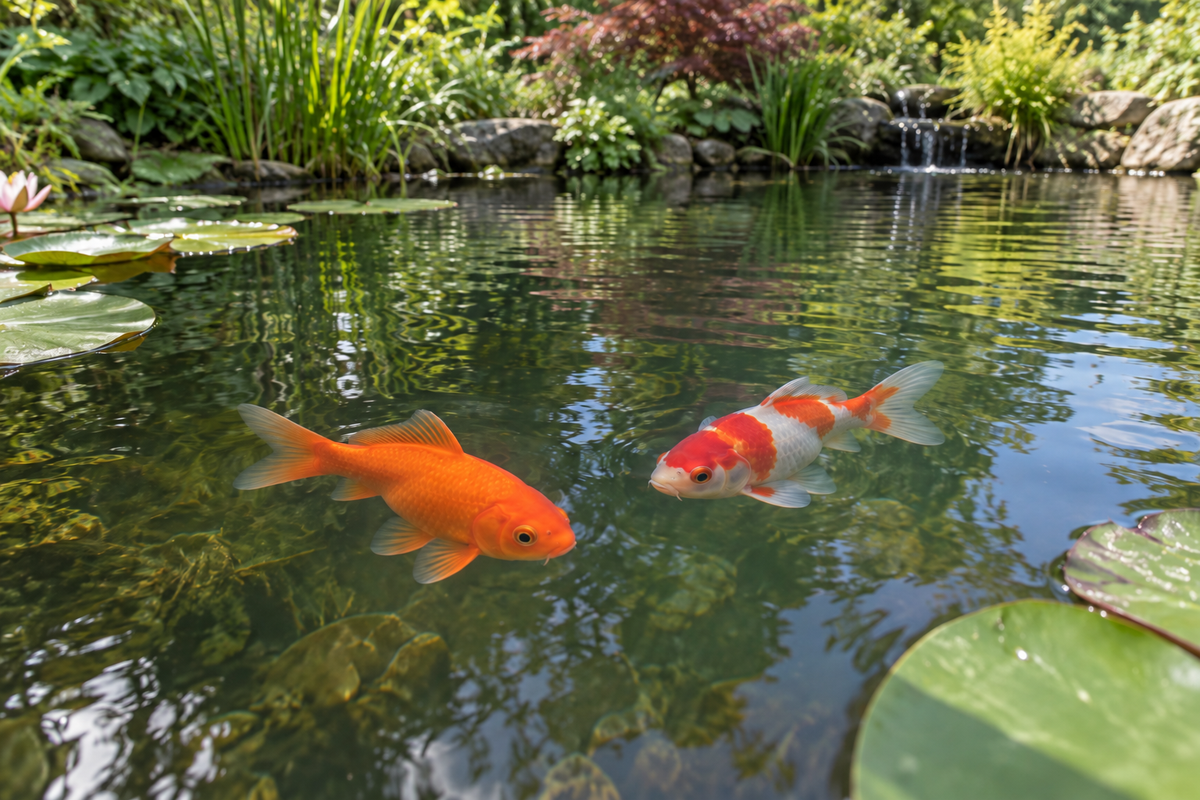
A goldfish should not be chosen under the assumption that it will healthily adapt its size to the container. The juveniles sold at a few centimeters have needs that evolve. Long-bodied varieties, including sarasas, require swimming space adapted to their adult size.
Round-bodied varieties are not decorative fish for tiny containers either. They may present other swimming, feeding, and temperature constraints. Their shape does not exempt them from needing stable water and a properly sized environment.
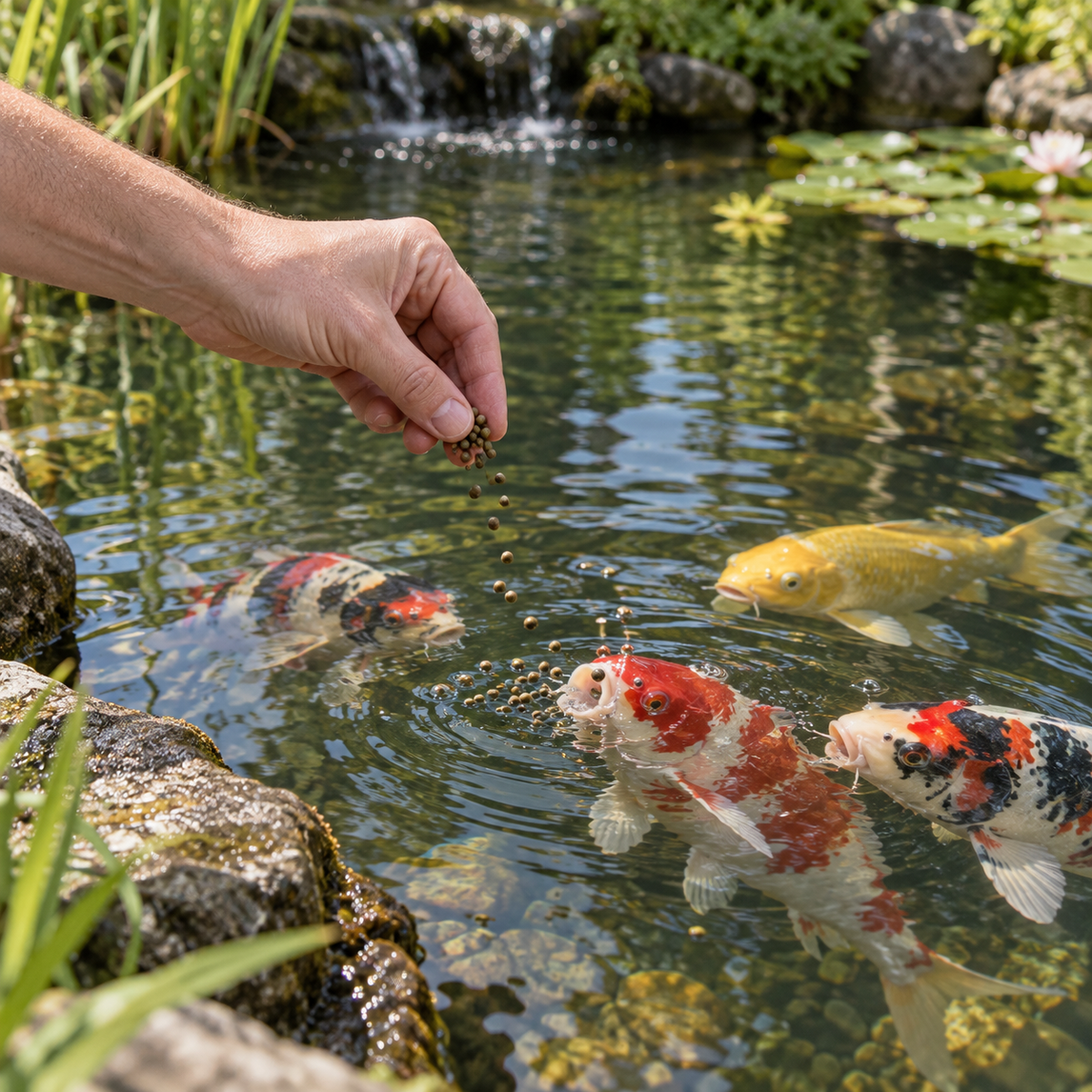
Koi are particularly unsuitable for a mini patio pond as a permanent habitat. A solution advertised as temporary already requires a real future pond ready to receive them, with a realistic schedule and capacity. To start, it is better to avoid this complication.
A small species is not automatically the solution
Some small-sized fish can be kept in specific outdoor installations. This requires knowing their species, social needs, and suitable temperature range precisely. An experience observed in a different climate cannot be directly transposed to a Belgian balcony.
Before selecting a species, ask about its adult size, the minimum number compatible with its behavior, current requirements, and overwintering organization. Also, check compatibility with plants and equipment. Do not replace this information with a general rule of centimeters of fish per liter.
If these answers are not clear, start with plants. You will keep the possibility of developing the project later after a real assessment, without having to urgently find new housing for animals already purchased.
Why small volumes require careful monitoring
A small amount of water can change temperature or composition quickly. Sunlight on the walls, heavy rain, excess food, or a circulation failure can have a marked effect. Operating margins are often smaller than in a well-designed large pond.
Clear water does not mean everything is fine. Some water quality problems are invisible. Observing the fish must be combined with appropriate measurements and knowledge of how the system works.
The water level also deserves regular attention. Evaporation reduces volume and can compromise the pump's water supply. A small waterfall too exposed to the wind can lose water through splashing without there being a hole in the basin.
Filtration and maturation: prepare before arrival
The system must manage the waste produced by the fish and their food. A pump that simply circulates water is not necessarily complete filtration. Check for the presence and sizing of mechanical and biological functions.
Biological filtration relies on microbial communities that develop within the system. Starting it requires time and checks. A dose of bacteria can accompany an adapted protocol but does not justify immediate introduction or excessive population.
For a product like Aquipond NitriBoost, confirm the conditions of use and the accuracy of the dosage for your volume. The choice of packaging or protocol must take into account a small pond, where an approximate quantity can represent a significant deviation.
What checks to prepare?

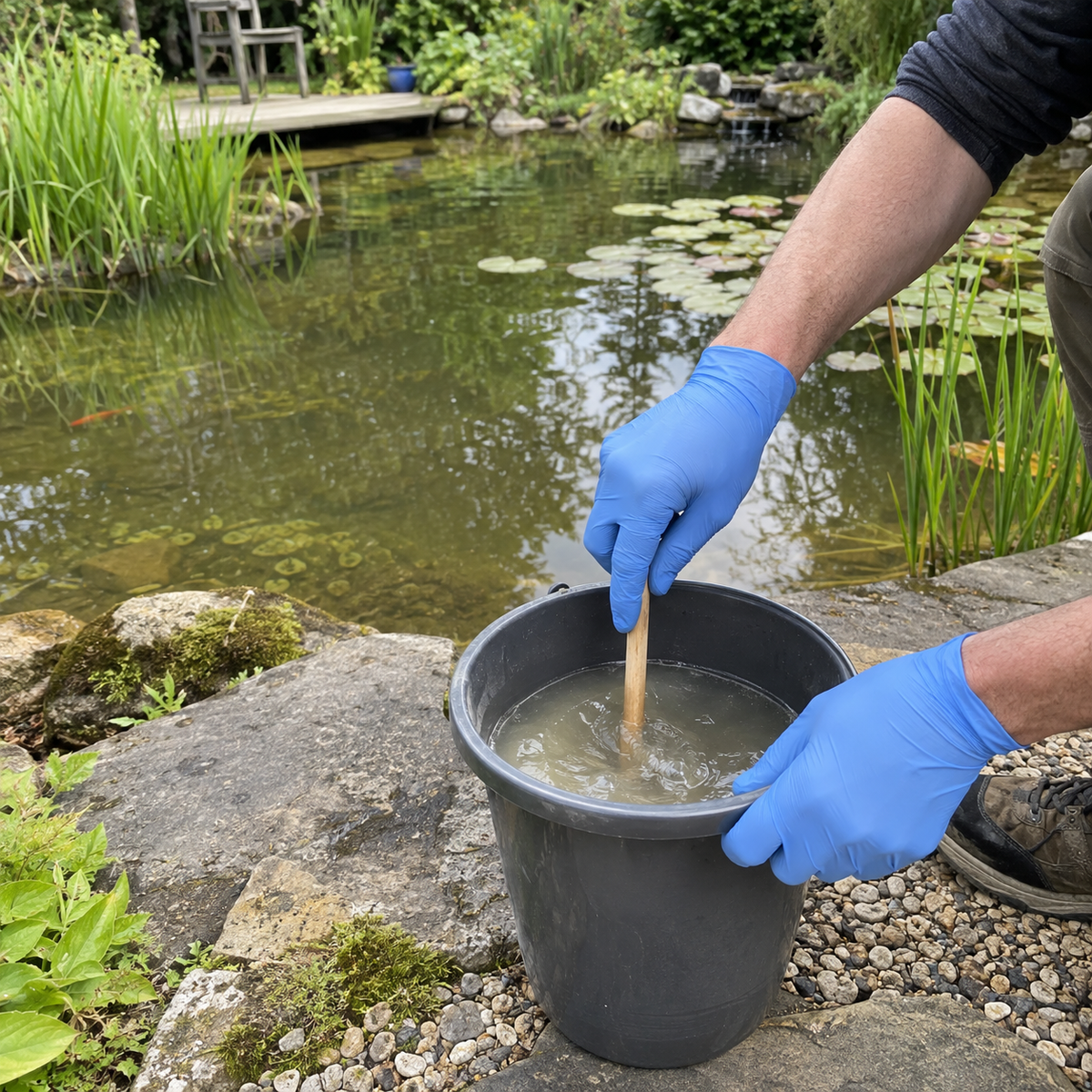
The JBL ProAquaTest CombiSet Pond case allows you to track several parameters, including pH, KH, GH, ammonium, nitrites, and phosphates depending on its composition. It does not replace a specific dissolved oxygen measurement and does not automatically contain all possible tests.
Note the results, dates, temperature, and interventions. Nitrogenous compounds must be interpreted using the test units and other parameters, particularly pH for ammonia. When in doubt, have the complete results read rather than summarizing the water as "everything is good."
Before an introduction, have it confirmed that the conditions are suitable for the species. Introduce fish gradually according to an adapted protocol and continue checks after their arrival, as the system's load changes.
Anticipating summer and winter
In summer, monitor heating and oxygenation. Warm water contains less oxygen at saturation, while biological needs may be high. Partial shade, population management, and adapted aeration should be prepared before the heatwaves.
In winter, a small above-ground container is exposed through its walls and surface. It does not benefit from the same conditions as an in-ground pond. Check the container's resistance, the risk of freezing, and the species' thermal needs.
If indoor accommodation is necessary, it must be prepared with its own volume and biological system. A tub installed on the day of the first frost is not a wintering plan. Discuss this step as soon as you choose the fish.
Feed sparingly and observe every day
Distribute food adapted to the species, temperature, and mouth size. Leftovers unnecessarily increase the pond's load. Adjust the ration to the observed appetite and remove accessible excess.
Fish that breathe abnormally, remain lethargic, or group at the surface require a quick check of the water, temperature, and equipment. These signs alone do not allow for identifying a disease. If the condition worsens or if several fish are affected, seek competent advice quickly, especially from a veterinarian.
A mini-pond without fish remains a real water garden
Plants, insects, and reflections already provide much to observe. A small pond without fish can also be better suited to hosting amphibians and invertebrates, provided that the animals can access and exit it.
Choosing this option allows you to focus the project on vegetation and the seasons. You avoid the constraints of feeding and population while maintaining a lively water feature. Maintenance remains necessary, but the objectives are simpler to achieve in a very small container.
Before any purchase of fish, send the usable volume, dimensions, exposure, and a photo of the installation to support@aquiflor.com. A suitable selection begins with the pond that will house them long-term.