A pond can be transparent and yet contain nitrogen compounds that are problematic for fish. Conversely, slightly colored water does not necessarily indicate poor biological filtration. To understand what is happening, you need to look at the work of nitrifying bacteria and test the water.
These microorganisms participate in the transformation of ammonium and ammonia into nitrites, and then into nitrates. Aquipond NitriBoost is designed to support the biological seeding of the pond and its filtration system. Its use makes perfect sense when you know which problem you are trying to solve and how to verify the progress.

The nitrogen cycle, explained with fish meals
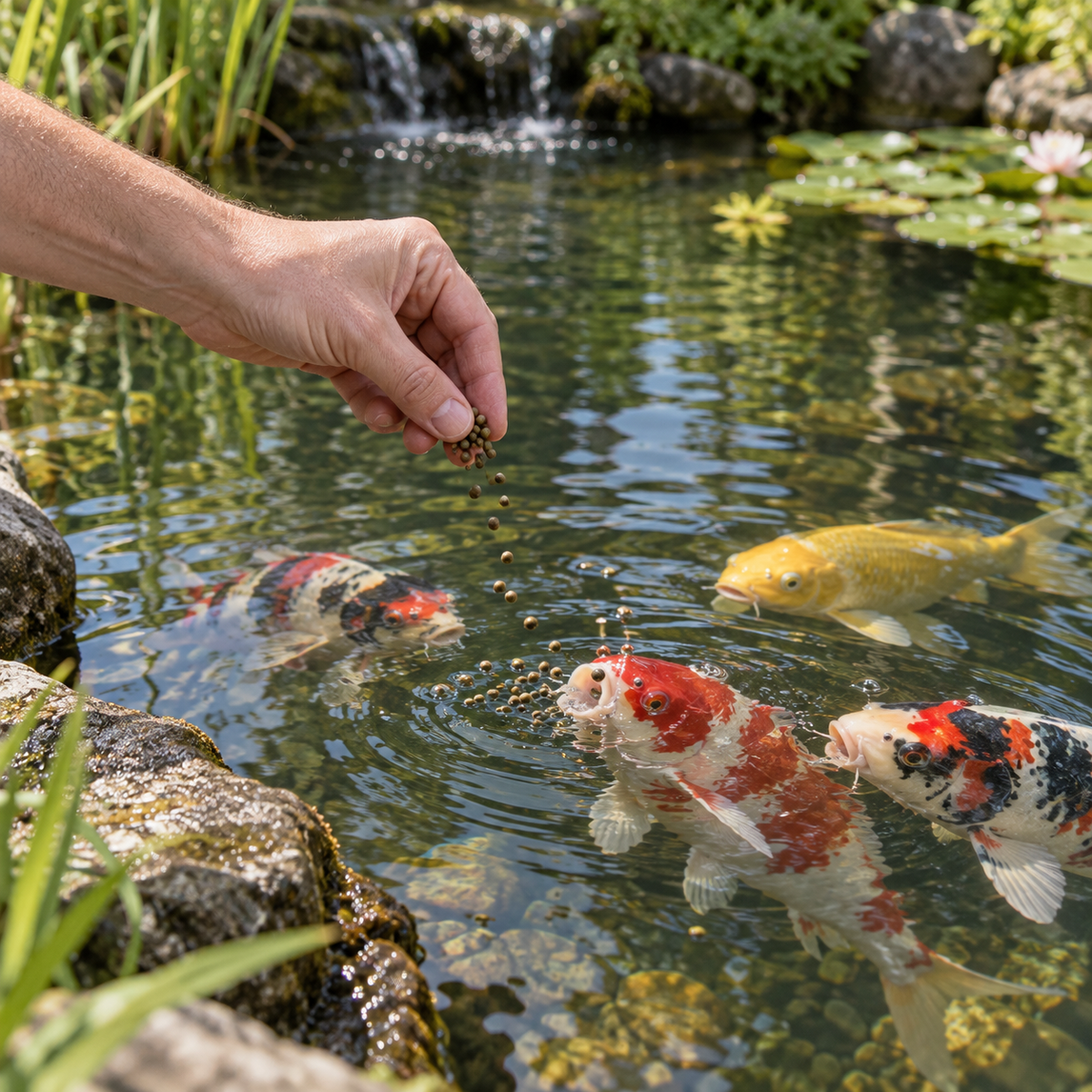
When you feed the fish, some of the nitrogen provided by the food subsequently enters the water through their excrement. Leftover food and other organic matter also contribute to this load as they decompose.
Nitrification takes place in two main steps: a first group of microorganisms transforms ammonia and ammonium into nitrites; another transforms nitrites into nitrates. Oxygen is necessary for these transformations. The University of Florida also highlights the role of alkalinity, which helps buffer pH variations.
Nitrates are generally less toxic than the previous compounds but can accumulate. Nitrification therefore transforms nitrogen; it does not make it disappear from the pond. Exporting waste, managing inputs, using plants, and performing appropriate water changes remain factors to consider for overall balance.
Mechanical and biological filtration: two complementary tasks
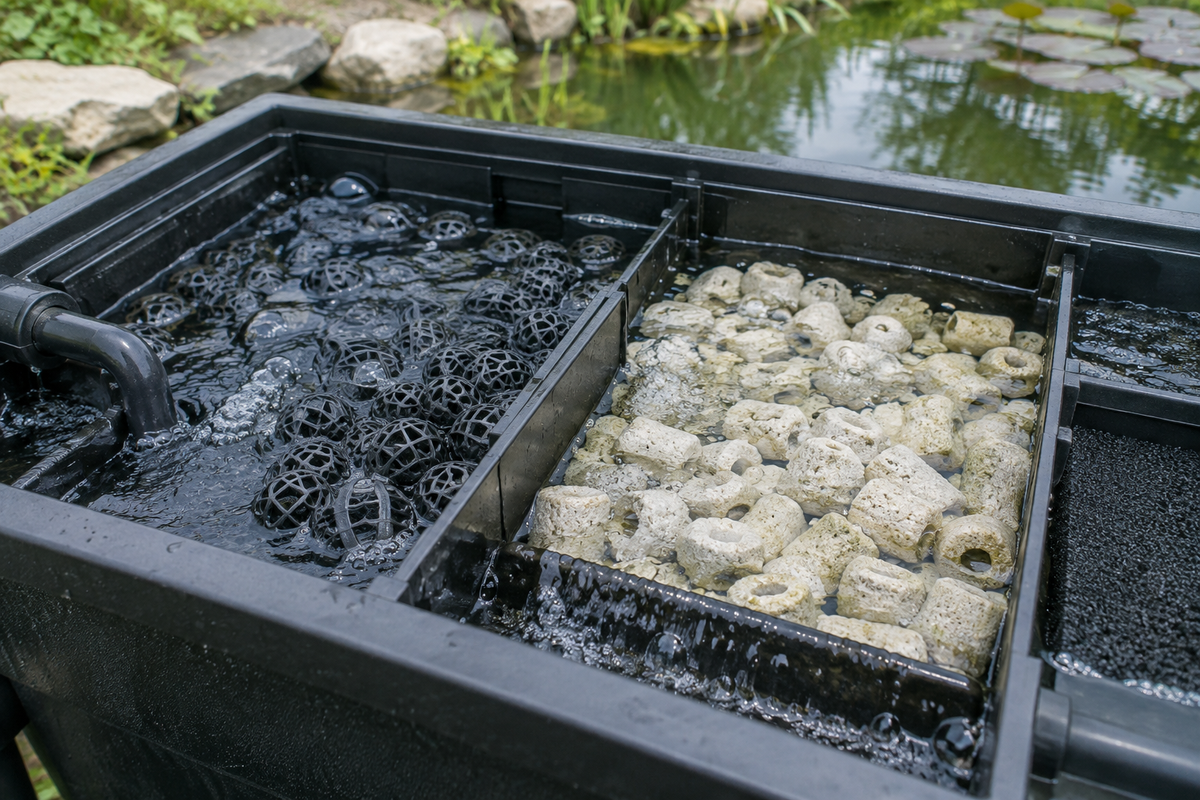
The mechanical part retains particles. The biological part offers surfaces where microorganisms can settle. In the same filter, certain media participate in both functions, but maintenance requirements are not identical.
A clogged foam limits circulation. A biological medium that is entirely scrubbed clean loses part of the community that was colonizing it. Trying to make every material look like new with every cleaning is therefore not a relevant objective.
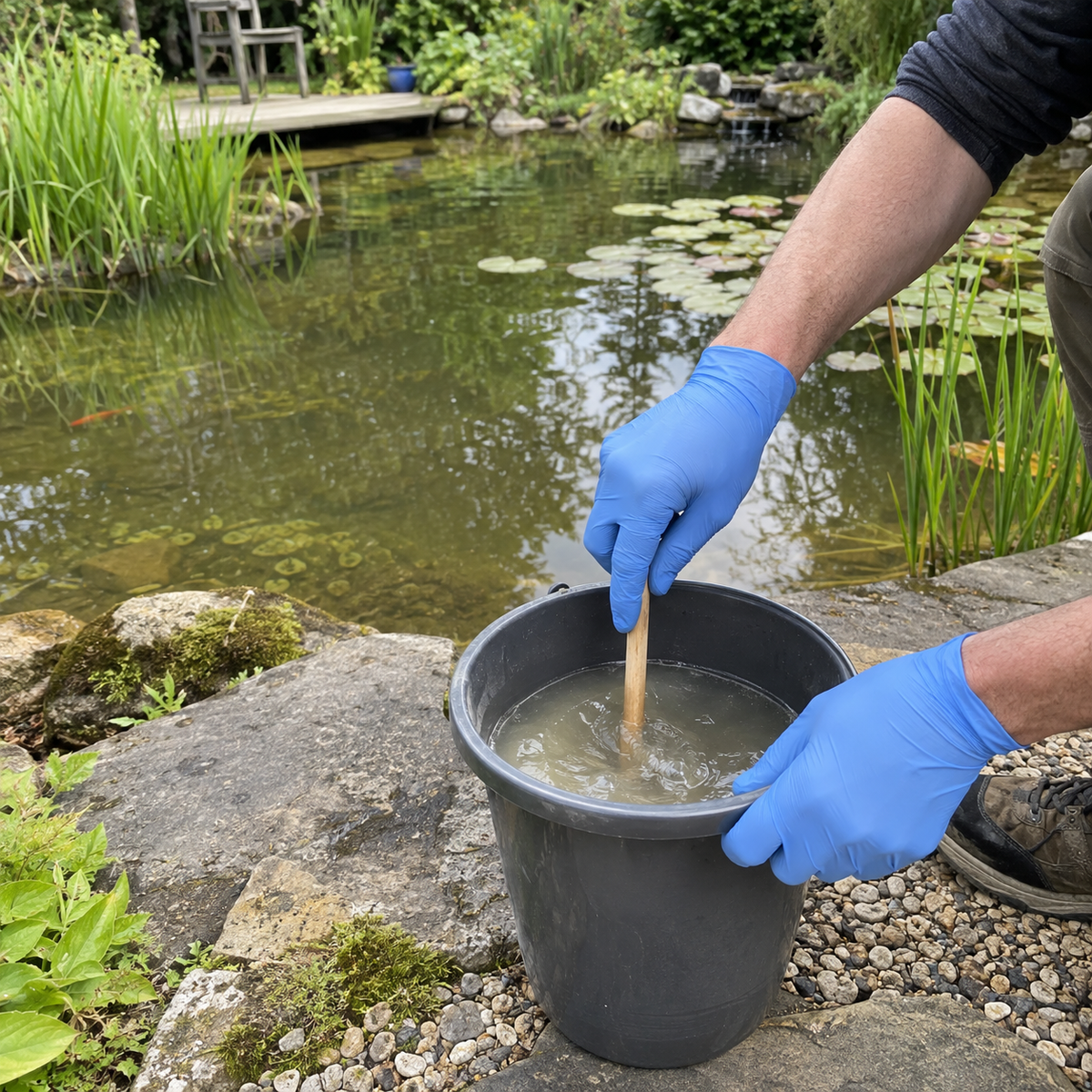
The RHS advises maintaining filters while preserving their biological activity, particularly by using pond water for elements that need to be rinsed. Also consult the manual for your model: access, direction of flow, and the cleaning procedure vary depending on the device.
When to think about Aquipond NitriBoost?
The Aquipond product sheet introduces NitriBoost for spring startup, after a major filter cleaning, or after large water changes. The product is part of restoring proper filtration conditions.
Before adding it, check the flow rate, aeration, and condition of the media. A stopped pump, a clogged hose, or a filter that is too small cannot be fixed with a bottle of bacteria. If the population has increased, also reassess the capacity of the installation and the amount of food distributed.

Usage guidelines to check on the label
The manufacturer's sheet indicates a dosage of 1 liter per 10 m³, with a pH between 6.5 and 8 and a water temperature above 10 °C for the conditions of use presented. Check these parameters in your water, then consult the label of the packaging used.
At this reference dose, a 5 m³ pond corresponds to 500 ml and a volume of 2 m³ to 200 ml. This calculation assumes a truly known volume. An estimate based solely on external dimensions can be misleading when the pond has several levels.
For instructions related to UV, ozone, or recent treatment, follow the specific indications of the products and equipment. It would be unwise to transpose a shutdown duration intended for another bacterial preparation. In case of doubt, keep the exact references on hand to ask for advice.
How to know if the pond is regaining its balance?
Prepare a simple log with the date, temperature, pH, KH, measured ammonium or ammonia, and nitrites. Add a column for events: cleaning, water change, new fish, breakdown, or product addition. Context makes the numbers much more useful.
The JBL ProAquaTest CombiSet Pond offered on Aquishop includes tests for pH, KH, GH, ammonium, nitrites, and phosphates. It does not include oxygen or nitrate measurements: these parameters require dedicated tests when needed.
Respect the volumes, reaction times, and colorimetric scale of each test. Check the expiration date of the reagents and note the unit. A result expressed in ammoniacal nitrogen cannot be compared directly to a value expressed in ammonium without accounting for this difference.
An isolated measurement after an addition does not prove that the filtration will sustainably support the fish load. Follow the trend, especially after a significant intervention. The Merck Veterinary Manual highlights the time required for a biofilter to establish: a seeding product does not replace this monitoring.
Ammonium and ammonia: why also look at pH?
Non-ionized ammonia, denoted NH3, is more toxic than ammonium NH4+. Their proportion depends notably on pH and temperature. The same total quantity can therefore present a different risk depending on water conditions.
If you record an abnormal value, avoid correcting the pH abruptly to reach a supposedly ideal figure. The Merck manual describes the risk associated with a rapid rise in pH in water that already contains ammonium. Have the results interpreted together, with the units and the temperature.
This point also explains why transparency does not replace testing. Dissolved compounds are not necessarily visible from the bank.
Fish in difficulty: act on conditions without waiting for a biological effect
Fish that breathe abnormally, gather at the water intake, or become suddenly lethargic require an immediate check of the pond. Check aeration, circulation, and water quality. Several causes can produce similar signs.
Reduce or temporarily suspend feedings depending on the situation and the needs of the animals, remove uneaten food, and ask for advice quickly if the signs persist. A partial water change may be indicated, but its volume and the water used must be adapted: temperature, potential chlorine, and parameters all count.
Do not multiply treatments simultaneously to try all options. Some products can disrupt the bacteria in the filter. Keep a list of additions and their dates to facilitate diagnosis, especially if a veterinary consultation becomes necessary.
NitriBoost, BactoMaintenance, and Bactovase meet different needs
Choosing from the Aquipond range begins with identifying the target. To support the seeding of filtration, NitriBoost is the reference to consider. For biological maintenance related to organic matter, look at the function and conditions of use for BactoMaintenance.
When the main problem is an organic deposit at the bottom, Aquipond Bactovase corresponds to a different use. It does not replace the extraction of a sand layer or the suction required by a PondoVac 4 or PondoVac 5.
Avoid adding multiple preparations simply because they contain the word "bacteria." A precise objective, adapted conditions, and observations before and after the intervention provide an easier approach to follow.
Habits that preserve the work of the filter
- Adapt feedings to consumption and temperature, without letting leftovers accumulate.
- Maintain mechanical parts before clogging significantly reduces flow.
- Follow the cleaning procedure for biological media.
- Check circulation after a breakdown or disassembly.
- Test the water before a new introduction and after a significant change.
- Read treatment labels to ensure their compatibility with filtration.
The right benchmark is not the quantity of bacteria poured throughout the season. It is the pond's ability to maintain stable conditions, with a population and inputs that its filtration can handle.
Preparing a seeding with Aquipond NitriBoost
Record the volume of the pond, its temperature, and its parameters, then check the conditions on the product sheet. Keep your results to follow the evolution after the addition.
Sources
- University of Florida, IFAS — Ammonia in Aquatic Systems: nitrogen transformations and nitrification requirements.
- Merck Veterinary Manual — Management of Aquarium Fish: biofiltration, parameters, and interpretation of imbalances.
- Merck Veterinary Manual — Providing a Home for Fish: water monitoring and system capacity.
- RHS — Pond filters: filtration maintenance.
- JBL — Biological balance and water parameters: bacteria and possible effects of treatments.
- Aquipond — NitriBoost and Aquishop sheets for products related in the article: uses, characteristics, and conditions of use.