Cloudy water can hide fish and make maintenance difficult to evaluate. When the problem is caused by fine suspended matter, a clarifier can help group them together to facilitate their removal. Aquipond ClearWater should be considered in this approach: analyze, clarify, then extract the matter.
Its use requires preparation. The volume, water parameters, filtration, and oxygenation must be examined. Before any application, have the instructions corresponding to your specific package confirmed, particularly the guidelines regarding aeration and the waiting period before any potential repeat treatment.

Why does pond water become cloudy?
Cloudiness can stem from mineral particles, organic debris, or algae in suspension. Heavy rain, a displaced basket, or a stirring up of the bottom can quickly change the appearance of the water.
A relatively transparent brown tint can also be linked to dissolved substances originating from plant matter. It does not behave like water laden with particles. Filaments attached to supports are yet another subject.
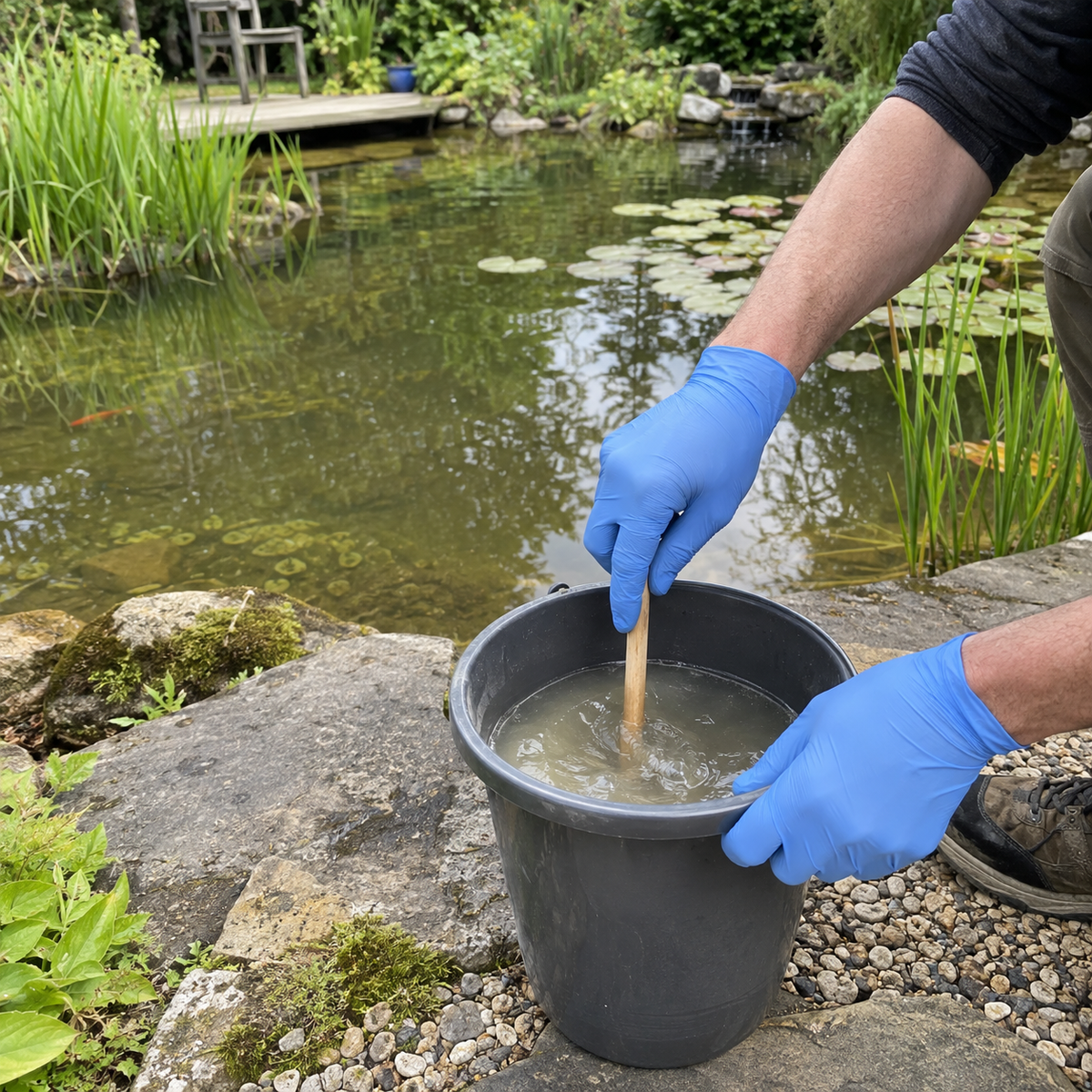
Describe the color, the presence of deposits, and the time of appearance. These observations help verify if a clarifier meets the need or if another intervention should be prioritized.
How to understand ClearWater's action?

The Aquipond ClearWater data sheet describes an action that binds suspended matter to form aggregates that are easier to recover. This grouping is called flocculation.
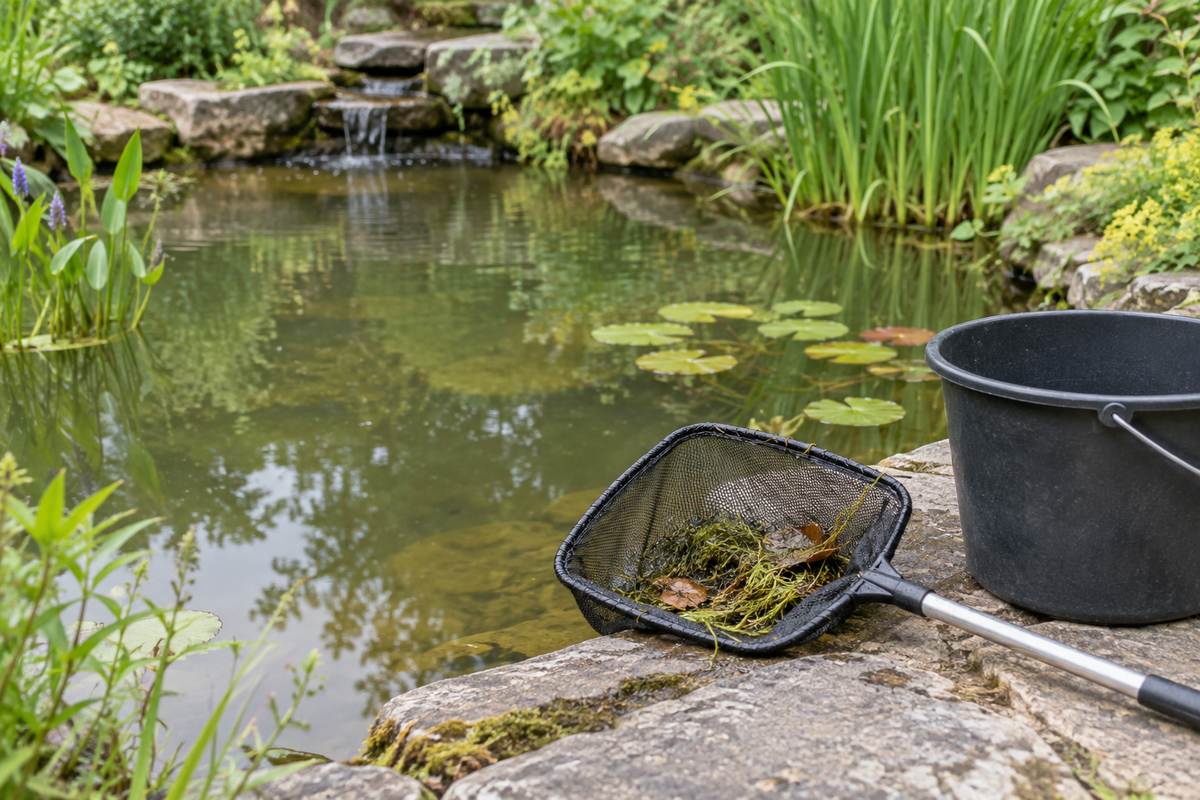
The practical point is essential: the matter must then be removed by a suitable means. Its settling at the bottom does not mean it has left the pond. Visual clarification and waste extraction are two stages of the same maintenance.
The product, therefore, does not replace a properly maintained filtration system nor the search for the cause of the cloudiness. A repeated influx of soil or waste may continue after an improvement in appearance.
Analyses to perform before starting
The ClearWater sheet requires a water analysis, with particular attention to KH and GH. These measurements should not be skipped to save time.
KH indicates the buffering capacity linked to carbonates, while GH describes another dimension of mineralization. Both values are not interchangeable. Have the results interpreted according to the requirements of the instructions and those of the pond's inhabitants.
The JBL ProAquaTest CombiSet for ponds includes pH, KH, GH, ammonium, nitrites, and phosphates, among others. It does not measure dissolved oxygen. Additional checks may be necessary depending on the situation.
Avoid automatic mineral correction. If an adjustment is justified, it must be calculated and monitored using the appropriate product. Keep the results and their units to provide to your advisor.
Confirm the volume and the full protocol
Calculate the volume actually present in the pond. For an irregular shape, the maximum depth cannot be applied to the entire surface. The shelves, slopes, and current water level all count.
The name of a package is not enough to reconstruct a precise dose. Check the label of the product received, its concentration if indicated, the quantity required, and the requested preparation.
Before starting, you must also know the management of the pump, aeration, and filtration at each step. If the documents at your disposal give different instructions, have them clarified by Aquiflor or Aquipond. Do not stop the aeration and do not schedule a new application based on uncertain information.
Why oxygen deserves special attention
The ClearWater sheet notes a risk of oxygen depletion linked to biological activity around the accumulated matter. A pond that is already low in oxygen does not constitute a favorable situation for treatment.
Check the condition of the equipment and the behavior of the fish. Abnormal breathing or gathering at the surface requires prompt advice. A clarifier should not delay the search for the cause of this distress.
Heat, population, and the amount of waste influence the context. A visible waterfall or bubbles do not provide an accurate measurement of dissolved oxygen. If this data is necessary, use an appropriate measurement method.
Choose a time when you will be able to monitor the installation. The animals' needs must remain integrated into the protocol, even when the water already appears clearer.
Prepare the filter to receive more matter
Identify the compartments that trap waste and verify that they are accessible. A large load may require increased attention after the intervention.
Follow the maintenance method for mechanical parts and monitor changes in flow. Distinguish their cleaning from that of biological supports: a complete and simultaneous stripping of all media can disrupt the filter's operation.
The sheet suggests considering reseeding with Aquipond Bacto Maintenance after the relevant maintenance. The need, timing, and preparation must be integrated into the confirmed program. The addition of bacteria does not dispense with the need for water testing.
Remove deposits with a PondoVac vacuum
When matter settles in an accessible area, a PondoVac 4 or a PondoVac 5 can help extract it. The choice depends on depth, access, and discharge management.
Prepare for the disposal of the vacuumed water and monitor the level. Work in a targeted manner to avoid stirring up deposits across the entire bottom.
Do not assume that a waste bag will catch all fine particles. Check the capacities of the accessories and the destination of the discharged water. The goal is to evacuate the target matter without bringing it back into the pond.
ClearWater and Bactovase have different roles
ClearWater targets a clarification approach for suspended matter. Aquipond Bactovase can be considered for the organic fraction of deposits.
Both needs can exist in the same pond, but this does not justify an improvised simultaneous application. Have the steps organized and the compatibilities verified.
The nature of the sludge also counts. Bacteria intended for organic matter will not make sand or soil disappear. A repeated mineral influx must be corrected at its source.
Limitations to keep in mind
No clarification time can be guaranteed independently of the pond. The load of matter, filtration, and conditions of use influence the result. Wait for the time frame provided in the confirmed protocol before concluding it is a failure.
Clearer water does not prove that all parameters are suitable for the fish. Continue useful checks and observe the animals. Furthermore, clarification is not a certification of potability or swimming quality.
Respect the precautions on the label. The sheet warns of danger if swallowed and possible irritation to eyes and mucous membranes. Keep the product identified, out of the reach of children and pets, and follow the handling instructions.
Prepare your maintenance with Aquiflor
Before use, send a photo of the ClearWater label, the volume, the KH/GH results, and the filtration references to support@aquiflor.com. Include the species present and the list of products recently used.
Once the protocol is confirmed, record the intervention and observations. To maintain the result, reduce food waste, accumulated leaves, and soil runoff. It is this continuity of maintenance that allows you to enjoy a pond that is easier to observe for a long time.
Sources
- Aquipond — ClearWater sheet and precautions; operational instructions must be confirmed for the packaging used.
- Penn State Extension — origins of cloudiness in ponds.
- USGS — particles and dissolved coloration.
- RHS — pond filtration.
- Aquishop data sheets for ClearWater, JBL, Bacto Maintenance, Bactovase, and PondoVac linked in the article.