On a frosty morning, tits dart back and forth in the hedge and a robin inspects the leaves near the terrace. Helping garden birds in winter starts with understanding what they are looking for: food, water, and places to take cover.
Proper management combines a welcoming garden, measured winter feeding, and a well-maintained water source. A bird feeder can be helpful during difficult times, provided it is kept clean and does not cause too many birds to congregate in one place for long periods.

Start with what the garden can offer
Before buying seeds, look at the resources already present. A hedge that still bears berries, plants that have gone to seed, and an area of dead leaves host life that birds explore spontaneously. A garden that is entirely trimmed, raked, and cleared of its dry stalks offers fewer opportunities.
Keep quiet corners and space out your maintenance work. You can clear paths and maintain the terrace while letting part of the garden evolve more freely. This organization is particularly well-suited around a pond, where planted banks extend terrestrial refuges.
Natagora specifically recommends native plantings, hedges, and natural resources. To prepare for future winters, choose plants based on your soil and available space, then stagger pruning to preserve some fruit and shelter.
When should you feed birds in winter?
In Belgium, Natagora's advice is to restrict feeding to winter. Periods of prolonged cold, snow, or frost make this help particularly relevant. Actual weather matters more than a date chosen once and for all.
Start with small portions and observe what disappears. If the food remains damp for several days, the quantity is too large or the location is unsuitable. Filling it more does not solve this problem.
Also consider your own availability. An installation located in front of the kitchen window will be easier to monitor than a remote feeder that is rarely visited. The best setup is one where you can check the condition daily.
When spring conditions return for good, gradually reduce the feed in accordance with local advice. A garden rich in insects and vegetation then becomes fully beneficial, especially during the breeding season.
Which foods should you choose?
Choose food intended for wild birds, adapted to the feeder and the species observed. A quality seed mix is a simple way to start. Check its condition: an abnormal smell, damp clumps, or mold mean the affected contents must be discarded.
Fatty foods can supplement seeds during extreme cold. Use a holder intended for this purpose and remove the netting around fat balls: they pose a risk of entanglement. Do not place food in a feeder whose openings or mechanism are not suitable for it.
Avoid salty leftovers, seasoned preparations, and spoiled food. Bread is not a suitable staple for feeding. It is simpler to keep a small stock of appropriate food than to improvise a menu with kitchen scraps.
Keep supplies dry, in a closed container, following the manufacturer's instructions. Note the date of opening and buy a quantity consistent with the garden's level of activity. A large bag used too slowly loses its value.
Choose a feeder that can be disassembled
Cleaning should guide your choice as much as appearance. Can you empty the reservoir completely, reach the corners, remove the parts, and let everything dry? These actions will quickly become more important than a few extra centimeters of capacity.
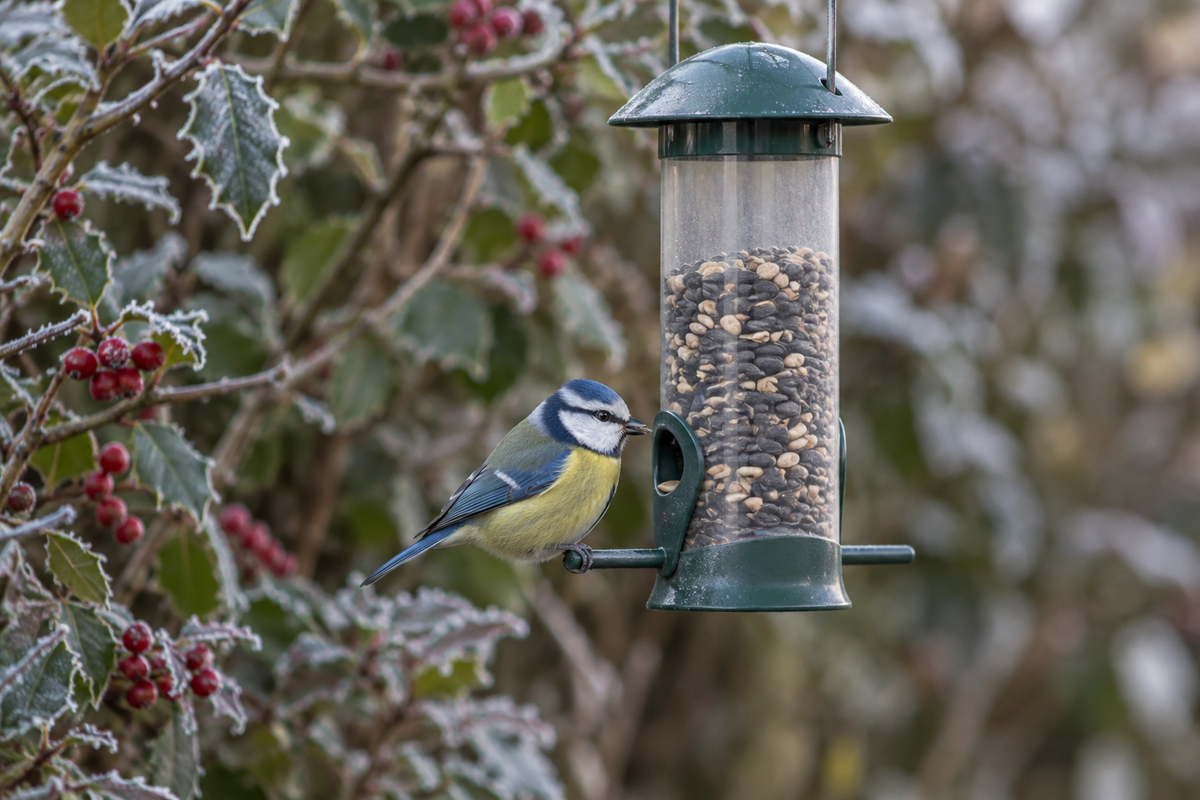
The Wildlife Garden Green Combi Seed Feeder has an insert for dispensing seeds and a hanger. Its design allows the insert to be removed for other uses described by the manufacturer. To start, keep the configuration intended for seeds and check the exit points regularly.

A large capacity does not mean you have to fill the reservoir to the top. Adjust the level according to visits and the weather. After several rainy days, checking the bottom and the openings is particularly useful.
Where should you install the feeder?
Look for a location that birds can reach easily, with refuges nearby. However, avoid areas where a cat could wait just behind a dense clump, within immediate range of the feeding area.
Check the strength of the suspension and access for maintenance. A feeder that spins violently in the wind, hits a window, or spills its seeds onto a walkway needs to be moved. Also observe the ground: an accumulation of waste indicates that the quantity distributed or the installation needs to be reviewed.
Near a pond, avoid hanging the feeder above the water. Spilled seeds and droppings would add material to decompose in the water feature. Keep a separate space for feeding birds and feeding fish.
Hygiene: a real part of feeding
Gatherings around food and water can facilitate the transmission of diseases. In its updated recommendations, the RSPB advises against flat feeding surfaces, where food and droppings easily mix.
Every day, remove spoiled leftovers and check the installation. Plan for regular deep cleaning, at least weekly according to RSPB recommendations, and more often if conditions require it. Use equipment reserved for this maintenance, rinse thoroughly, and let dry before adding seeds.
If a bird appears sick or if multiple deaths occur, stop feeding and seek advice from a wildlife rehabilitation center. The RSPB then recommends a break of at least three weeks and the temporary removal of shared water points. Cleaning alone does not justify immediate resumption.
Also provide water during frost
The garden may be damp and still lack accessible water. A shallow, stable, and easy-to-empty container helps birds drink. Replace the water regularly and keep the container clean; do not just add water to a dirty bottom.
When it freezes, remove the container or thaw the ice away from animals, then put water back at a safe temperature. Do not add salt or antifreeze. A small, clean supply, refreshed throughout the day if necessary, is better than a large bowl left for several days.
To organize this water point, see our guide on the garden watering station. Place it so that you can clean it without interfering with the fish pond.
A simple routine for all winter
- In the morning, check the condition of the food, water, and supports.
- Distribute an amount adapted to the visits actually observed.
- Remove soiled leftovers and keep the ground clean.
- Set aside a regular time for disassembly and cleaning.
- After a change in weather, adjust the supplies and check the stability of the accessories.
Looking for a feeder for your garden? Discover the Combi Seed model and choose its location before installing it. A few regular actions make this equipment much more useful than a generous fill-up followed by several weeks of neglect.
Sources and references
- Natagora — Welcoming birds to the garden.
- Natagora Brussels — Feeding birds in winter.
- Natagora — Should we feed birds?
- RSPB — Hygiene and bird health at feeding points.
- Wildlife Garden — Combi Feeder range and Aquishop product sheet linked in the article.