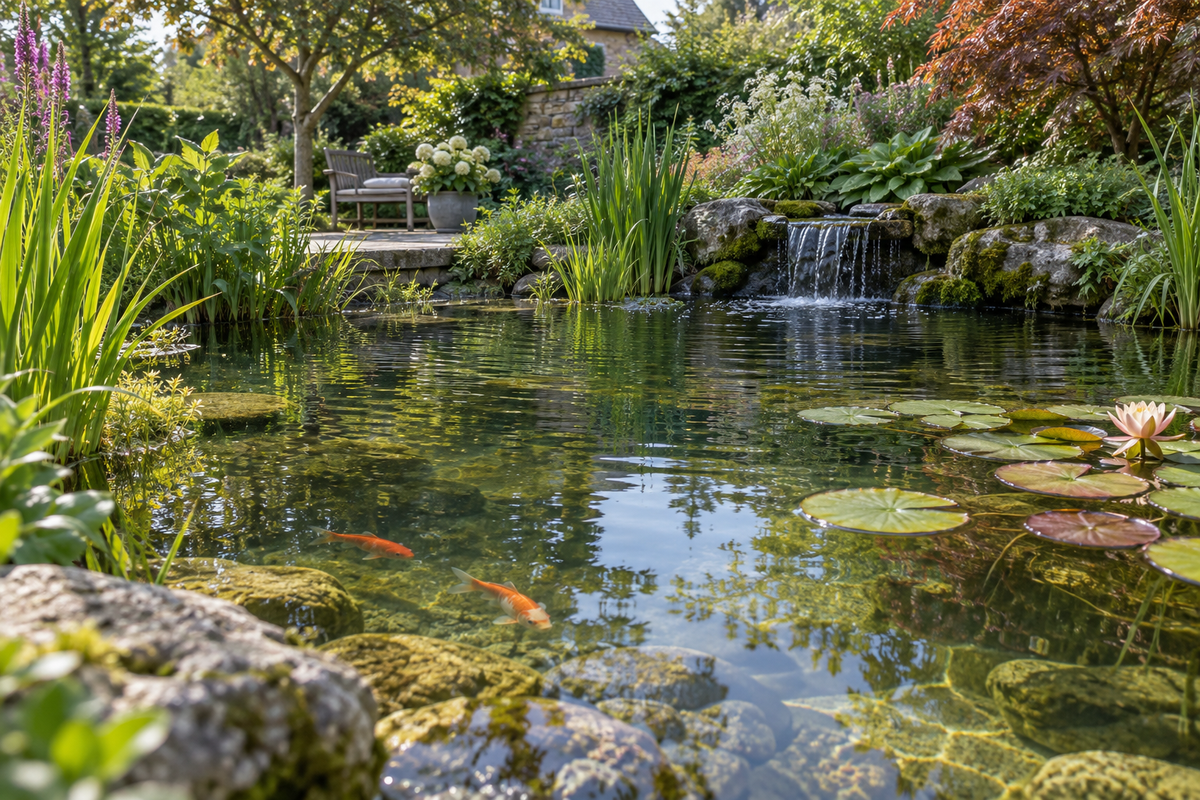
The pond was crystal clear in June, then turned green during the holidays. Or perhaps the water stays beautiful for a few weeks after each cleaning, before clouding up again. In these situations, the most useful question is not so much "what product should I add?" as "what changes between two maintenance sessions?"
Long-lasting clear water relies on several elements working together: circulation, filtration, vegetation, fish population, and waste removal. Your maintenance program must track their evolution throughout the seasons.

Defining what you mean by clear water
Start by distinguishing between transparency, color, and chemical quality. Amber water can still allow you to see the bottom; green water often contains microscopic algae; brown cloudiness can come from particles. These situations require different checks.
Choose a landmark already present in the pond, for example, a stone or a submerged step, and photograph it from the same spot. Also, note the weather and any recent work. This comparison will be more reliable than a memory of the water's color.
Keep expectations appropriate for your project. An ornamental pond with fish and filtration is not maintained like a pond intended for wildlife. In the latter, constantly seeking perfect transparency can lead to unnecessary interventions.
Checking if the filter still suits the pond
The volume stated on a filter does not cover every situation. The number of fish, their size, feeding, and sun exposure all affect the load to be treated. The RHS recommends taking volume and population into account when choosing an installation.
Review the equipment specifications and compare them to the current population. Koi purchased when small may have grown significantly since the system was commissioned. The filter has remained the same, while food intake and waste have increased.
Filtration that clogs up very quickly deserves an examination of the entire circuit. Before buying a finer foam, check the pre-filter, waste inlets, and ease of discharge. Finer filtration may also require more frequent maintenance.
Prepare the information useful for sizing: measured or estimated volume, fish, filter model, pump, diameter and length of pipes, elevation change, and sun exposure. This file will help you choose a realistic capacity.
Measuring the actual flow rate
The maximum value indicated on a pump is not necessarily the flow rate passing through your installation. The height to be overcome, pipes, fittings, and clogging all modify the result. The pump curve must be read with these constraints in mind.
Compare the water return before and after routine maintenance. If the flow drops quickly, look for the point that is clogging: strainer, pre-filter, hose, or mechanical media. A poorly positioned valve can also divert part of the intended circulation.
When the setup allows for measurement without risk, the volume collected during a known duration gives an indication of the flow rate. Otherwise, have the installation checked with appropriate means. Avoid disconnecting a pressurized circuit to improvise a test.
Proper circulation must also reach areas where waste accumulates. A spectacular waterfall does not guarantee that all sectors of the pond are correctly serviced.
Maintaining the UV according to its role
A UV clarifier can help against microscopic algae responsible for green water. It does not by itself remove waste from the circuit: mechanical filtration and its maintenance remain necessary.
Record the lamp replacement date and maintenance performed on the quartz. Follow the manufacturer's recommendations for their care. A lamp that is still glowing is not sufficient proof of performance for its intended use.
Also check the allowable flow rate and the compatibility of the device with the pond. If the problem is caused by soil washed in by rain or stirred-up mud, replacing the lamp will not address the source of these particles.
Before opening any equipment, turn off the power supply and follow the instructions in the manual. Direct observation of a functioning UV lamp should not be attempted as a quick check.
Maintaining functional biological filtration
Filter media house a community that transforms nitrogenous waste. Its effectiveness depends notably on the water passing through them and the oxygen available. Thorough cleaning of all media or a long shutdown can disrupt this function.
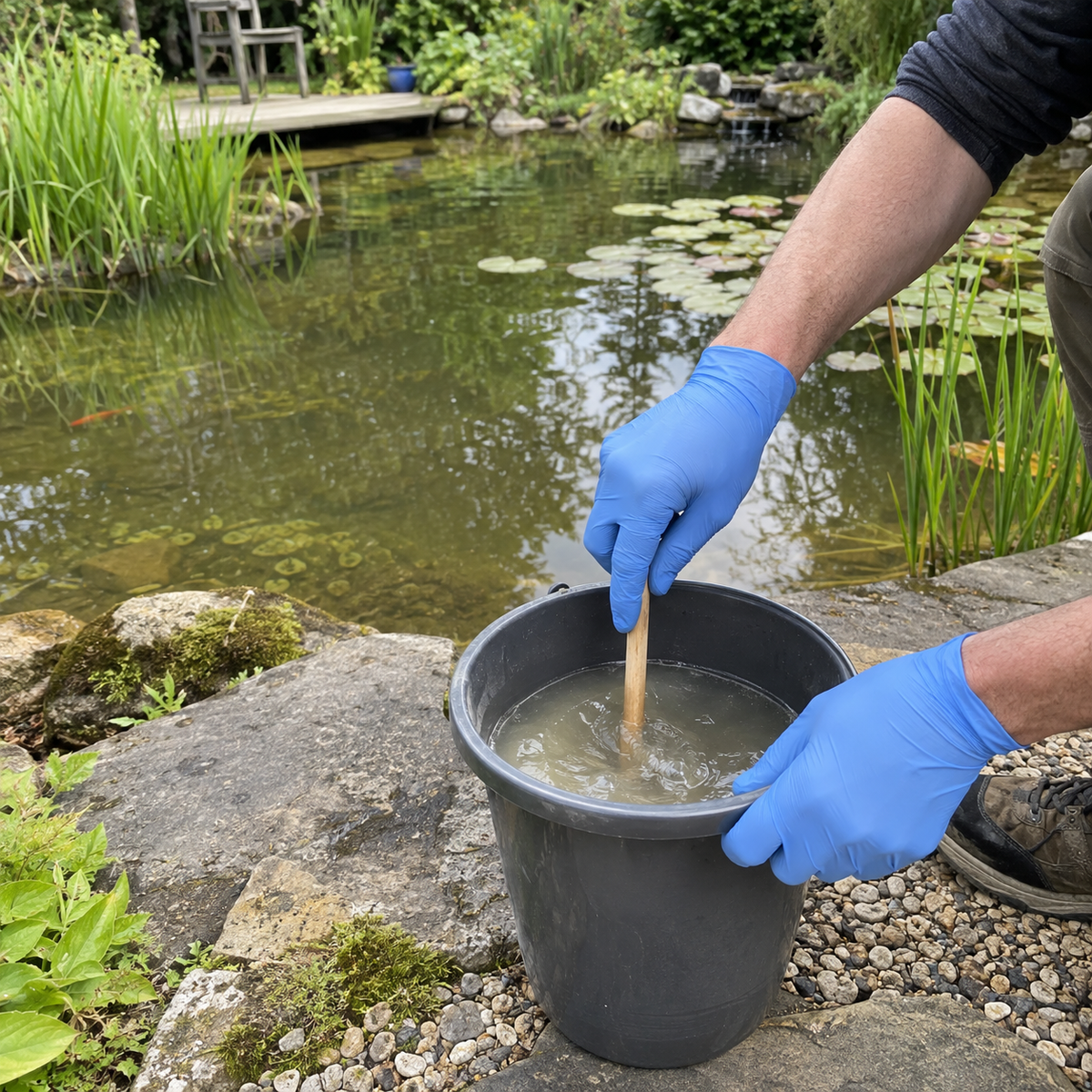
Distinguish between removing waste from the mechanical section and maintaining biological media. Respect the procedures provided by the manufacturer and avoid systematically stripping all media with chlorinated water. The filter does not need to look like a brand-new device after every cleaning.
After a major intervention, monitor ammonium and nitrites. Aquipond NitriBoost can assist with seeding under the conditions indicated on its data sheet. Adding it does not replace the analyses necessary to verify that the filter is functioning correctly.
Removing organic matter before it accumulates
Identify regular waste inlets: leaves from a nearby tree, dead flowers, uneaten food, or garden runoff. A small action in the right place can reduce cleaning needs for several weeks.
A skimmer collects some floating debris before it sinks. In autumn, a properly installed net limits leaf intake. Empty collection devices: waste must leave the system to be truly removed.
For accessible deposits, PondoVac 4 and PondoVac 5 vacuums allow for targeted maintenance. Prepare for discharge and work in sections, without trying to stir up the entire bottom at once.

Aquipond Bactovase concerns the organic fraction of sludge. It can supplement this approach according to its conditions of use. It does not remove sand or soil runoff that recurs after every rain.
Giving plants and feeding their proper place
Plants contribute to the pond's balance, and some provide shade. Choose them based on depth, available space, and sun exposure. A water lily that is too large for the pond becomes difficult to manage; a plant installed at an unsuitable depth will not provide the expected benefit.
The RHS highlights the role of nutrient input in algae blooms. Contain the substrate in baskets and limit runoff from fertilized areas. Remove plant parts that are decaying excessively, while maintaining refuges suitable for wildlife.
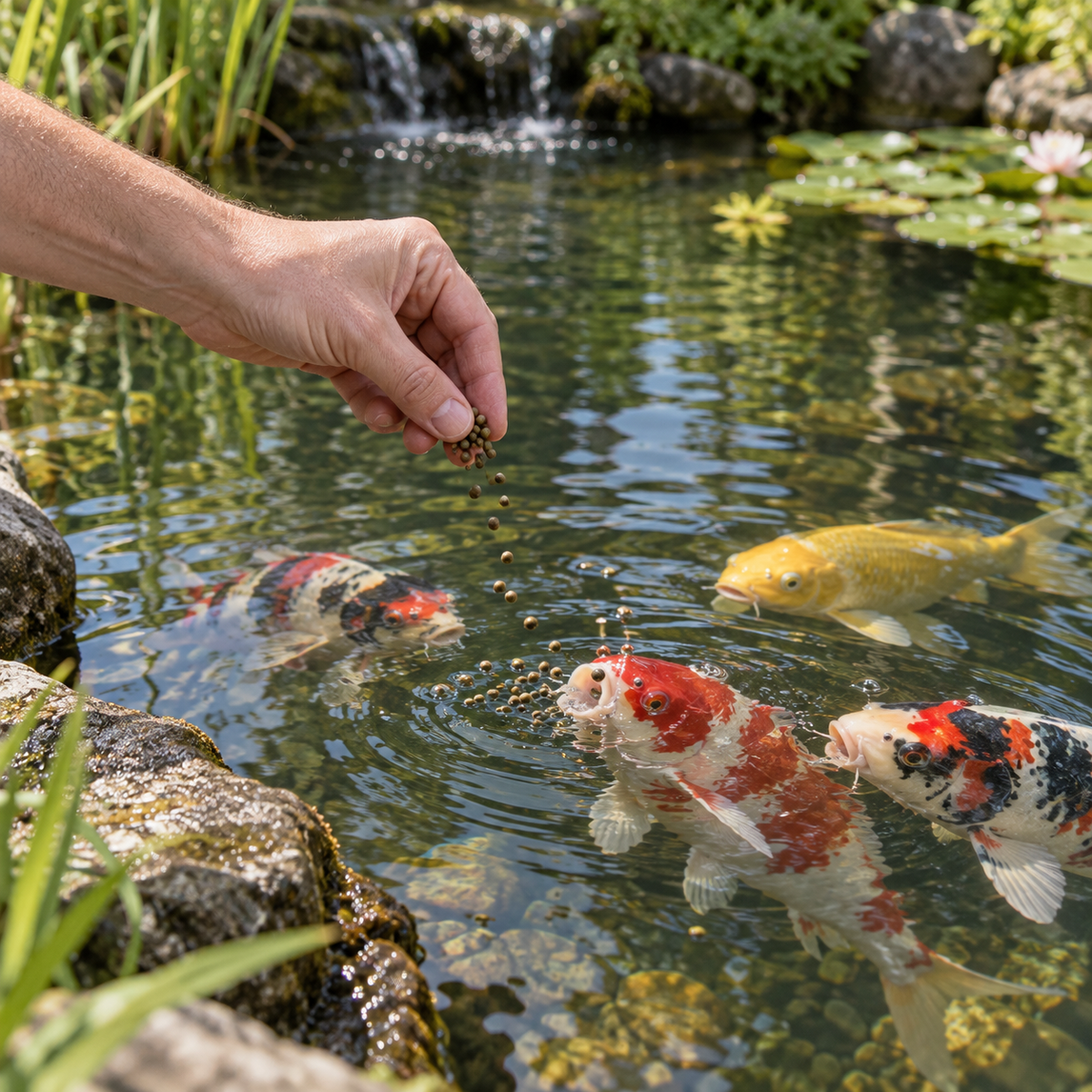
Observe the fish during feeding. If pellets regularly remain, adjust the amount distributed. Adapt the food, frequency, and seasonal cessation to the water temperature, the species, and the manufacturer's indications.
A calendar that follows the pond
| Period | Priority | Points to check |
|---|---|---|
| Spring | Support biological recovery | Filter, UV, analyses, and feeding progress |
| Summer | Maintain circulation and oxygenation | Temperature, flow, fish behavior |
| Autumn | Limit leaf accumulation | Net, skimmer, deposits, and reduction of meals |
| Winter | Adapt the installation to frost | Equipment manuals, planned circulation, and gas exchange |
As noted by the USGS, warm water can hold less oxygen than cold water at saturation. During heatwaves, transparency should therefore not distract from aeration and the fish.
In winter, there is no single rule requiring all pumps to be shut down. The setup, depth, climate, and equipment protection all matter. Prepare for this decision before the frost period.
A short routine, with additional checks as needed
At each visit, look at the water return, the surface, and the fish. At regular intervals, examine the collectors and check useful parameters: pH, KH, GH, ammonium, and nitrites depending on the situation. In case of recurrent algae, complete the nutrient investigation, particularly for phosphates.
After a breakdown, heavy rain, or a change in population, increase surveillance temporarily. Note one intervention at a time and its result. This will allow you to identify what is actually improving the situation, rather than attributing the change to the last product added.
Preparing for deposit maintenance
Choose a vacuum based on access and depth, then check if biological support is suitable for the existing sludge.
Sources
- RHS — Choosing a Pond Filter: filtration choice and maintenance.
- RHS — Pond Algae and Blanket Weed: light, plants, and nutrient input.
- USGS — Dissolved Oxygen and Water: temperature and dissolved oxygen.
- University of Florida IFAS — Ammonia in Aquatic Systems: biological filtration and water monitoring.
- OASE — Winterizing your water features: adaptation and equipment protection.
- Aquishop product sheets for PondoVac, Aquipond Bactovase, and NitriBoost linked in the article: product characteristics and uses.